Home

When Michelle’s sister, Norma, was diagnosed with cancer, she called their mom to tell her the news. Norma is strong-willed—not the type to break down easily. Her mom just listened quietly, nodding along. Then, at the end of the conversation, she simply said,
“You may come home if you want.”

And that’s when Norma broke down, sobbing.

“Wow. That was the perfect response,” I said to Michelle. “Your mom is really good.”
She didn’t try to fix anything. She just held space for Norma, offered her a safe place, and gave her a choice.

This would never happen in my family.

From what I’ve heard over the years, Michelle’s family runs on love. We’ve been friends for decades, and in the beginning, we didn’t really understand each other’s “normal.”
But as we’ve continued to exchange stories about our families, the contrast has only become clearer—how we think, how we move through the world, how we relate to others, and ultimately, who we are.

For Michelle, every relationship begins with love.
For me, every relationship begins with a transaction.

What would my mother say if I were in Norma’s shoes?
She’d say, “Come home.”
But not because I’d be welcome if I wanted to come home. It would mean I should come home—whether I wanted to or not—so she could step into the role of the devoted caretaker. My mom was a nurse, after all. She would turn the story into hers. She always does.
She dictates the narrative of my life.

And I would say, “No.”
Because for me, “home” isn’t a safe place.
The only safe place I know is the one I’ve made for myself, where I live alone.
The only safe relationship I have is with my dog—whose love comes without conditions.

We all carry different meanings for the same words.
What “home” means depends on who you ask.
So does “love.”
So does “safe.”

Three Way Mirror Vanity

I had three mothers.

There’s a photo of them together, sitting in a living room. Every time I look at it, I think of the witches—not the ones from Hocus Pocus, but the ones from Macbeth. Together, they conjured me: a daughter with a fragmented identity.

When we are young, we come to understand ourselves through interaction with our parents. We need to feel loved and accepted—especially by our mothers. Our survival depends on them. They become the foundation of who we are.

In my early childhood, my parents, grandmother, and aunt all lived under the same roof. My real mother was a nurse and gone during the day. My grandmother took care of me. She was a woman of few words, rarely expressive. She fed me, probably changed my diapers, and otherwise left me to my own devices. I was a free-range kid. She was always busy—tending to our small rice paddies, vegetable garden, and housework.

I followed her around, watching her do everything by hand or with simple tools. I saw her harvest soybeans, shell them, sort them, boil and mash them, and finally turn them into homemade miso paste. Everything was made from scratch. That’s just how small farmers lived.

She also took me on her regular visits—to the neighborhood Shinto shrine, and to my grandfather’s grave. From her, I learned ritual manners. She was more superstitious than religious. To this day, I still visit that same shrine when I go home. It’s deeply rooted in me. As long as I physically survived and followed her instructions, I was allowed to exist.

Sometimes, when my mother worked night shifts, my grandmother “let her rest” by handing me off to my single, childless aunt. I often slept beside her. Only much later—nearly half a century on—I learned that my aunt had once had a child out of wedlock, a daughter she gave up for adoption.

To her, I was a baby doll. She adored me and constantly told me I was cute. Whatever I did, I was “cute” to her. Naturally, I loved her. Looking back, I see now that I was her emotional support animal. A doll she could pour her love into. I was a blank screen, an empty vessel for her to project her longing and affection onto. As long as I accepted her version of “love,” I had a place in her world.

My actual mother? She’s almost completely absent from my childhood memories—except when I was sick. As a nurse, she took care of my body when it broke down. But emotionally, there was no connection. With her, I felt like a utility animal—fed and maintained for function, not love.

Her “love” was always conditional. I was a “good enough” daughter only when I served some purpose for her. Most of the time, that purpose was to be strong-willed, fearless, and short-tempered—a stand-in, a surrogate warrior she used to push back against her verbally and psychologically abusive husband. I was her avatar, not her child.

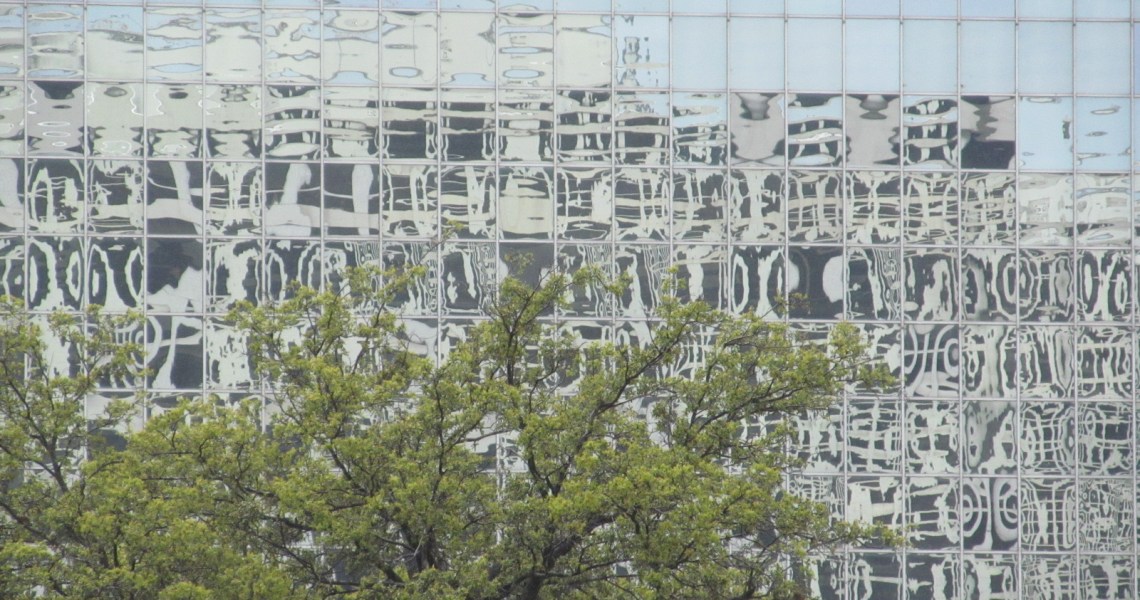
As I grew up, I developed three distinct clusters of identity traits—not like someone with dissociative identity disorder, but more like someone sitting in front of a three-way mirror vanity, where each angled mirror is distorted and reflects a different version of her. And those warped reflections bounce back and forth endlessly, deepening the distortion.

It was deeply confusing, to say the least.

It took me decades—more than half a lifetime—to even begin to feel the original me. I spent so many hours trying to reconcile those mirrored fragments. Now, I no longer need the mirror.

As for my father—he hated that I was a girl. The only time he acknowledged me as his child was when I got good grades. Otherwise, I was worthless.
Mother

After all, my choice was right,” my mother said, and I froze.

Since I was a little girl, she had made up her mind that I was destined to become a physician. She brainwashed me into believing it was my fate. Never mind that I loved reading and writing, hated math and science, and had terrible hand-eye coordination—she was convinced I was meant to be a doctor.

She had her reasons. My mother grew up poor and spent her early teenage years as a live-in nanny at her eldest brother’s house. He had been adopted out so he could get a better education and eventually became a physician. His wife was cruel and didn’t allow my mother to enroll in high school. But my mother, determined and stubborn, secretly applied to a nursing program and moved into a dormitory.

She became a nurse and later married—not to a doctor, but to an average city employee. So she shifted her dreams onto her children. She was going to be the proud mother of doctors. She believed this would elevate her status, allow her to join the elite “doctor’s family” club.

I never particularly wanted to become a physician, but I applied to a local medical school anyway. Thankfully, I wasn’t accepted. I could’ve tried again the next year, but by then, her focus had shifted to her new project: creating a physician son. She told me I was a bad influence on my younger brother and decided to “let me go.”

I had also applied to a liberal arts college in Tokyo, partly as an act of rebellion—and got in. She never asked what I wanted. She just decided I should go.

That was the “choice” she was referring to.

After college, I entered grad school and nearly earned a Ph.D. (Doctor!), but in my final year, I went to the U.S. to research my dissertation. There, I met an artist, fell in love, and got married. I stayed. Whatever plans she had for me, I repeatedly chose another path. At every fork in the road, she tried to map out my life, and I took the opposite turn.

She adapted. She became the mother of a daughter who lived in New York City. Her in-laws included a famous artist in Kyoto. She was no longer a poor country girl—she had graduated into the “cultured class.” She seemed to enjoy her new identity.

Meanwhile, my brother did become a surgeon, just as she’d dreamed. She didn’t need a physician daughter anymore.

Then I got divorced, and she lost that identity too. She wanted me to go back to my cheating husband.

For a time, she was the mother of a daughter who lived and worked in New York. She had no idea what I actually did for a living—a low-paid office secretary—but the title sounded impressive enough.

Since my father passed away about ten years ago, I’ve taken care of her, even from afar. I visit once or twice a year. I send gourmet meals every month. Compared to some of her friends, she realized she was lucky. She finally saw that it was possible because I didn’t have a demanding medical career or a family of my own to care for. And she said—without irony—that she was glad I was divorced.

And then, she said it again:
“After all, my choice was right.”

She took credit for all of my choices—every one I made against her wishes.

That’s my mother. I can’t recall a single time she ever asked me how I felt.