Just in Case

I’ve always wanted to be one of those rare people who can move at a moment’s notice with just two suitcases.

One of my friends has moved countless times—within New York City, from the East Coast to the West Coast, and even across the Pacific—in pursuit of better opportunities as an actress. Every time she moves, she sheds more of her belongings. Most of the time, she has lived in shared houses or apartments.

“I only keep one nice cup and one plate I love,” she once told me. She has a Tiffany teacup and a Wedgwood plate.

She doesn’t cook.

I have also moved many times, from one apartment to another in the city, as my relationships fell apart. Eventually, I came to live alone in increasingly smaller apartments. I have now lived by myself in the same small apartment for more than fifteen years.

I’ve done my share of shedding, but in general I’ve always had difficulty letting things go. Some things I kept because of their sentimental value, some because I thought I might need them someday, and others because I imagined I might use them for craft projects.

I am not a craft person.

While living in this apartment, I have encountered three cases of hoarding.

My father was a hoarder. Whenever I visited my parents and tried to sort through the belongings I had left behind, I was disgusted to find the room stuffed with toilet paper rolls, tissue boxes, and cheap bars of soap. Why do toilet paper rolls so often trigger scarcity anxiety? I rearranged the piles of toilet paper and other supplies just so I could make enough room to move around. My father complained.

I felt physically sick. It was like looking into his troubled mind. There was clearly something wrong with him. He kept everything and threw away nothing. Sometimes he picked up things other people had discarded and brought them home because they might be useful someday. We thought he was simply thrifty. After he retired, it became much worse.

After he was moved to a nursing home, we were finally able to clear out his belongings. My mother had no attachment to any of them. His better clothes and anything of value were donated to a charity. Without him there to protest, we got rid of the junk he had accumulated over the years. My mother was dumbfounded to discover several broken bicycles in the shed.

“Where did he get them?” she asked me.

He must have schlepped them home from neighborhood garbage dumps… just in case. He simply couldn’t resist the urge.

People might call it a depression mentality. Perhaps. He grew up in an era of scarcity, and it was a mindset shared by his generation. To a certain extent, it could even be considered a virtue. I have to admit that I inherited some of that mentality myself.

After he passed away, I helped my mother clear out the closets where he had stored his things. Deep inside, packed away in cardboard boxes, I found his psyche—clinging to mementos from every stage of his life, as if trying to hold mortality at bay.

I found his old clothes, tattered and dusty. Among them were the uniforms he had worn as a bank clerk, at least fifty years earlier. Then I came across a stack of pay slips over his entire career at the bank. I was at a loss for words.

Next I found old newspaper clippings from our hometown. One was a small article with a photograph of a group of young nurses. Slowly it dawned on me that one of them was my mother. Another clipping was about something I had written, with my photograph beside it. I didn’t even remember it. I showed my mother the article about the nurses. She didn’t even look at it before tossing it into the garbage. I threw mine away, too.

He never made an effort to know who I was. I was just another newspaper clipping to him, packed away in a dusty cardboard box with the other mementos of his life.

I still don’t know who he was.

But now I know his fear, his anxiety, and his insecurity.

About fifteen years ago, a friend of mine with Dissociative Identity Disorder asked me to help her clean out her apartment. Since she never let anyone inside, very few people knew how she was living. At the time, I was highly dissociated myself. She probably recognized a similarly traumatized psyche in me, and that may have made her feel safe enough to let me in.

Her apartment was in a state of extreme chaos. Everything that entered the space simply piled up without any sense of order. Letters, papers, and plastic bags fell onto the floor and remained there for years. New clothes, still with their tags attached, were buried beneath empty boxes alongside stained clothes. There was barely enough room to move.

It was a shock to my nervous system, but I didn’t feel it. I compartmentalized my emotions and focused on the task at hand, helping her create a little space with some semblance of normalcy.

It was like an archaeological dig. As I cleared away one layer, I uncovered things from the previous year, then the year before that. It became difficult when I began to recognize pieces of our shared past: handouts from our psychospiritual training program, essays by fellow students that she had reviewed, handmade scarves one of the artist students gave her every year. She was loved and trusted by so many of us, yet throughout those years she lived inside this chaos, building a fortress of possessions to keep the outside world at bay.

For about a year, I helped her carve out enough space for her simply to exist. Then she shut down. Before long, the apartment had returned to its original chaos. Perhaps she couldn’t tolerate even the slightest sense of normalcy.

That apartment embodied her psyche. While I was there, it felt as though multiple voices were speaking at once, without context. I stayed numb because if I had allowed myself to feel, I don’t think I could have survived the overwhelming chaos I was trying to bring into some kind of order.

When she was “allowed”—her word—to go out, she could present herself as a perfectly normal person. Brilliant and intelligent, thoughtful and kind, she was a wonderful woman. She was also a mentor to some of us.

I remember one evening when she treated two of us—both struggling with family trauma—to a Sondheim musical. She was funny, articulate, and sophisticated, dressed in a beautiful Eileen Fisher outfit, her favorite brand.

At the end of the evening, we each returned to our own worlds. I went back to my small, cluttered, but safe apartment. The other woman returned to her apartment in the East Village, where her husband was waiting. My friend returned to her own space, where chaos alone prevailed.

As more and more things accumulated in her apartment, there was less and less of the person we knew.

To me, it became clear that the apartment was her. Her confusion, her shame, her fear, her profound frustration, her madness—they all lived there.

Because of severe childhood trauma and the mental illness that followed, She had never been able to metabolize everyday life.

I saw something of myself in her. From that point on, I began consciously and deliberately letting things go.

I didn’t want to become her.

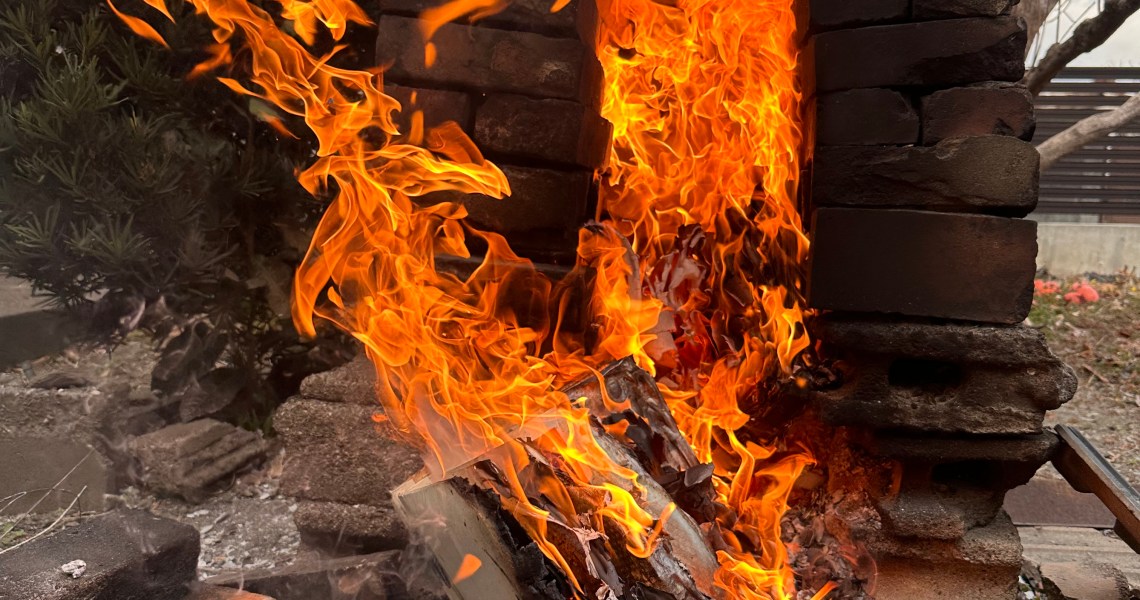
The third case was my aunt, who passed away at the age of one hundred. I was the executor of her will and had to empty her house before we could sell it. I never imagined she was a hoarder. Her home was always neat and beautifully decorated. I began by burning her photo albums simply because I couldn’t bear the thought of her personal photographs ending up in a garbage dump.

Then I realized she had been a major hoarder.

There were thousands of photographs of her. Everything was about her. It was as if she were the center of every party she attended, every trip she took, every occasion she was part of. Thousands of photographs documented the life she presented to the outside world.

Like my father, she kept everything. I found old tickets, postcards, and little souvenirs from her extensive travels tucked away in drawers. I kept feeding them into the fire.

Then I moved on to the closets. They were meticulously organized, filled with hundreds of boxes, most of them carefully labeled in her own handwriting. Inside were the leftover supplies from every craft she had ever taken up. She was extraordinarily talented and threw herself into one craft after another. For several years she would immerse herself in it, creating beautiful things, and then she would move on to the next one. The remnants of each passion were carefully packed away and preserved. Some of the boxes had remained unopened for decades.

She kept everything.

She built an armor out of her creations and achievements.

I don’t know who she was. It was as if someone had cut the figure out of a photograph. The background remained perfectly intact, but where she should have been, there was only a blank white space.

We digest food. We also digest life’s experiences—if they are fully lived, they become part of us. If they are not, they remain outside us as unfinished business. Sometimes they become objects we cannot throw away.

Now I look around my apartment and ask myself what I can let go of. I don’t need mementos of my life once I’ve metabolized it.

The One Who Stayed in the Garden

There were three girls, Nana, Kiki, and Zuzu, living together in a small house with a large backyard. Nana was the smart one. Kiki was the pretty one and Zuzu was the dumb one.

Every day Nana went to school with books and pencils and erasers and rulers neatly packed in her backpack. Nana loved to visit the computer room, where she could sit by herself and punch in numbers and formulae. Kiki also went to school, but she didn’t read books. She liked to chat and hang out with friends.

Zuzu always stayed home and played by herself in the large backyard. Zuzu couldn’t read. Zuzu couldn’t write. Zuzu couldn’t talk. She buried things in the backyard, things that had once been alive. She buried things from Mama’s kitchen: carrots, turnips, shells, chicken bones, eggs, fish bones, ox tails, potato peels, grapes, seeds of fruits. She buried things from their living room: goldfish, plants, birds, when they stopped moving. She did not bury Kiki’s socks or her ribbons. She did not bury Nana’s books or papers. So nobody minded what she buried in the backyard. No one asked why she chose the things she did.

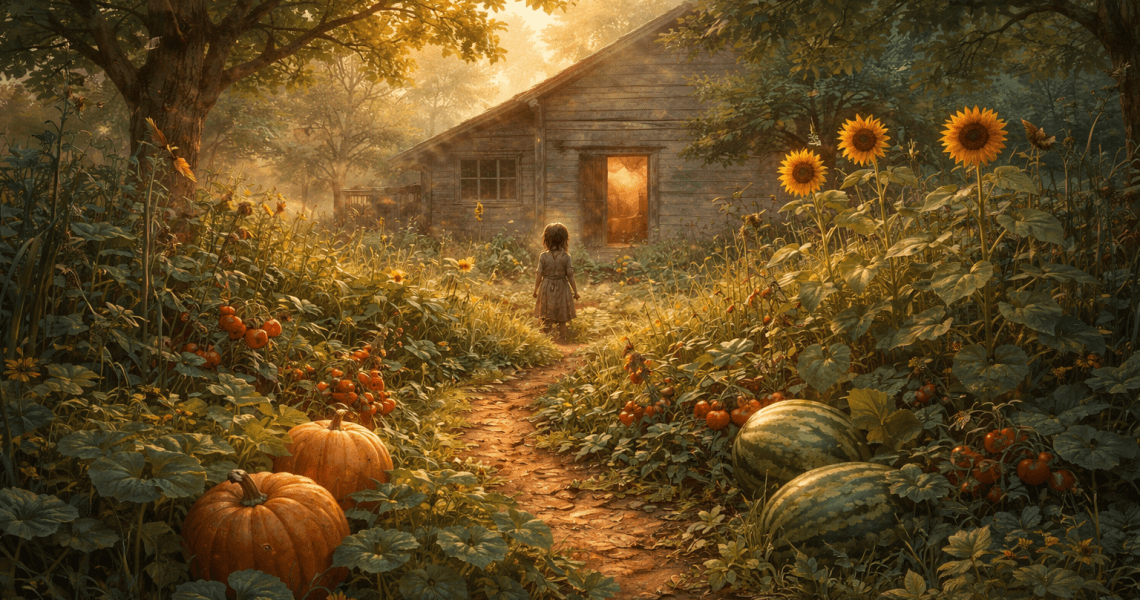
In spring many plants broke ground in the backyard. In summer it got crazy. Next to pumpkin vines crawling on the ground, sunflowers stood high above. Papaya and avocado turned the garden into a tropical island and died away when the first autumn wind touched the frail leaves. Baby trees were everywhere. Flowers had no sense of order. You could bump into huge watermelons with cute green stripes. Grasshoppers were jumping around and ants were marching from one place to another. Mama never bought any herbs from the store. She just had to step outside into Zuzu’s garden. Things came back in other forms. And they grew and grew like kudzu in the South. The girls ate watermelons for lunch. Mama baked pumpkin pies. Grape vines crawled up a pine tree. Everything was sweet and rich and nobody cared why. Spiders and caterpillars, which Nana did not like, were everywhere. When something stopped growing, Zuzu buried it in the garden.

One day, Zuzu buried Kiki’s white rabbit fur coat. Zuzu never buried Nana’s stuffed animals. Zuzu never buried Kiki’s dolls. Mama had to tell her not to bury fur coats. But nobody knew if she understood or not.

Nana went to the upper school. Kiki ceased to go to school. All day long Nana wrote and read and calculated. All day long Kiki chatted and chatted. All day long Zuzu stayed in her garden. At night, they ate supper together with Mama.

A peach tree Zuzu had planted long ago became very big. Birds came to the tree and made a nest. Mama bird laid eggs and the eggs became small, tiny baby birds. One day Kiki found a dead baby bird on the ground. There was no storm, no rain, no wicked bird. The baby had just dropped. Zuzu buried the dead bird near the sunflowers as usual.

Grandmother got sick and Mama left to see her. The three girls stayed home by themselves. Kiki got sick and moaned and cried. Nana was worried. Zuzu didn’t say anything. In the morning Kiki had a baby, and it was dead, with blood all over its tiny body. There was no storm, no tornado. Just warm white sunlight shining through the leaves in the garden.

Nana gave the dead baby to Zuzu. She buried it next to the kitten that had died three years ago. Then they forgot about the baby. Zuzu did not forget.

Nana left home to go to college. Kiki left home to be a movie star. Zuzu stayed home with Mama.

Nana earned a lot of degrees and went to work in the big city. She had lots of money in the bank. She invested her money everywhere. She traded bonds and stocks, and bought and sold real estate. Mama did not understand what Nana was talking about, so Nana stopped talking to Mama. Nana got married to a rich man with a boring tie and had three girls. One day she killed them all with a butcher knife. They were buried somewhere. Since Nana was rich and could hire a famous lawyer, they had her sent to a hospital. After a couple of years Nana came back to Mama’s house. She did not read or write anymore. She died without saying a word to anybody. Zuzu buried her in the backyard, next to the kitten.

Kiki earned a lot of admirers and bought jewelry, fur coats, dresses, and cars. She won a trip to Europe. She made a lot of friends there. She went to parties with her jewelry and her admirers. Kiki got married three or four times and had babies, all of which were stillborn. They were buried somewhere. After her last husband left for a young girl who looked like Kiki when she was pretty in white, Kiki got sick and came back to Mama’s house with jewelry and fur coats and dresses and cars, but without health insurance. Kiki did not look pretty anymore. Kiki did not chat anymore. She lay in her room and got sicker and sicker, and one day died without saying a word. Zuzu buried Kiki in the backyard next to the baby.

Mama was very sad. She could not eat any of the things that grew in the backyard. Mama said, “I lost the smart one, then I lost the pretty one.” Zuzu turned to Mama and opened her mouth and said, “Take it easy, Mama. I survived.”

Then Mama realized that she had never had triplets, but only one daughter.

Zuzu and Mama lived together, and the garden kept growing. Mama began to recognize what had been there all along.

Author’s note

This story comes from a time when my inner world lived in fragments. The figures are not separate people, but parts of a psyche shaped by survival. Zuzu, in her own way, held what could still grow.

On Father’s Day

My mom called and told me to come home to see my father. I was in my twenties, living by myself in a big city. My father was hospitalized and scheduled for surgery.

It was surgery for suspected lung cancer, and my mom, who was a nurse, expected him to die soon.

“Don’t tell him. Just pretend you’re home for the holiday.”

At that time, in my home country, it was common not to tell patients they had cancer, especially if it might be terminal.

I didn’t feel sadness, anxiety, or any of the emotions considered appropriate in such a situation.

“OK,” I said, and I went home to see him in his hospital bed.

It turned out that the tumor was benign. He lost one-third of his left lung, but he would live.

My mom spent most of the day with him at the hospital. When I came home, she wanted a break and asked me to stay with him for a couple of hours. He didn’t need twenty-four-hour nursing care, and I was not the nurturing type. Still, I stayed with him to give my mom a break.

Every thirty minutes or so, he would ask, “Is Mom back yet?”

This guy is like a kid, I thought.

We didn’t have any emotional connection. I had never felt loved by him. Actually, I didn’t know what being loved felt like. I had never felt seen by him. I didn’t love him. I didn’t even care about him.

I was told to play a role, so I played it.

While we were alone in the hospital room, he said, probably more to himself than to me, “This time I thought I was gonna die.”

He had Type 2 diabetes and often had health scares. His father died from diabetes when he was very young. His older sister died, leaving behind a young son whom he helped raise. Then, when his wife was pregnant with a boy, he himself was diagnosed with diabetes.

He was afraid to die.

His entire life seemed devoted to avoiding the fate he believed awaited him.

That was the first time I saw him—not as a father, but as a frightened man facing his own mortality.

The second and last time I felt an emotional connection with him came much later.

He was in his eighties and had Alzheimer’s disease, along with complications from diabetes. Whenever I visited my mother, I went to see him in the nursing home every day, sometimes twice a day.

He no longer recognized me as his daughter.

I was simply a nice lady who visited him and gave him massages.

Oddly enough, that made it much easier for me to be with him.

He was just a frail old man.

One day, I sat beside him and told him about the dog I had recently lost.

Suddenly, he said, “Don’t tell that story. It makes me so sad…”

I saw him.

He loved dogs.

He had never expressed his feelings openly, but he was the only person in my family who truly took care of our dogs. When a dog died, the rest of us moved on without much sentiment, but he was the one who mourned.

OK.

At least we had something in common.

I didn’t visit him because I cared about him or because I loved him. I visited him and took care of him because it was the role I was expected to play: the good, caring daughter who flew all the way from the United States to see her father and visited him every day.

A loving daughter for a loving father.

I didn’t feel any love.

I didn’t know what love felt like.

After I returned to the United States, my mom called one day to tell me that he was dying.

It was clear that I wouldn’t make it back in time, and I didn’t care.

What was the point?

We had never had an emotional connection.

He died in the nursing home after my mother went home to rest.

I flew back for his funeral.

I didn’t feel grief.

I felt relief.

Finally, he was gone.

I was free.

I don’t feel guilty for not loving him.

If I don’t know what being loved feels like, how could I have loved him?

I still don’t feel love toward him, but I have learned compassion.

He did the best he could.

He simply didn’t have the emotional capacity to be present with me.

©2026 JU

Tear of Hannya: The Fire that Became the Sea


Hannya’s Tear

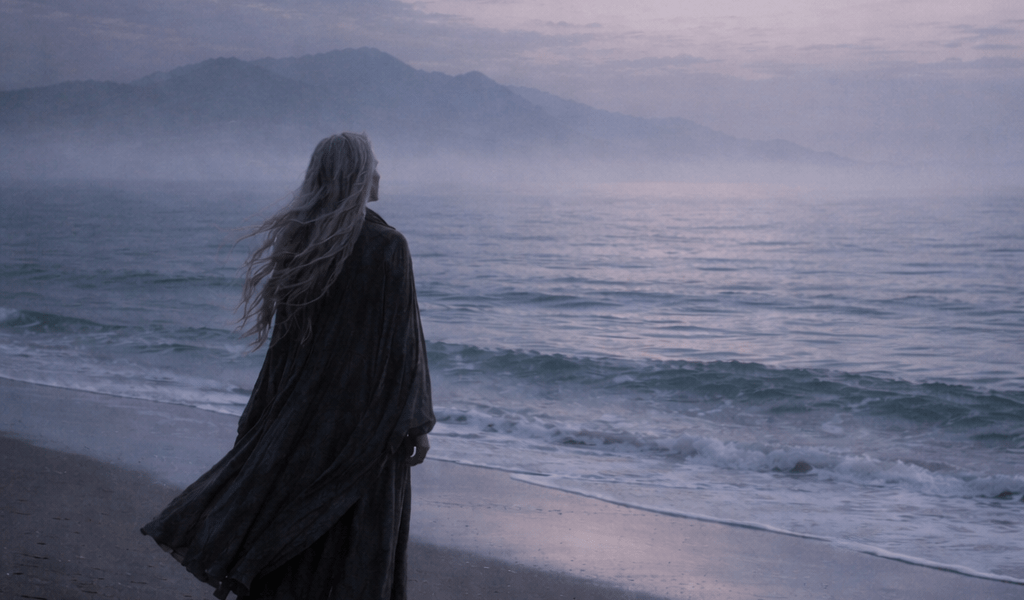
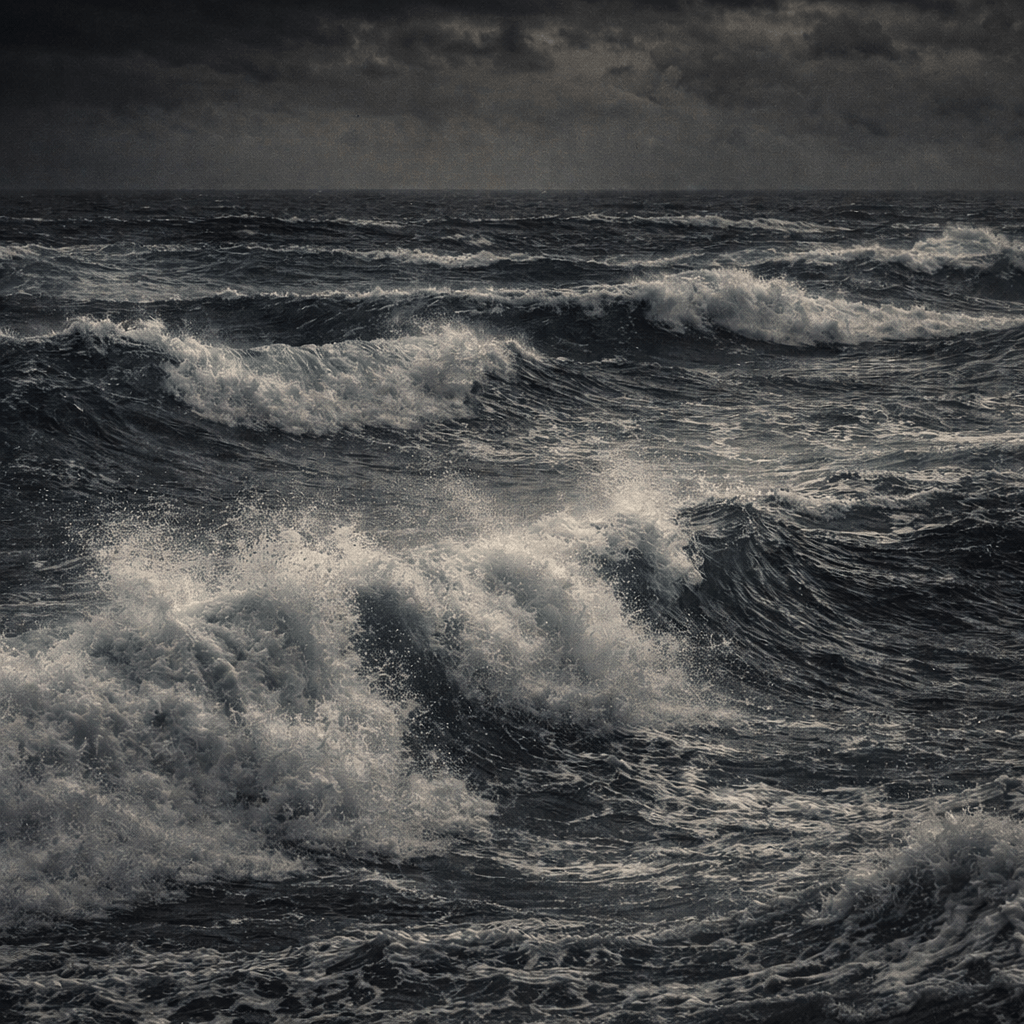
An old woman stood on a desolate beach, staring out at the sea. The ocean wind blew through her long gray hair. The hour was neither night nor day, neither dusk nor dawn. The sea was calm. Beyond it, the blue-gray shadow of distant land floated on the horizon.

She had come a long way. So long that it could not belong to a single lifetime. She had walked through several lives to finally arrive at this distant sea.

I am tired.
So tired.
I want to die.

The wind moves through my hair—hair that was once so angry it flamed upward and burned the sky.

Blazing visceral anger burned my entrails like an ungutted fish thrown into a fire. It charred me from the inside out. Now my heart has lost the heat of burning coal and left me with ash-gray hair.

Every step I took was across shards of tile and gravel.

Every Breath I drew was studded with broken glass.

Where did I come from? I no longer remember. It was too long ago.

All the way here I slashed, stabbed and sliced. Blood gushed and sprayed over me—on my face, my neck, my arms. It burned my skin and hardened it into rusted iron.

I hid in dark places for days and nights, wounded and motionless while the shadows of enemies passed by. I was always watching, always alert. And when I slept, I dreamed of blood and dismemberment, waking to the smell of burning flesh.

That was the only way I knew.

It was my way.

In my hand I see a sword darkened with dried blood.
I have become the thing I feared.
An Oni who only knows how to fight.

And now I find myself standing alone on this beach. No more bodies to leave behind me. Where is my fire? Where is my anger.

It is gone.

There is no enemy left to kill.

What did I do to deserve lives of perpetual fighting? I have survived, and there is no one left to kill. And I am standing here alone.

I am tired.

I want to die.

I want to end this for good. No more fighting. No more bloodshed. No more hiding. I want to dissolve into total oblivion. No more memories. No more me.

Then what is holding me here on this silent beach?

The waves come and go, come and go, through thousands of nights and days.

Let me dissolve into that place where sea and sky are indistinguishable. That is the only way I can stop fighting.

Please do not make me turn into an Oni again.

“Who is it?”

The Oni suddenly turned.

For a moment her hair flared upward. Her muscles tightened. Her eyes widened. Her hand gripped the sword, ready to kill.

Then she saw a little girl.

The girl slowly stepped out from the woods and walked toward the Oni. With every stride she grew older—her hair longer, her legs stronger, her eyes wiser.

The Oni remembered the girl.

Three or four lifetimes ago she had begun fighting for the child, to protect a helpless, vulnerable little girl.

Then she forgot the child.

And after that, she forgot what she had been fighting for—or against.

She fought simply for the sake of fighting.

That was when she became an Oni.

And now look—the child has grown into a woman, soft as she wishes to be, supple as she needs to be. She is smiling.

And look—she beans not even a scratch.

The Oni felt her anger flare again.

I was the one who fought all the way here.

Where were you when I lay in a ditch, holding my breath in the darkest hour of the night?

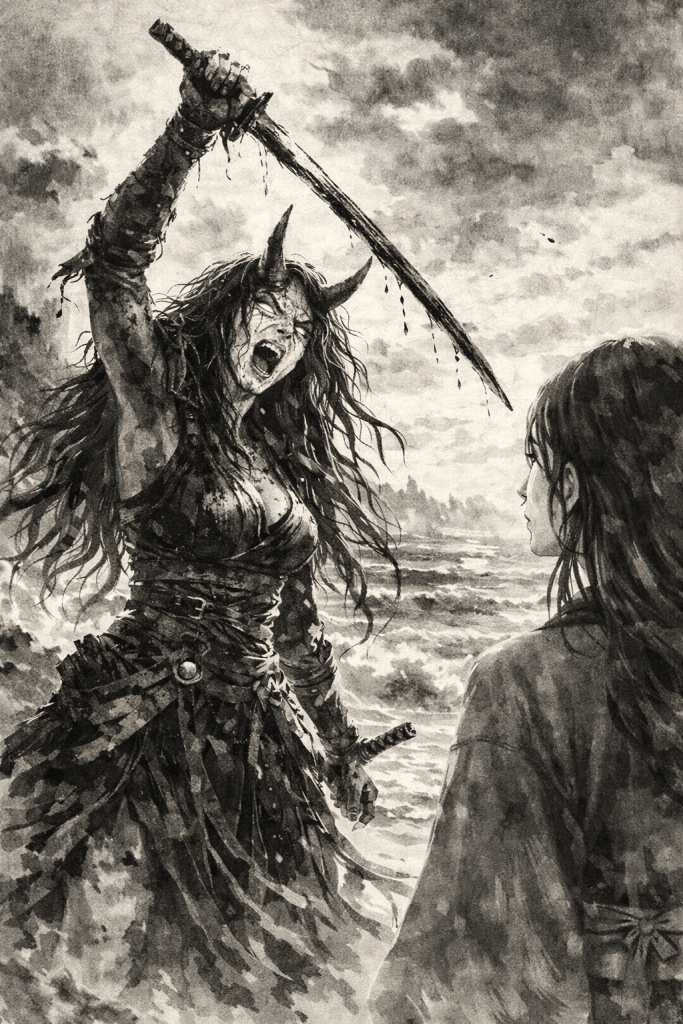
The Oni faced the woman and raised her sword high.

She was about to strike when the woman said quietly,

“I am your way.”

The sword shattered in the Oni’s hands.

And in the woman’s hand a sword appeared—clean as the first beam of morning sunlight falling across a hill heavy with dew.

She thrust it through the Oni.

Sweet breath flowed through her like sunlight streaming through leaves.

The Oni shed a single tear.

With that tear she dissolved into her,

becoming the sea and the wind—

where she is no more and dreams no dreams.

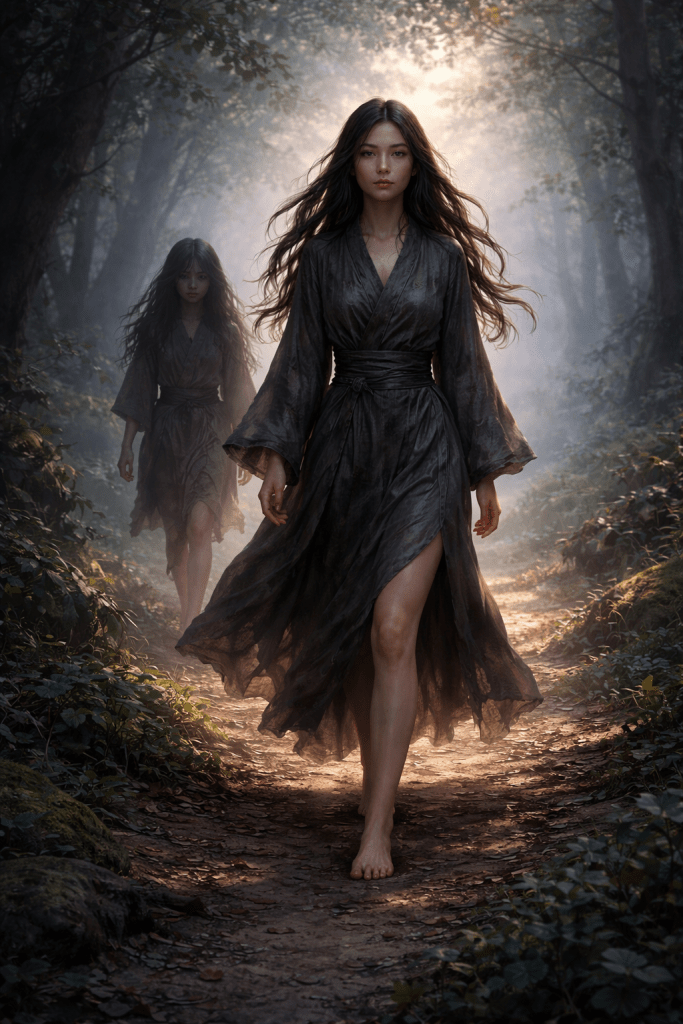
Images are AI created.

©J.U. 2004

Home

When Michelle’s sister, Norma, was diagnosed with cancer, she called their mom to tell her the news. Norma is strong-willed—not the type to break down easily. Her mom just listened quietly, nodding along. Then, at the end of the conversation, she simply said,
“You may come home if you want.”

And that’s when Norma broke down, sobbing.

“Wow. That was the perfect response,” I said to Michelle. “Your mom is really good.”
She didn’t try to fix anything. She just held space for Norma, offered her a safe place, and gave her a choice.

This would never happen in my family.

From what I’ve heard over the years, Michelle’s family runs on love. We’ve been friends for decades, and in the beginning, we didn’t really understand each other’s “normal.”
But as we’ve continued to exchange stories about our families, the contrast has only become clearer—how we think, how we move through the world, how we relate to others, and ultimately, who we are.

For Michelle, every relationship begins with love.
For me, every relationship begins with a transaction.

What would my mother say if I were in Norma’s shoes?
She’d say, “Come home.”
But not because I’d be welcome if I wanted to come home. It would mean I should come home—whether I wanted to or not—so she could step into the role of the devoted caretaker. My mom was a nurse, after all. She would turn the story into hers. She always does.
She dictates the narrative of my life.

And I would say, “No.”
Because for me, “home” isn’t a safe place.
The only safe place I know is the one I’ve made for myself, where I live alone.
The only safe relationship I have is with my dog—whose love comes without conditions.

We all carry different meanings for the same words.
What “home” means depends on who you ask.
So does “love.”
So does “safe.”

Three Way Mirror Vanity

I had three mothers.

There’s a photo of them together, sitting in a living room. Every time I look at it, I think of the witches—not the ones from Hocus Pocus, but the ones from Macbeth. Together, they conjured me: a daughter with a fragmented identity.

When we are young, we come to understand ourselves through interaction with our parents. We need to feel loved and accepted—especially by our mothers. Our survival depends on them. They become the foundation of who we are.

In my early childhood, my parents, grandmother, and aunt all lived under the same roof. My real mother was a nurse and gone during the day. My grandmother took care of me. She was a woman of few words, rarely expressive. She fed me, probably changed my diapers, and otherwise left me to my own devices. I was a free-range kid. She was always busy—tending to our small rice paddies, vegetable garden, and housework.

I followed her around, watching her do everything by hand or with simple tools. I saw her harvest soybeans, shell them, sort them, boil and mash them, and finally turn them into homemade miso paste. Everything was made from scratch. That’s just how small farmers lived.

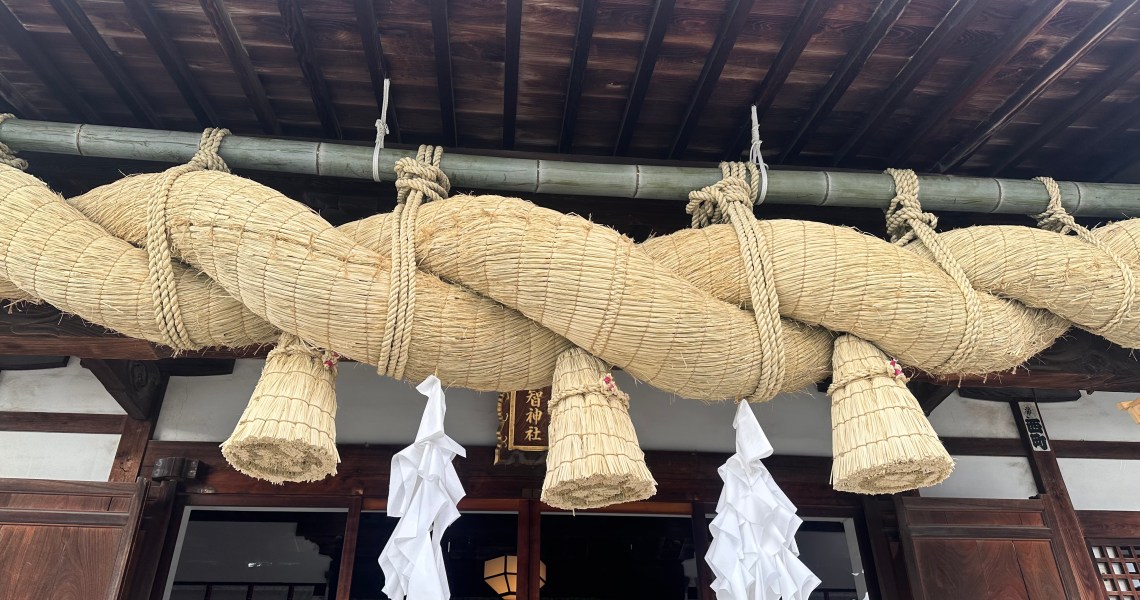
She also took me on her regular visits—to the neighborhood Shinto shrine, and to my grandfather’s grave. From her, I learned ritual manners. She was more superstitious than religious. To this day, I still visit that same shrine when I go home. It’s deeply rooted in me. As long as I physically survived and followed her instructions, I was allowed to exist.

Sometimes, when my mother worked night shifts, my grandmother “let her rest” by handing me off to my single, childless aunt. I often slept beside her. Only much later—nearly half a century on—I learned that my aunt had once had a child out of wedlock, a daughter she gave up for adoption.

To her, I was a baby doll. She adored me and constantly told me I was cute. Whatever I did, I was “cute” to her. Naturally, I loved her. Looking back, I see now that I was her emotional support animal. A doll she could pour her love into. I was a blank screen, an empty vessel for her to project her longing and affection onto. As long as I accepted her version of “love,” I had a place in her world.

My actual mother? She’s almost completely absent from my childhood memories—except when I was sick. As a nurse, she took care of my body when it broke down. But emotionally, there was no connection. With her, I felt like a utility animal—fed and maintained for function, not love.

Her “love” was always conditional. I was a “good enough” daughter only when I served some purpose for her. Most of the time, that purpose was to be strong-willed, fearless, and short-tempered—a stand-in, a surrogate warrior she used to push back against her verbally and psychologically abusive husband. I was her avatar, not her child.

As I grew up, I developed three distinct clusters of identity traits—not like someone with dissociative identity disorder, but more like someone sitting in front of a three-way mirror vanity, where each angled mirror is distorted and reflects a different version of her. And those warped reflections bounce back and forth endlessly, deepening the distortion.

It was deeply confusing, to say the least.

It took me decades—more than half a lifetime—to even begin to feel the original me. I spent so many hours trying to reconcile those mirrored fragments. Now, I no longer need the mirror.

As for my father—he hated that I was a girl. The only time he acknowledged me as his child was when I got good grades. Otherwise, I was worthless.

Mother

After all, my choice was right,” my mother said, and I froze.

Since I was a little girl, she had made up her mind that I was destined to become a physician. She brainwashed me into believing it was my fate. Never mind that I loved reading and writing, hated math and science, and had terrible hand-eye coordination—she was convinced I was meant to be a doctor.

She had her reasons. My mother grew up poor and spent her early teenage years as a live-in nanny at her eldest brother’s house. He had been adopted out so he could get a better education and eventually became a physician. His wife was cruel and didn’t allow my mother to enroll in high school. But my mother, determined and stubborn, secretly applied to a nursing program and moved into a dormitory.

She became a nurse and later married—not to a doctor, but to an average city employee. So she shifted her dreams onto her children. She was going to be the proud mother of doctors. She believed this would elevate her status, allow her to join the elite “doctor’s family” club.

I never particularly wanted to become a physician, but I applied to a local medical school anyway. Thankfully, I wasn’t accepted. I could’ve tried again the next year, but by then, her focus had shifted to her new project: creating a physician son. She told me I was a bad influence on my younger brother and decided to “let me go.”

I had also applied to a liberal arts college in Tokyo, partly as an act of rebellion—and got in. She never asked what I wanted. She just decided I should go.

That was the “choice” she was referring to.

After college, I entered grad school and nearly earned a Ph.D. (Doctor!), but in my final year, I went to the U.S. to research my dissertation. There, I met an artist, fell in love, and got married. I stayed. Whatever plans she had for me, I repeatedly chose another path. At every fork in the road, she tried to map out my life, and I took the opposite turn.

She adapted. She became the mother of a daughter who lived in New York City. Her in-laws included a famous artist in Kyoto. She was no longer a poor country girl—she had graduated into the “cultured class.” She seemed to enjoy her new identity.

Meanwhile, my brother did become a surgeon, just as she’d dreamed. She didn’t need a physician daughter anymore.

Then I got divorced, and she lost that identity too. She wanted me to go back to my cheating husband.

For a time, she was the mother of a daughter who lived and worked in New York. She had no idea what I actually did for a living—a low-paid office secretary—but the title sounded impressive enough.

Since my father passed away about ten years ago, I’ve taken care of her, even from afar. I visit once or twice a year. I send gourmet meals every month. Compared to some of her friends, she realized she was lucky. She finally saw that it was possible because I didn’t have a demanding medical career or a family of my own to care for. And she said—without irony—that she was glad I was divorced.

And then, she said it again:
“After all, my choice was right.”

She took credit for all of my choices—every one I made against her wishes.

That’s my mother. I can’t recall a single time she ever asked me how I felt.

Ding Dong, the Witch is Dead

I got a call from my 92-year-old mother. She had just been informed by the nursing home that my 100-year-old aunt passed away in her sleep—her heart had stopped.

I had visited her just a month ago and sat with her, talking. She had stopped responding a long time ago, but her heart kept beating with the help of a pacemaker. She swallowed whatever mushy food her caregiver spooned into her mouth and wore diapers.

This is not how I want to spend the last years of my life.

I loved her when I was a child. She lived next door to my parents, and she spoiled me with sweets, cute dresses, dolls, and stuffed animals—whatever I wanted, she bought for me. Every day, I waited eagerly for her to come home and ran to give her a hug. Sometimes, her breath smelled of alcohol.

My father was emotionally abusive, and my mother was emotionally unavailable. In many ways, it was my single, childless, career-oriented aunt who “adopted” me. She even wanted to adopt me legally at one point, but my parents—outraged—refused. There was no reason for them to give me up; we weren’t poor. I suppose it was her desire to have a daughter of her own.

I used to say I wanted to be just like her. She was my role model: fashionable, independent, capable of doing anything perfectly. She was the first woman in the region to be promoted to regional manager at the national telephone company. She was also incredibly skilled with her hands—especially knitting and crocheting. I had so many beautiful sweaters she made, and people often complimented them.

I, on the other hand, am not crafty at all. I tried, but I could never do anything as well as she could. I’d get frustrated, give up, and she would finish my projects for me. I still sometimes try, but I almost always give up.

She kept her home neat and beautiful, always with fresh flowers from her garden. She adorned the house with lovely things. Though she didn’t cook elaborate meals, she arranged simple dishes with such care that they looked more appealing than my mother’s “here’s your food, eat” style.

I admired her and, as a little girl, I dreamed of being like her—working, unmarried, and childless. That was an unusual dream at the time, when most girls wanted to be brides in white gowns. My parents didn’t respond to my dream at all. They just ignored it.

Life didn’t turn out quite the way I envisioned. I moved to the U.S., got married, worked as an ordinary office assistant, got divorced, lost my job, became an independent contractor, and remained childless. Still, I returned to Japan once a year to visit my parents and my aunt.

Even as a child, I sensed something was off in my family. There was a ghost in the closet—a family secret. Children can feel these things. Even if it’s never spoken, it changes the air.

The closet opened after my father—my aunt’s younger brother—passed away at age 87. My mother began to talk.

It was the scandal everyone in the small town knew. My aunt had an affair with her married boss and got pregnant. At the time, having a child out of wedlock was a deep shame for a respectable family. But she refused to have an abortion. Her lover’s wife was infertile, and my aunt may have believed that having a child would lead him to divorce and marry her.

Instead, he and his wife adopted the baby girl. He secretly allowed my aunt to visit the child, pretending she was just a family friend. But my aunt, lacking boundaries, acted like a mother. As the child grew older and started asking questions, the visits ended. The wife eventually died, but the man never remarried. The girl grew up not knowing she was adopted until her teenage years.

Then I was born into the family. At the time, my parents lived with my grandmother and my aunt. In a sense, my grandmother gave me to my aunt as a substitute. I don’t remember my mother’s touch. I was always with my aunt. Four years later, my brother was born, and this time my mother clung tightly to him. He was always wrapped around her like a baby monkey.

Once the secret came out, the meaning of so many things shifted. When I used to say I wanted to be like my aunt, I meant I wanted to be an independent woman. But my parents may have heard something else—that I admired her for having an affair and bearing a child out of wedlock, bringing shame to the family. My father resented having a daughter—specifically me being a daughter. From him, I absorbed the belief that all men were predators, and I had to fend them off with claws and fangs.

My aunt loved me like a daughter until she lost her mind. Even in my fifties, she’d try to brush my hair and spoon-feed me. She never truly saw me for who I was—only the daughter she lost. I was her living doll.

After my father died, my aunt’s physical and mental health declined. No one in the family wanted to take care of her, and I was the only one who didn’t hate her. So, by default, I became the one responsible.

She lived in her own home for nearly ten years, with various caregivers as her condition worsened. Eventually, she needed 24-hour care.

That’s when her true nature came out. She was highly narcissistic and very demanding. She wanted everyone around her to serve her in exactly the way she expected. She went through so many caregivers. She never forgot who had crossed her.

“Everyone who spoke ill of me died of cancer,” she once said, as if she’d cursed them.

Yes, she cursed me with her projection. She cast me in a role she needed someone to play—and I played it well. I understand she had a hard life, and she endured it the only way she knew how: by casting her pain outward, cursing everyone around her.

After the phone call, I said to myself, “Ding dong, the witch is dead.”

At least I’ve chosen not to curse anyone. That is my freedom.

Split

I watched Split and Glass on Netflix, where a fictional character with Dissociative Identity Disorder (DID) develops a personality with superhuman strength. James McAvoy was phenomenal, shifting seamlessly from one persona to another on screen. The story is a textbook case of severe childhood trauma: the psyche fractures to protect the vulnerable self. One of his identities, “The Beast,” punishes the undamaged—those who haven’t suffered.
[Spoiler Alert] The Beast sees the damaged as pure.

That’s what drew me in.

I have a friend with DID. Sarah is brilliant, cultured, well-read, and funny. She took many younger, “damaged” women under her wing. She was the one who introduced me to Broadway, gifting me tickets to Sondheim. We’d sit in cafes, visit restaurants, and talk about arthouse films and everything else. Her life sounded like a novel. She told me she was one of the first female TV producers—or something close. I’m not sure if Sarah is the original. I met two of her other selves: Tommy, a boy who constantly said, “Sorry,” and another, terrifying one—probably her internalized mother.

The switches weren’t as clean as in the movies. She once said she had a “Flat Earth Committee” in her head, which decided what she could or couldn’t do. That committee often said she wasn’t allowed to leave her apartment.

Before her DID diagnosis, she’d been given a charcuterie board of mental health labels: agoraphobia, depression, anxiety disorder. She’d been prescribed all kinds of medications. None of them helped.

Many friends tried to help her. After all, when she showed up as “Sarah,” she was wonderful. But over time, that became rarer.

I was the last one who tried hard. I had this urge to rescue someone else—maybe instead of rescuing myself. Her disorders were inflated versions of mine, so I could speak her language to a certain extent.

I don’t have DID. I’ve been dissociated, but not to that degree. I had dysthymia and episodes of major depression. Sometimes I wasn’t “allowed” to get out of bed. I had extremely low self-esteem and poor communication skills—unless I was in a professional setting. Then I became articulate, competent, impressive. I still have a voice inside that occasionally whispers, “Jump” or “Kill yourself.”

Over time, I realized that some of Sarah’s other personalities were sabotaging anything that might make her better. Whenever she admitted to feeling improvement, they lashed back—as if healing would erase them. As if their survival depended on her staying damaged. Ironically, their original role had been to protect her.

They exhausted me, as they had exhausted many before me.

I haven’t seen Sarah in years. She reaches out once in a blue moon—only in moments of desperation. The last time, it wasn’t even her. A mutual friend contacted me because no one had heard from her. Turned out she’d fallen and been hospitalized. She didn’t have her phone in the hospital room, so she couldn’t reach anyone. But she came up with an ingenious solution: she befriended the woman in the next bed and asked her husband to deliver a handwritten note to my building.

That’s Sarah—resourceful and fiercely capable when it matters. She once told me she’d made a deal with the “committee” to keep her alive. One of her friends with DID had died by suicide. Sarah wasn’t going to be one of them.

Eventually, I accepted Sarah as she is. There’s no “original” Sarah waiting to be recovered. She was already many when I met her. I just didn’t know it. She contains multitudes. Every piece of her is my friend. And I’ve let go of the childish fantasy that I could save her—or anyone else.

Everyone splits, to some degree.

There are incidents I don’t remember, but my body seems to. I don’t have a single, monstrous trauma, just layers: a verbally and emotionally—possibly sexually—abusive father; a manipulative, passive-aggressive mother; a narcissistic aunt; a silent, possibly borderline grandmother. Add to that a culture soaked in misogyny, inappropriate touches, and the absence of loving contact—and I was left scarred.

I didn’t split, but I did build personas: a tough bitch and an abrasive man—my internalized father—to protect the vulnerable child inside me.

I’ve spent decades re-parenting that little girl. I wanted her to grow up into who she could have been if she had been loved and left alone: a happy, loving, beautiful girl. A confident, capable woman who could love and be loved.

I didn’t become exactly what I hoped—but I like who I’ve become. I’m happy with this version of myself.

You can’t restore the original child. But you can hold your scars with tenderness. You can carry your pain gently, like something sacred. And in doing so, you become who you were always meant to be:

Clean and pure, with old scars.
Survive. Then thrive.

Giant Anteater

My high school best friend recommended me to watch a Japanese drama series, titled Brush Up Life. It is a story of a young woman, who suddenly died in a freak accident. She arrived at the reception desk of the “upstairs” office. A clerk at the desk told her she was assigned to re-incarnate as a giant anteater. She refused to be reborn as a giant anteater and asked the alternative option. The clerk told her that she could redo her life from the birth with her current knowledge and consciousness. The woman chose to start over and changed her life as she went. To make a long story short, every time she started over, something didn’t work and she died. So she kept going back to the start. Eventually she got the result she wanted (she saved her friends’ life).

My friend asked me if I could start over with current consciousness intact, what would I do. I thought about changing this and that. I would be on SSRI as soon as it’s available–I wasn’t diagnosed until in late 30s and I had developed a basketful of disorders. I would focus on physical fitness –I had eating disorder and was out of shape, a heavy smoker with alcohol dependency. I would move to the U.S. as soon as possible–I moved here in my late 20s and didn’t know my old country’s restrictive culture had traumatized me. I would study harder to get in a medical school –I applied for but wasn’t accepted and instead went to study liberal arts.

Then I realized I would be born into the same family and would have to do it all over again. The heroine of the drama has a “normal enough” and functional enough family. She tries to change things to save others. I can’t change my dysfunctional family. I can’t change how my parents deal with me. I would be born into the same family with all the pain, fear, shame, and anger. No. I would rather be a Giant Anteater. It would be much better.

My friend said she wanted to change one event, which traumatized and defined her life. Her parents moved from a metropolitan area to a rural city due to her father’s job and she was transferred from a private school in a large city to a local public middle school in a pretty tough district, where she was bullied as an outsider. She still can’t get over the trauma. She is now a professor of psychiatry at a local medical school, established and lives in a large house. She is married, has two sons, and they both are well-respected medical doctors. She has grandchildren, who live in the same city. I am freelancing, living in a small apartment with an old dog. I’m divorced with no children. From outside, she seems to have a good enough life. Still, she wanted to change.

I’ve been thinking about starting over, but every time I think of it, I end up choosing a giant anteater. I had a volatile life and I wish I could choose differently here and there, but if I changed any event I wouldn’t be able to be here. Every mistake I made, every bad choice I made, it was a ferry to carry me here and now. I have realized I am very content and happy with who I am now.

I just spend much of my life in constant stormy weather, hanging onto whatever I could to survive. And the deadly wind and current pushed the boats, ferry, or sometimes just a wooden lifesaver to where I am now.

So it’s possible to make peace with your life. I never expected to have this calm ordinary days at the end. (Of course, I spent large sum of money and time on this and that therapy.)