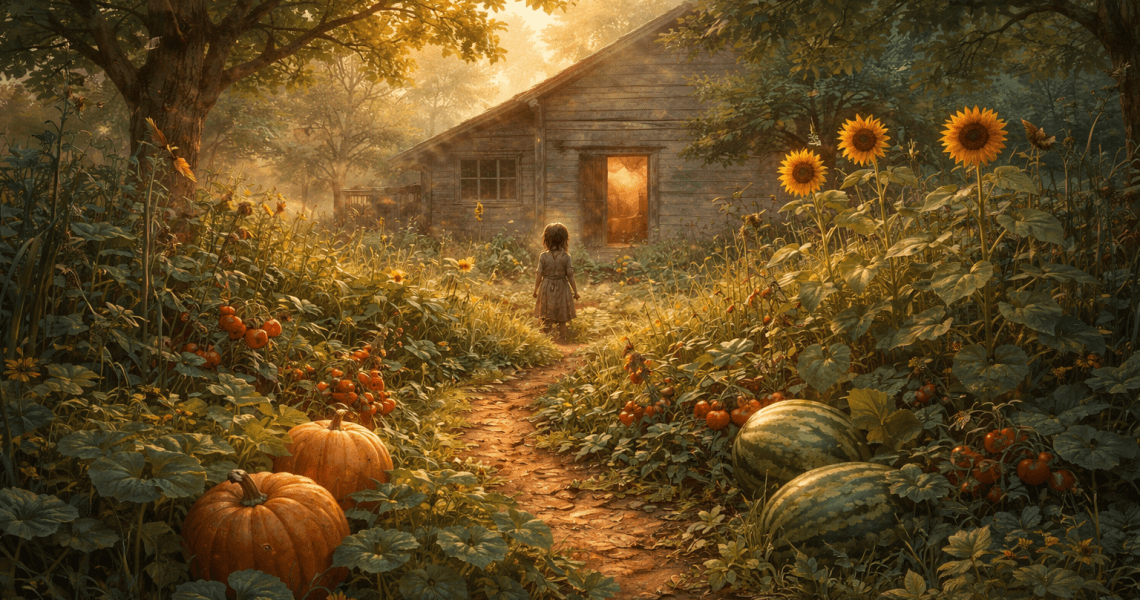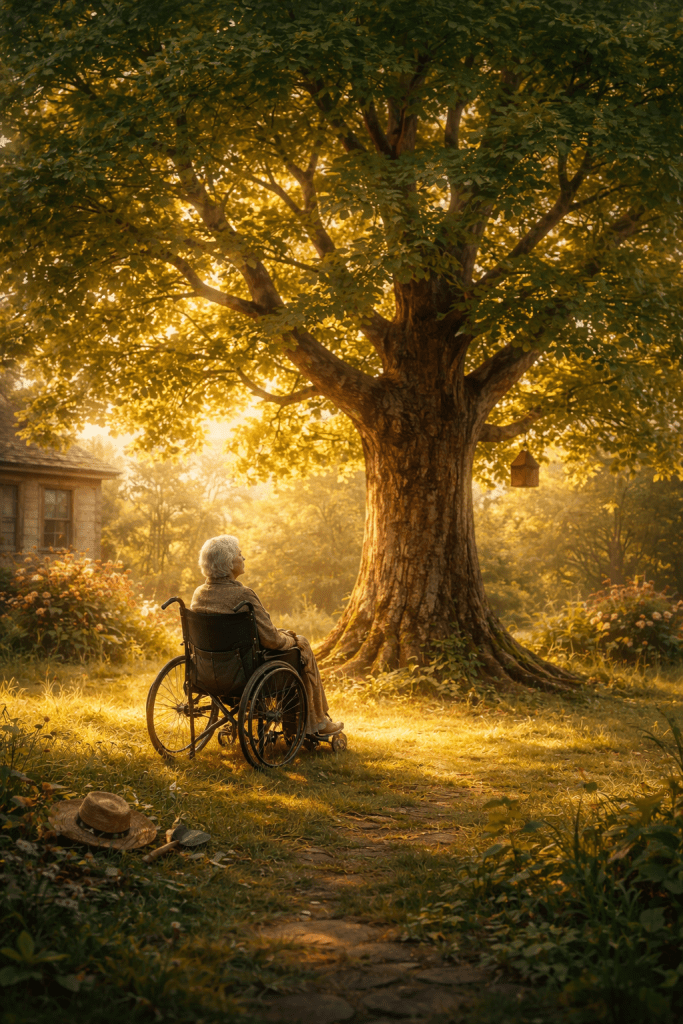
A wayfarer came up to a village on his way to another day. The sun was shining brightly in the very middle of the sky. The field was filled with golden waves. Over rolling hills, cattle and sheep were drowsily munching on soft green pastures. Men and women with their nicely tanned skin, working in the fields tending cattle and picking berries, waved at the wayfarer. Waving back, he walked into the village. The day was bright. Smells of freshly baked bread, noise of running hens, stalks of sunflowers welcomed him.
The wayfarer had passed through many villages. Some were starving, some were sick, and some were fighting. To his tired eyes, this village was a paradise.
A man with strong hands came out to welcome him.
“I travel from the past to another day. Your village can be my today. Would you give me permission to stay for a night? Tomorrow I will be heading for another day,” the wayfarer said.
“Please allow me to have you as our guest, and tell us stories of your world of the past,” said the man of the village. They shook hands. The wayfarer saw something strange fly across the face of the welcoming man, but was not quite sure what it was.
There was something strange about the village. Everything was so bright in the mid-day sun high in the center of the sky, and everything looked flat, as if it were cut out of paper. What the wayfarer did not notice was that nobody cast a shadow here. What the man of the village noticed was the wayfarer’s dark shadow on the ground when he reached his hand out.
The man of the village said to the wayfarer, “Our king lives in a castle on the hill. His majesty loves to hear stories of other countries. He will throw a great feast for you.” Then the man took the wayfarer to the great castle on the hill.
The king himself welcomed the wayfarer. He was old but a strong man with deep tan. He used to be a fearless warrior, somebody whispered into the wayfarer’s ear. The feast started with music and dancers. Roasted ducks, eggs, bread and cheese. Wine flowed from pitchers. Noble men and ladies in the castle ate and drank. Even guards were with goblets filled with wine. The wayfarer started to tell his story of the past.
The king said, “My dear royal guest, tell the Prince, my only son, your story. He has never seen the ocean or the mighty rivers you crossed. He has never known other countries, where other kings, queens, and princesses reside in their castles. He is now in the field riding his favorite horse. He will return soon.”
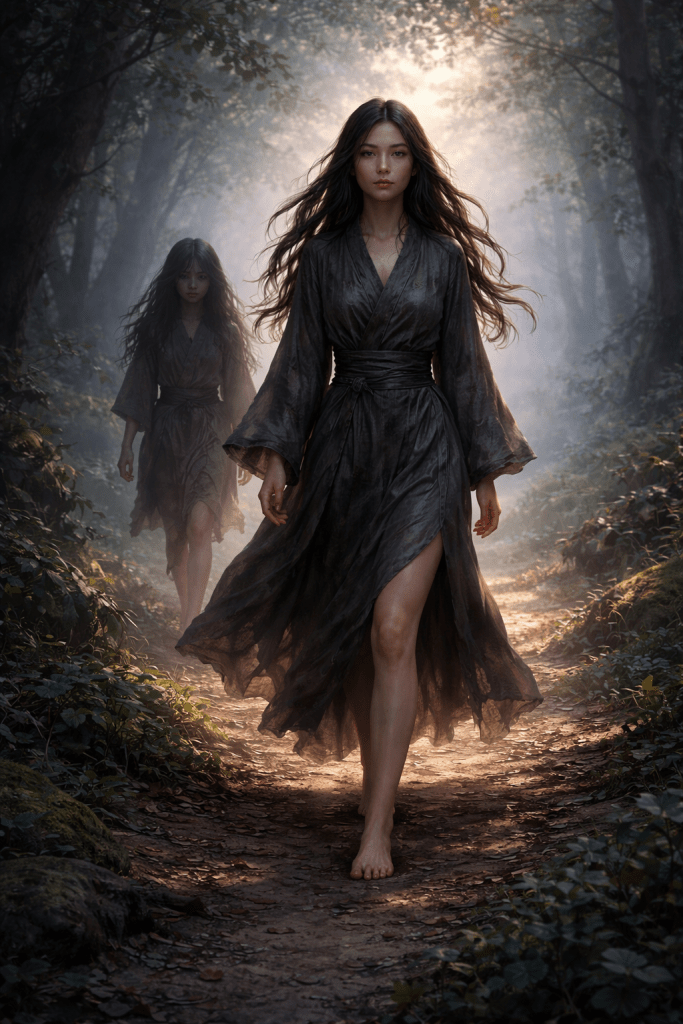
The Prince was a handsome young man. His hair and his eyes were as dark as a forest at night. And he had a shadow. His shadow was so black against the bright white-washed landscape. It was as if somebody cut out darkness itself and pasted it at his feet. When he moved, the dark shadow moved with him.
“Here comes my son. He is my joy and our hope.” The prince dismounted his horse and reached out his hand to the wayfarer. Only the prince looked real among the paper cut-out people.
The wayfarer told stories of dark night in the woods, the mighty river he crossed, great warlords’ castles, white mountains of ice, a frozen river of winter, the sun setting into the ocean, dark caves where dragons and monsters lived. The prince listened to the story with his dark eyes shining.
The feast went on and on. The jar of wine was never left empty. Plates full of food just appeared on the table one after another. Music filled the court of the old king.
“I traveled over hundreds of thousands of miles. I passed through many villages and kingdoms, and I have never seen such a wonderful feast as yours,” the wayfarer said. “Your kingdom must be blessed and filled with golden light like drips of honey on every single crop.”
For an instant people fell silent. Just the music kept on filling the void.
The prince said, “I do not know if I am blessed or not, since this is the only world I know from the beginning of my life. However, a strange feeling sometimes catches me. I miss something, something I have never known.”
The sun was bright and still in the middle of the sky. The wayfarer could not tell how long he had been drinking and eating. The sun never set, and the night never fell. Suddenly, tiredness overcame him. He fell asleep.
When the wayfarer woke up, he found himself in a blinding darkness. His clothes were wet, but he found it cool and pleasant. He heard water running nearby. His eyes started to see dark shapes of trees. It was night—blissfully dark night.
There was no moon, but he could see. The wayfarer wondered where the mysterious light came from. It was a cool blue-green light, which did not convey warmth. It was not the kind of light that came from a single source. Then he realized that some trees were glowing slightly.
This was the strangest forest he had ever seen.
“They thought you were dead,” a man’s voice came from the forest.
The wayfarer jumped and turned toward the voice. A man stood there in a long dark gray robe.
“I did not mean to scare you. I am a priest and serve the high priestess of our order. An owl told me that they sent a dead man up the river. It’s been a while since the last one.”
“Then, this is the country of the dead, isn’t it?” the wayfarer asked.
“No, you are not dead. And if you do not know where you are now, you must be a stranger.”
The wayfarer explained his journey and the strange village.
“They mistook you for dead and sent you to this side of the river to be buried. We bury their dead as well as ours in this forest of night. They did not mean harm. We do not mean harm to you. But I must take you to our high priestess. She has never been out of the woods.”
The wayfarer was curious and decided to follow the priest. Although the priest also seemed to glow slightly, it was not enough to light the way. The priest noticed his companion’s awkward steps and stopped to break a small branch from a nearby tree. He handed it to the wayfarer, and then he cupped his hands at the end of the branch. The slight light started to concentrate. It was a soft cool light, similar to that of fireflies, with a touch of yellow. The light breathed in a slow steady rhythm at the end of the stick.
They walked deep into the woods. The noise of dead leaves and breaking branches under their feet echoed in the darkness. It was an unusual forest. The night was as strange as the day on the other side of the river. “It’s the silence,” the priest murmured. Anybody who has ever spent a night in woods knows that the woods should be more alive at night. But here they hear no cricket sing, no frog croak, or no night crawlers howl. Even leaves of the trees did not rustle.
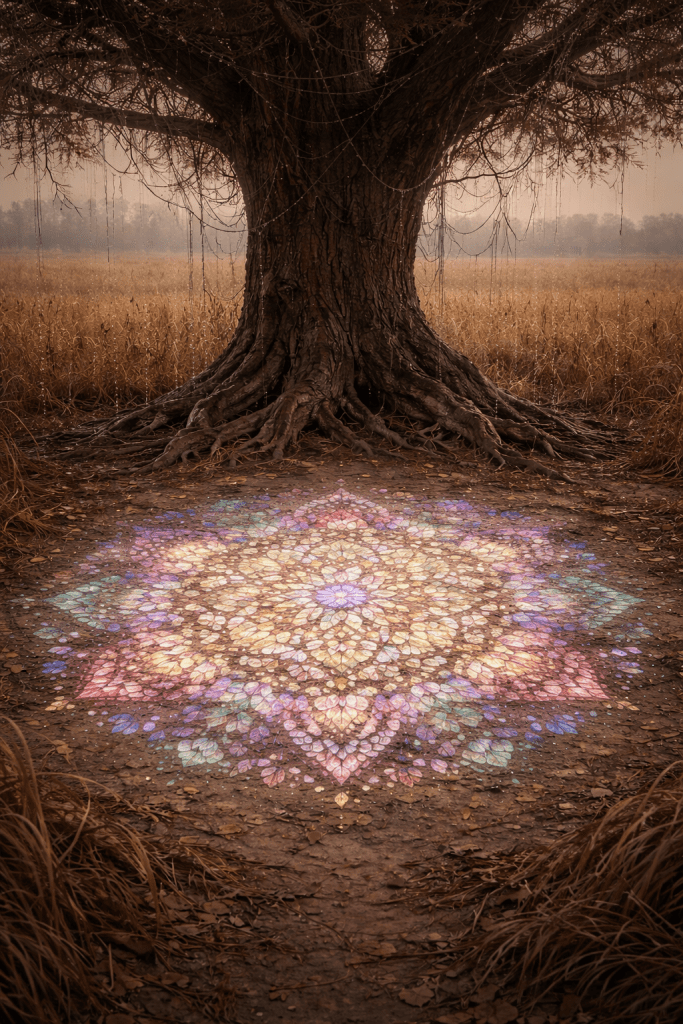
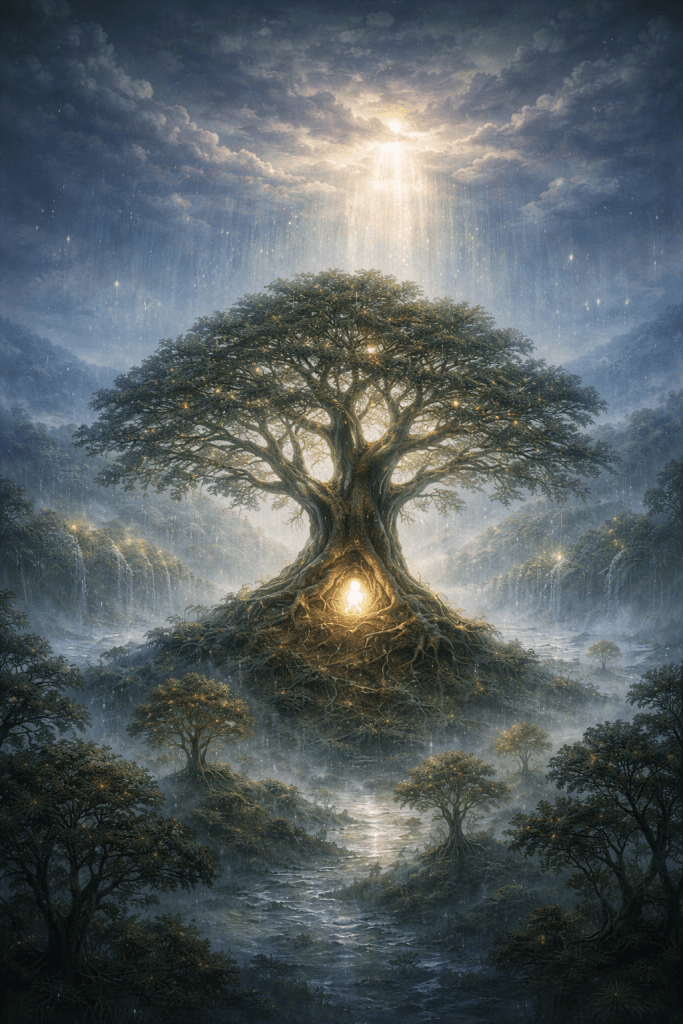
The trail led them into a clearing, where they found a small spring. The water was radiating cool sapphire blue light. The wayfarer was drawn to the spring and he kneeled down on the edge. He put his hands into the water. It was cool like dew that touches your feet when you step into a field early in the summer morning. He scooped up water from the spring. The water was glowing in his hands. Every drop of water dripped from his hands back into the spring was glowing.
“This spring is the sacred place for us,” the priest said. “Our order has guarded this spring since the beginning of the time. Please proceed into our temple.” The wayfarer looked up and found a grotto opening.
He followed the stream of sacred water into the grotto. The cool blue glow of the stream guided him further into. The priest followed behind him in silence. Footsteps echoed softly and the cool moist floor seemed to breathe at the touch of his feet. When it breathed, it glowed.
The wayfarer didn’t know how long he walked in the grotto night. Sometime the path led him up and sometime down. The underground stream disappeared and appeared again.
Then the wayfarer stepped into a clearing in the woods. He found himself where he started. Besides the blue hue of the sacred spring, standing the high priestess as if the full moon just stepped down from the sky.
“The owl told me we had a visitor from the other side,” the priestess spoke in a soft voice. “He came from the place far away,” the priest said. “I found him by the river.” The priestess face lit up. “It has been long time since the last stranger passed by. Tell me about the place you came from.”
The wayfarer told the stories of his long journey from the past: a night in the woods, the mighty river he crossed, great warlords’ castles, white mountains of ice, a frozen river of winter, the sun setting into the ocean, dark caves where dragons and monsters lived. Then he told the story of the strange village of people with no shadows. When he told about the dark eyes of the prince, the priestess’ blue eyes shined.
The night was soft and permanent. Nothing moved in the woods. Then the wayfarer realized the priestess was not there. And there was no moon in the sky. The priest came to sit next to him and started to tell the story of the Night and the Day.
“Before our priestess was born, there was a time we had both nights and days. The villagers were farmers and we were medicine people living in the woods. We crossed the river to go to the market in the village to exchange our fruits, nuts, mushrooms, herb and medicines for their bread and cheese. The villagers came to the sacred spring to receive blessing. Babies, the newly married, the sick, and the dying, every one of the villagers came here sometimes in life to receive blessings. Some moved in the woods and became one of us. Others moved out to the village and became one of them. Our children played together crossing the river back and forth.
There used to be a flock of birds here, nesting in the woods. In the morning they flew out to the field and at night they came back to the woods to rest. One day a king’s man shot at a bird crossing over the river. One bird fell down to the ground and died, and then it turned into gold. The man smelt the gold and made a golden goblet. He poured wine in the goblet and nobody could make the goblet empty. It just kept on filling itself with heavenly wine. Then, another man shot another bird down. It was smelt into a golden plate. Fruits and berries grew on the plate. Eventually, no more sick to come to the spring to pray. Bird by bird, the day got longer. No more babies to come to bathe in the spring. Bird by bird, the night got longer. When the last bird fell from the sky, the day took over the night, and the night the day. In the king’s court, wine flowed endlessly in the goblet. Night fell on our woods and never left. Our people dissipated into the darkness of the night woods.
Now we can’t step out of the darkness, and they can’t step into the darkness.
Only one baby was born in the woods after the last bird failed to come home to nest. Our priestess is the only one who emits light in the woods,” the priest said in a sad voice.
“And only one baby was born in the village after the last bird fell. The prince is the only one who carries shadow in the day,” the wayfarer said. “Yes, you are right,” the priest said. “And we will be separated until the day meets the night…”
Looking at the spring glowing blue, the wayfarer fell asleep. In his dream, he saw sky full of golden birds flying across the river to the woods.
When he woke up, it was night. The priest was nowhere in sight. He was lying under a tree near the spring, with soft moist ground underneath his body. He stood up and started to walk back into the woods, toward the riverbank.
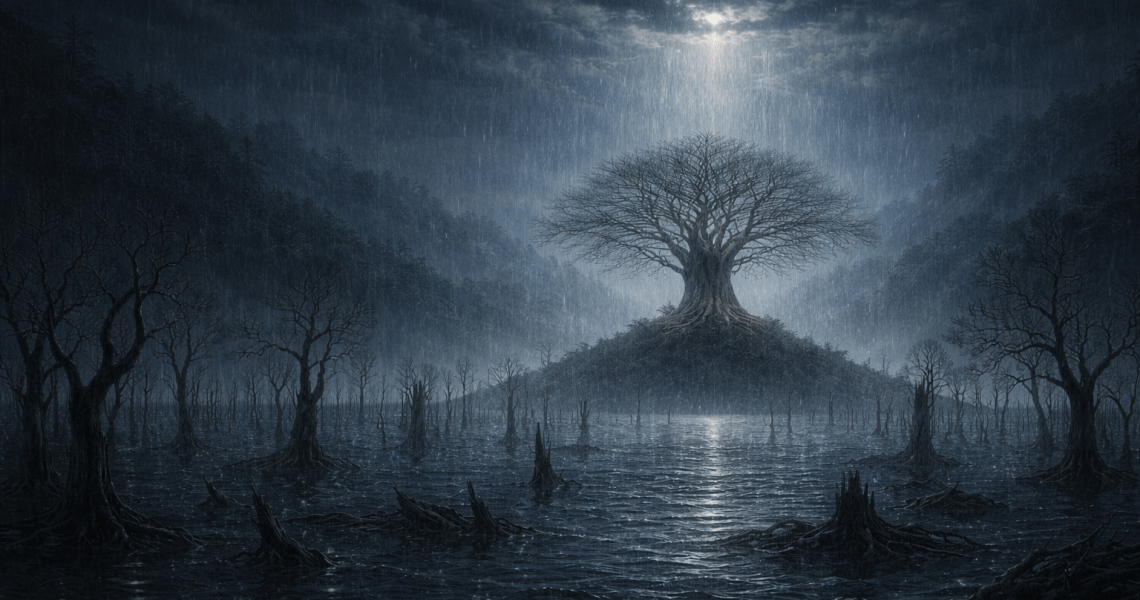
Standing on the cool grass at night, he saw the village in the perpetual high noon across the silvery river. He took a huge breath and dove in the river. The water wrapped him and embraced him in its arms. He dove further down and everything seemed to be arrested. It was quiet as stones. A moment he thought he saw a school of children —or were they some kind of exotic fish?— swimming further upstream.
Then he looked upward and shot up into the glaring sun. It was a fine day on the other side of the river. A villager saw the wayfarer walk out of the river. The man ran to the court to tell the king that the dead man crossed the river back.
The wayfarer went to the court and told the story of the silent night woods and the priestess with silvery hair and sky blue eyes. The king listened to the wayfarer and gave a big sigh.
“Nobody but the dead can cross the river between the night and the day. You are the first one ever who came back from the night. “
The Prince with dark hair was listening in silence, and then said to the wayfarer, “Take me to the river where you came back to life.”
The wayfarer took the prince to the river. On the other side of the river, the dark woods were silent. The prince stood there staring at the woods, with his shadow dark and short on the ground.
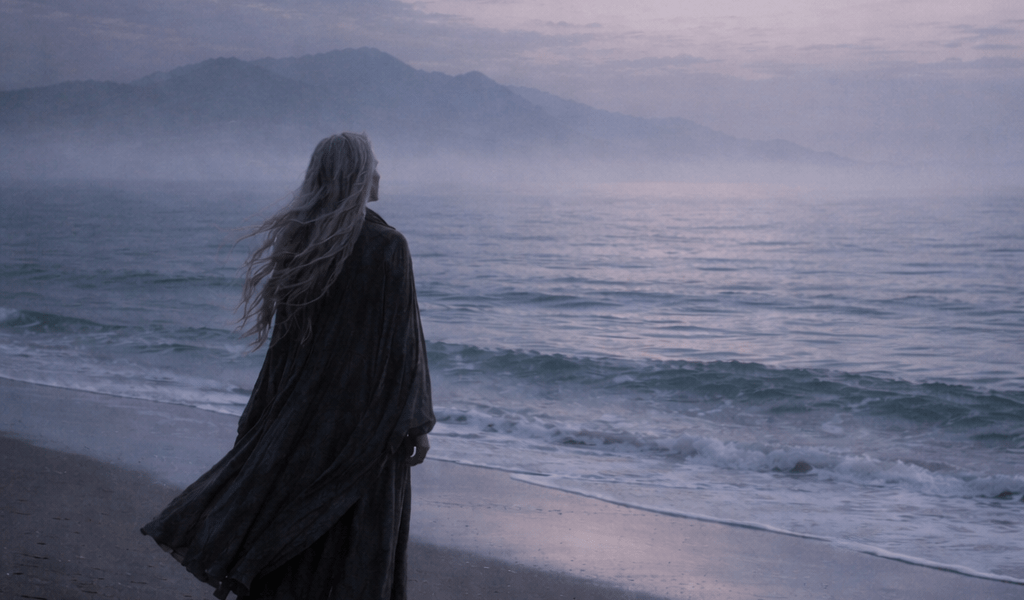
On the other side of the river, the priestess followed footsteps of the wayfarer to the river bank. The wayfarer saw her standing in the dark shadow of woods, with her silvery hair flowing down to the ground.
“There she is,” the wayfarer said to the prince.
“Tell me what you see,” the prince said.
The wayfarer told the prince what she was like, and how she stood there across from the Prince just beyond the reach of the daylight.
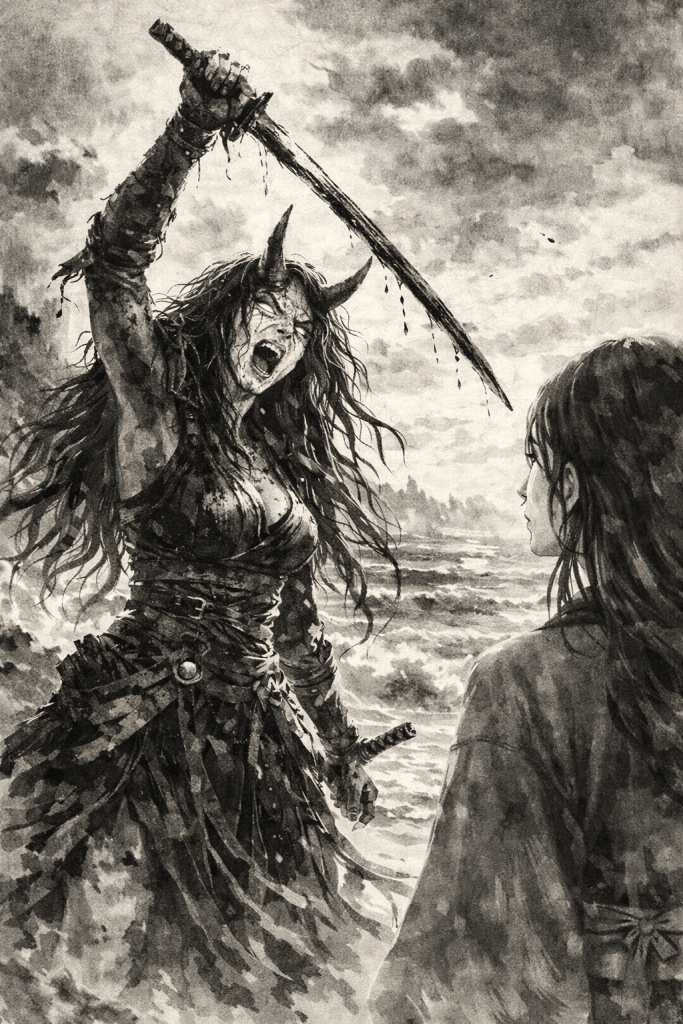
Suddenly, the prince jumped in the river and started swim across. The river swallowed the prince and he disappeared in the water. The current was fast and water was cold. He swam hard and finally reached at the bank. He came out of the river and found the wayfarer standing in the sun.
“Tell me what you see,” the prince said.
The wayfarer told him what he saw.
The Prince and the Priestess remained there looking at each other, as if they could see each other.
The prince jumped in the river and came out of the river in the sun. The wayfarer told him what he saw.
The prince jumped in the river and came out of the river again and again. His night-dark hair was wet, reflecting the sun. His dark eyes grew deeper every time he emerged.
The wayfarer noticed that every time the prince came out, his shadow grew a little longer. Each crossing lengthened it.
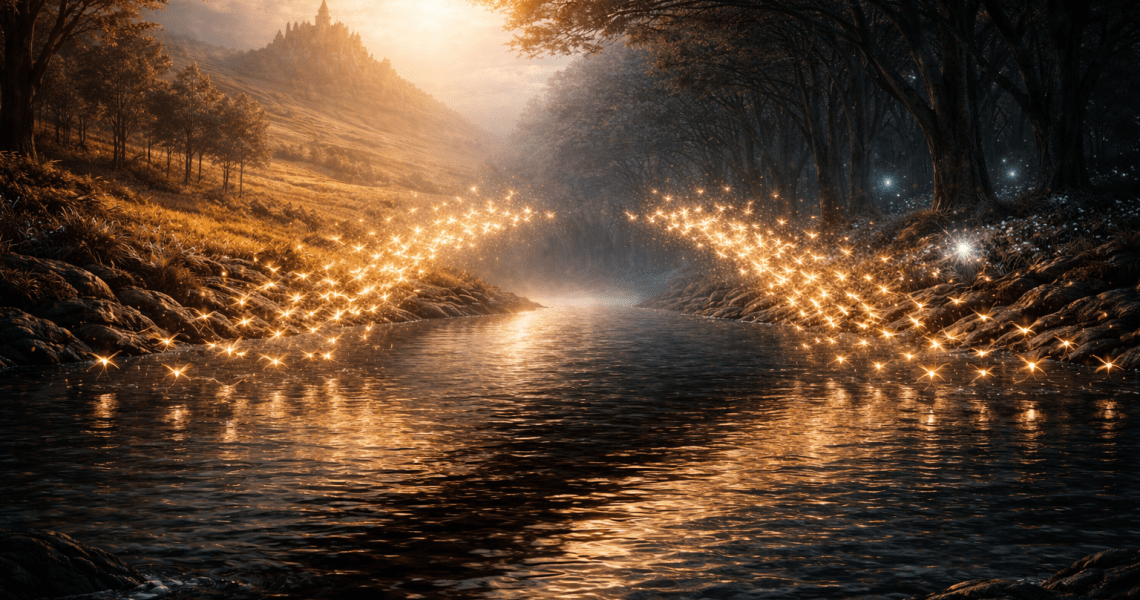
After one hundred eighty-two times, his shadow became so long that it reached across the river to the other side.
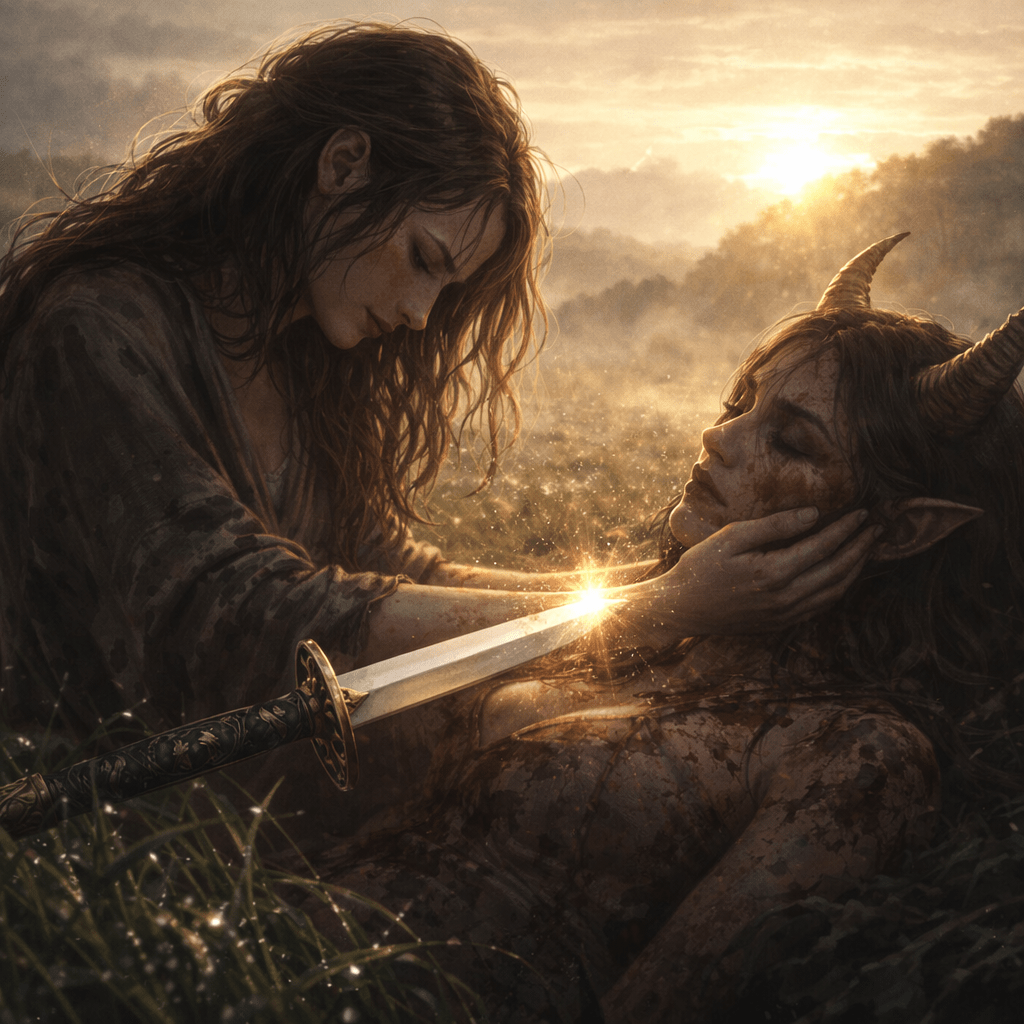
The priestess stepped out of the night woods and walked into his shadow. They finally saw each other for the first time.
The prince stepped into his own shadow toward the priestess. His shadow remained stretched across the river.
They walked toward each other on the bridge of shadow.
In the middle of the bridge, they met.
And there, they dissolved into each other.
They heard thousands of golden birds fly across the river.
Somewhere in the village, a shadow flickered.
Somewhere in the woods, a leaf trembled.
© J.U. 2007
The image is AI generated.