Three Way Mirror Vanity

I had three mothers.

There’s a photo of them together, sitting in a living room. Every time I look at it, I think of the witches—not the ones from Hocus Pocus, but the ones from Macbeth. Together, they conjured me: a daughter with a fragmented identity.

When we are young, we come to understand ourselves through interaction with our parents. We need to feel loved and accepted—especially by our mothers. Our survival depends on them. They become the foundation of who we are.

In my early childhood, my parents, grandmother, and aunt all lived under the same roof. My real mother was a nurse and gone during the day. My grandmother took care of me. She was a woman of few words, rarely expressive. She fed me, probably changed my diapers, and otherwise left me to my own devices. I was a free-range kid. She was always busy—tending to our small rice paddies, vegetable garden, and housework.

I followed her around, watching her do everything by hand or with simple tools. I saw her harvest soybeans, shell them, sort them, boil and mash them, and finally turn them into homemade miso paste. Everything was made from scratch. That’s just how small farmers lived.

She also took me on her regular visits—to the neighborhood Shinto shrine, and to my grandfather’s grave. From her, I learned ritual manners. She was more superstitious than religious. To this day, I still visit that same shrine when I go home. It’s deeply rooted in me. As long as I physically survived and followed her instructions, I was allowed to exist.

Sometimes, when my mother worked night shifts, my grandmother “let her rest” by handing me off to my single, childless aunt. I often slept beside her. Only much later—nearly half a century on—I learned that my aunt had once had a child out of wedlock, a daughter she gave up for adoption.

To her, I was a baby doll. She adored me and constantly told me I was cute. Whatever I did, I was “cute” to her. Naturally, I loved her. Looking back, I see now that I was her emotional support animal. A doll she could pour her love into. I was a blank screen, an empty vessel for her to project her longing and affection onto. As long as I accepted her version of “love,” I had a place in her world.

My actual mother? She’s almost completely absent from my childhood memories—except when I was sick. As a nurse, she took care of my body when it broke down. But emotionally, there was no connection. With her, I felt like a utility animal—fed and maintained for function, not love.

Her “love” was always conditional. I was a “good enough” daughter only when I served some purpose for her. Most of the time, that purpose was to be strong-willed, fearless, and short-tempered—a stand-in, a surrogate warrior she used to push back against her verbally and psychologically abusive husband. I was her avatar, not her child.

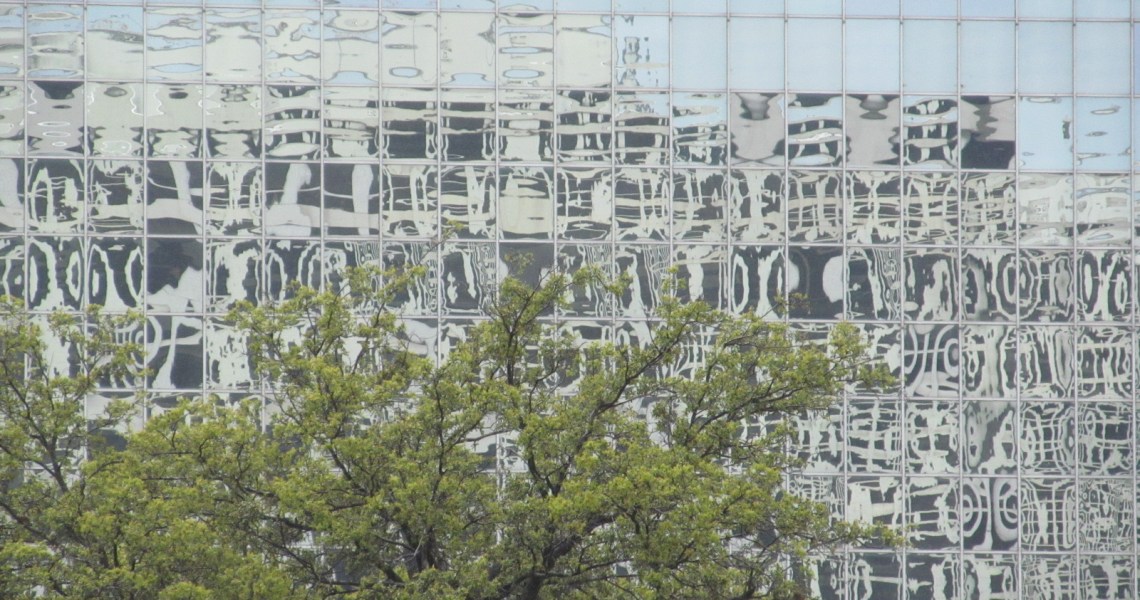
As I grew up, I developed three distinct clusters of identity traits—not like someone with dissociative identity disorder, but more like someone sitting in front of a three-way mirror vanity, where each angled mirror is distorted and reflects a different version of her. And those warped reflections bounce back and forth endlessly, deepening the distortion.

It was deeply confusing, to say the least.

It took me decades—more than half a lifetime—to even begin to feel the original me. I spent so many hours trying to reconcile those mirrored fragments. Now, I no longer need the mirror.

As for my father—he hated that I was a girl. The only time he acknowledged me as his child was when I got good grades. Otherwise, I was worthless.

Ding Dong, the Witch is Dead

I got a call from my 92-year-old mother. She had just been informed by the nursing home that my 100-year-old aunt passed away in her sleep—her heart had stopped.

I had visited her just a month ago and sat with her, talking. She had stopped responding a long time ago, but her heart kept beating with the help of a pacemaker. She swallowed whatever mushy food her caregiver spooned into her mouth and wore diapers.

This is not how I want to spend the last years of my life.

I loved her when I was a child. She lived next door to my parents, and she spoiled me with sweets, cute dresses, dolls, and stuffed animals—whatever I wanted, she bought for me. Every day, I waited eagerly for her to come home and ran to give her a hug. Sometimes, her breath smelled of alcohol.

My father was emotionally abusive, and my mother was emotionally unavailable. In many ways, it was my single, childless, career-oriented aunt who “adopted” me. She even wanted to adopt me legally at one point, but my parents—outraged—refused. There was no reason for them to give me up; we weren’t poor. I suppose it was her desire to have a daughter of her own.

I used to say I wanted to be just like her. She was my role model: fashionable, independent, capable of doing anything perfectly. She was the first woman in the region to be promoted to regional manager at the national telephone company. She was also incredibly skilled with her hands—especially knitting and crocheting. I had so many beautiful sweaters she made, and people often complimented them.

I, on the other hand, am not crafty at all. I tried, but I could never do anything as well as she could. I’d get frustrated, give up, and she would finish my projects for me. I still sometimes try, but I almost always give up.

She kept her home neat and beautiful, always with fresh flowers from her garden. She adorned the house with lovely things. Though she didn’t cook elaborate meals, she arranged simple dishes with such care that they looked more appealing than my mother’s “here’s your food, eat” style.

I admired her and, as a little girl, I dreamed of being like her—working, unmarried, and childless. That was an unusual dream at the time, when most girls wanted to be brides in white gowns. My parents didn’t respond to my dream at all. They just ignored it.

Life didn’t turn out quite the way I envisioned. I moved to the U.S., got married, worked as an ordinary office assistant, got divorced, lost my job, became an independent contractor, and remained childless. Still, I returned to Japan once a year to visit my parents and my aunt.

Even as a child, I sensed something was off in my family. There was a ghost in the closet—a family secret. Children can feel these things. Even if it’s never spoken, it changes the air.

The closet opened after my father—my aunt’s younger brother—passed away at age 87. My mother began to talk.

It was the scandal everyone in the small town knew. My aunt had an affair with her married boss and got pregnant. At the time, having a child out of wedlock was a deep shame for a respectable family. But she refused to have an abortion. Her lover’s wife was infertile, and my aunt may have believed that having a child would lead him to divorce and marry her.

Instead, he and his wife adopted the baby girl. He secretly allowed my aunt to visit the child, pretending she was just a family friend. But my aunt, lacking boundaries, acted like a mother. As the child grew older and started asking questions, the visits ended. The wife eventually died, but the man never remarried. The girl grew up not knowing she was adopted until her teenage years.

Then I was born into the family. At the time, my parents lived with my grandmother and my aunt. In a sense, my grandmother gave me to my aunt as a substitute. I don’t remember my mother’s touch. I was always with my aunt. Four years later, my brother was born, and this time my mother clung tightly to him. He was always wrapped around her like a baby monkey.

Once the secret came out, the meaning of so many things shifted. When I used to say I wanted to be like my aunt, I meant I wanted to be an independent woman. But my parents may have heard something else—that I admired her for having an affair and bearing a child out of wedlock, bringing shame to the family. My father resented having a daughter—specifically me being a daughter. From him, I absorbed the belief that all men were predators, and I had to fend them off with claws and fangs.

My aunt loved me like a daughter until she lost her mind. Even in my fifties, she’d try to brush my hair and spoon-feed me. She never truly saw me for who I was—only the daughter she lost. I was her living doll.

After my father died, my aunt’s physical and mental health declined. No one in the family wanted to take care of her, and I was the only one who didn’t hate her. So, by default, I became the one responsible.

She lived in her own home for nearly ten years, with various caregivers as her condition worsened. Eventually, she needed 24-hour care.

That’s when her true nature came out. She was highly narcissistic and very demanding. She wanted everyone around her to serve her in exactly the way she expected. She went through so many caregivers. She never forgot who had crossed her.

“Everyone who spoke ill of me died of cancer,” she once said, as if she’d cursed them.

Yes, she cursed me with her projection. She cast me in a role she needed someone to play—and I played it well. I understand she had a hard life, and she endured it the only way she knew how: by casting her pain outward, cursing everyone around her.

After the phone call, I said to myself, “Ding dong, the witch is dead.”

At least I’ve chosen not to curse anyone. That is my freedom.