A Skeleton in the Closet

I grew up believing my family was an ordinary one.  Nobody was particularly out of ordinary, so I thought.  My father was not an alcoholic nor an addict.  My mother was not a chain-smoking suicidal woman.  My brother didn’t smoke pot nor join a band.  I didn’t have an eccentric spinster aunt.  It was a quotidian kind of dysfunctional family.  Then I saw a play,  August, Osage County.  After the curtain, I turned to my friend and said, “That’s a terrible family.” And then I added, “That’s my family.”

Every dysfunctional family I saw on stage had a secret everybody knew about.  They lock it up in the closet and pretend it is not there.  Children born into the family can’t do anything but inherit it.  Adults may think kids don’t know about the skeleton in the closet.  We know. We see the ghosts lurking in the hallway, hear them whisper, and feel the cold air when they pass through us.  We grow up with the ghosts and adults tell us again and again that there is no such thing.  Silly child.  So we start to believe it’s us.  The dark shadows and crazy voices are inside of us.  We become the ghost of the family secret.

So I started to drink early, chain-smoked, cut myself, ate and vomited.  I started to live by myself when I was 18 and moved further and further from my hometown until I reached to the other side of the globe.  I’ve become an eccentric divorcee.

After several decades, funerals started to happen.  Older generation was dying out and they wanted to talk about the skeleton.

The irony is that I knew about it.  Nobody told me but I just knew it.  It’s silly to believe you can keep secrets from a highly sensitive child.  They just didn’t know I knew.  Once they knew I knew, they talked, and talked, and talked.  He said, she said, he said she said, and she said he said.  Everybody told a different version of the story.

So I found out that my family was not an ordinary family.  It could be the one in Yoknapatawpha County, could be in Tennessee Williams’ play, and definitely August, Osage County worthy.

Nothing was wrong with me.  It wasn’t me.

Fortunately, after decades of therapy I was able to be the shaman who could navigate between the worlds of the living and ghosts.  I listened to the stories they told, and returned them a story with a new and much gentler narrative, transformed it into a story where there was no skeleton in the closet.   Adults could talk about their feelings, how they loved and hated, how they got hurt and survived.  The mistake they made and how it affected their lives, lives which are running out ever so quickly.

I am not a ghost anymore.


My own very personal storm

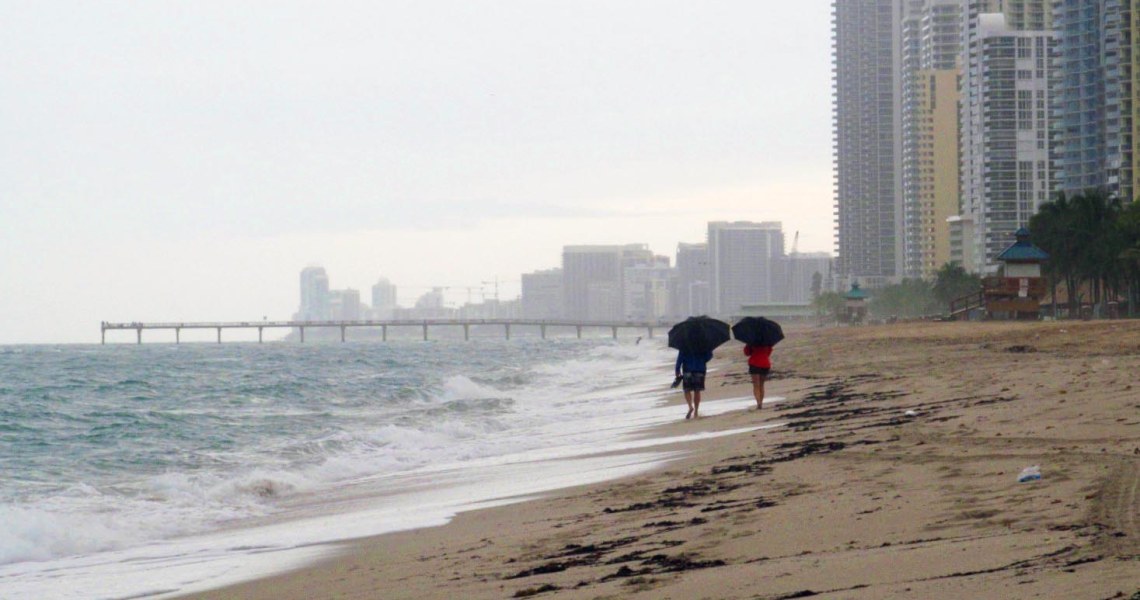
In Frozen, Olaf, the funny snowman, gets his own personal flurry to prevent him from melting in the sun.  Some of us were born with our own personal weather system. Having dysthymia is like having a personal weather which might not be so cute as personal flurry.

If your baseline is dysthymia and you have recurrent major depression, your life probably sucks.  A gloomy day is a good day and before you take one breath, voila! you are in a storm of one kind or another.  You can’t breathe, you barely can keep your eyes open.  You can’t see clearly.  You always walk against vicious winds.  Hail, lightning and heavy rain overturn what you know, and knock down what you hang onto.

You see your friends and wonder why they can move so easily; why they can read in the torrent of rain; why they can laugh in the sand storm without feeling choked while you taste the deadly ash of volcano eruption in your mouth even though you close your mouth so tightly shut that your face start to hurt.

What is wrong with me?  Am I weak?  Am I lazy?  Am I stupid?  Or what?  I am trying to do what they do as hard as possible, and still I can’t catch up.

What I didn’t know was my friends lived in a different land, where everyday was a normal weather day: sunny with some cloud, and slight chance of rain.  They have storms, but after a couple of days, it returns to normal sunny days.

What I didn’t know was that it takes a courage, endurance, and focus of athletes of extreme sports for us just to live a day in such a severe internal environment.

Once in a while, I experienced a beautiful day with blue sky as high as eternity and it scared me because if I would ever enjoy the weather, if I would ever even slightly believe it was real, then I would be punished multifold.  The storm shall follow and strike me down, on hands and knees, with my face in a gutter.  So I held my breath, close my eyes tight, and made myself hard.

So if your personal weather sucks, it’s not your fault that you can’t move gracefully.  And your friends who live in a normal weather land could never imagine how it is to be you. (They won’t survive in your personal weather.)

I hope you will find your way to change the weather.  It is possible.  After decades, I’ve changed my weather.  Everyday is just an ordinary weather day and it’s beautiful.   Even when a hurricane hits me, I now know it will pass and that I will breathe easily tomorrow.


Ordinary People

“What do you want to be?”  I asked my date.   We were just shy of 20 years young.

“I want to be an ordinary person,” the young man said.

“???”  I didn’t get it.  When you are a teenage boy or girl, don’t you want to be an outstanding, extraordinary, prominent person even when you don’t know in what.  Somebody but an ordinary person.

Several decades have passed since and I had a chance to see the boy again at a class reunion.   I told him I now understood what he meant by being ordinary and appreciated him for his wisdom at such a young age.

“Did I say such a deep thing?”  the boy, now a man in fifties, said.

I should have chosen this ordinary guy instead of a succession of overgrown permanent teenagers, who were exciting and extraordinary in not necessarily good ways as a partner.

I am not outstanding, extraordinary or prominent, but I think my life was nothing but ordinary.   After decades of turmoil, now I find myself living a very ordinary life with absolutely no drama.  And I am mostly content with my ordinary life as an ordinary person. Then once in a while, I look back and say to myself, “It was fun.”

It must be just a state of one’s mind.


Lifeline

I have never been prescribed meds for anxiety.  I have had severe anxiety but it was always a precursor or aura of major depression.  When I experienced anxiety attacks, I was already on the way to major depression and almost immobile.

I am one of the lucky few.  After years of psychotherapy, a straightforward generic SSRI and Crossfit have been working for me and I haven’t experienced a major depression for several years.

Still every night for a couple of seconds before I fall asleep, I feel anxiety.  It’s about nothing and everything.  It’s about being.  Suddenly I have a hole in my chest and I feel like I am being sucked into the hole in my chest into a heavy black mass of nothingness.  I know if I allow it happen, I will lose my sleep and fall straight down to the bottomless depression.

So I reach out and hold the tail of my dog sleeping next to me, as if it were a lifeline.  My 80lb 12 year old mutt’s tail is thick and feels substantial, warm and alive.  I feel tethered to his life.   And I fall asleep.


Yearbook

When I went home to attend my father’s funeral, I found my junior high yearbook.  I recognized faces of girls I haven’t seen for many decades.  One by one, they came back to life in my memory.  I knew those teenage girls.  They looked exactly as I remembered.   I turned pages looking for my photo.  I couldn’t find it.  I felt confused.  I was sure I was in the yearbook.  I started back from the first page.  Page after page, the faces of girls got clearer in my memory.  I still couldn’t find my face.

On the third try, I finally found my name under a photo.  She was a beautiful teenage girl.  I didn’t recognize her because I had been told I was an ugly, unattractive, miserable creature no boy would love and I believed the image the fucked-up mirror reflected.

Did I look ugly to you, Dad?  Or did I threaten you?  Did I look ugly to you, Mom?  Or did you also believe what Dad saw?

Anyway, it’s too late.  I lost my chance to live the life of a pretty girl.

Then I became a plain looking highschool girl.

When I remember my highschool years, I am cast as that unpopular girl with long hair hiding half of her face, Violet Parr in The Incredibles, believing that she is invisible.  My best friend is that popular girl who dates the football team captain.

I started having drinking problem while I was in highschool.

A couple of years ago, I had an opportunity to attend a highschool reunion.  One guy, who was neither the football team captain, nor an academic high achiever, told me that I had been his crush in highschool.  I was like, WTF.  “You were a beautiful and intelligent girl,” he said, “and I admired you.”  Shit, I didn’t know.  I knew he liked me, but I did’t believe anybody would like me.

So I lost my chance to live a life of popular girl in highschool.

When we are surrounded with distorted mirrors, we believe the distorted images they reflect.  I wonder what it would be like to have a mirror on the wall that always tells me I am the most beautiful girl in the world.  I guess that would also fuck me up in a different way.

I still can’t believe 100%, but I think I am freaking gorgeous as an old gal of certain age.  It took me almost half a century to feel unugly.

“You are a catch,” a male friend of mine recently informed me.   “Really?” I said.  “Yes, you really are a catch.”  I believed him.

Postcard

I found an old postcard.  I was clearing out “stuff” in an attic.

My father passed just a week ago after slowly disintegrating from Alzheimer’s for the last 10 years.  I heard the news and flew home for his funeral.

The last time I saw him, about 9 months ago, he didn’t recognize me.  He haven’t recognized me for a long time.  I spent much more time talking with him once I became a nice stranger to him.  When he knew me, we didn’t talk to each other.   He talked at me.  I talked to myself.  We didn’t communicate.

I didn’t know him.  He didn’t know me.

My mother seemed to be relieved.  “I’ll burn all the photos of him,” she said.  After his funeral, she immediately started to clearing out “stuff.”  She has been clearing out “stuff” since my father moved to a nursing home 4 years ago.  My father hoarded.

I was helping her.  And I found the postcard along with yellowed newspaper clippings.  It was from my parents to my grandmother on their honeymoon.  It was from them before I ever be conceived or maybe on the day I was conceived.

They were somebody I didn’t know.   I smelled happiness from the message on the postcard.  It was an ordinary message.  “We are having a good time.  We bought something for you and sent it by mail…”  What did they buy?  Who chose the postcard?    Why is it here?  The old house my grandmother used to live in was demolished decades ago.  Did my father saved it when my grandmother died?    What happened to this newlywed couple?

I never saw them happy together.  I don’t know them.

I showed my mother the old newspaper clippings I found.  One of them had a group photo of nurses. I recognized my mother among the young nurses.  She said, “That’s me,” and she threw them in a trash bin.

I didn’t show her the postcard and I brought it back to my place with me.

The irony?  I also fond photos I sent to my parents long time ago, while I was married.  I looked young, beautiful and happy with the guy I was married to.   Who is this woman?  I don’t know her either.


Restricted Access Area

I am an adorable three year old.  A perfectly happy little girl with natural exuberance radiating from her smile.   Whenever I post my baby photo on facebook, many of my Facebook “friends” say, “You haven’t changed at all.”

And I’m like, “Yes!!!!” crying out my victory.  By age four, she was locked up behind a heavy door.  I dedicated the last 30 years of my life to find and raise her to be a woman she was meant to grow up into.

“You are too skinny,” Dad said. “You are ugly.  No man will marry you,” Dad said.   “Having girls is a waste.   I shouldn’t have had a girl child,” Dad said.  “Why aren’t you a boy.  I wish you were a boy,” Mum said.  “Your skin is too dark for a girl,” Auntie said, “but strangely red becomes you.”   “You were a tiny thing.  A tiny wrinkled faced monkey baby.  I was sure this baby wouldn’t survive,” Grandma said.  “Look at this girl’s eyes.  Too small,” Dad said…

I was too short, too dark, too skinny, too fat.

I was ugly and nobody would ever love me.  (Then why did you touch me?)

Everything about me was wrong.

Don’t believe what they say, Girl.  They are defective mirrors.  They reflect distorted, biased images of you, or maybe perceived images of themselves.  It’s not you.  You are a perfectly happy little girl with natural exuberance radiating from your smile.


Nightmare that didn’t happen

This is a nightmare that didn’t happen.  I was about 11, sleeping in my room.  The door suddenly opened and my father came in.  He was yelling something and he threw things, talking to himself.  I hid under the comforter.  I heard him walk around in my room, talking to himself, throwing stuff.  Then he left.

I waited.  I waited for my mother.  I waited for my mother to come to check on me, comfort me.   Minutes passed.  Nobody came.  I fell asleep crying.

I woke up in the morning.  I found my stuffed animals were on the floor.  One of them, a stuffed kitty my friend gave me, was almost decapitated.  I didn’t understand.

I quietly went down the stairs, expecting my mom at least to explain what happened.

Nothing happened.

Nobody mentioned anything.  Mom was cooking breakfast.  My father was reading the newspaper or whatever.  Nothing happened.  I ate my breakfast and went back to my room.

That was the nightmare that didn’t happen.

But I remember that I sewed my stuffed kitty’s head back by myself, crying, saying to myself again and again, “My friend gave it to me.”

Decades and years of therapy later I confronted my father and asked what it was about.

He didn’t remember.

My mom came to me to tell that she had no idea and asked, “Your father didn’t hit you, did he?”

“No, he didn’t,” I said.

It doesn’t matter.  It was not my father’s unpredictable rage that marked me.  It was the absence of my mother.  I learned that nobody would come for me.   I didn’t want to be the scared little girl, so I became my father.  “You have a temper just like your father,” my mother used to say.

Now I have many friends who are fathers.  When I saw their daughter perfectly safe with their father, not hiding from them, not tensing up at the sight of them, remaining soft and smiling, I wonder how they do.  It is a dream that didn’t happen to me.

Heartburn

Through sheer chance my G.I. doctor found I had Barrett’s esophagus during a routine physical.  The lining of my esophagus was turning into that of small intestine.  That sounds scary.  The doctor asked me if I had an acid reflux.  I didn’t.  Part of  the lining of my stomach was also turning into that of small intestine.  That spelled the possible C word.  I was told I must have a silent (symptomless) acid reflux and I’ve been on medication since.  Eventually my stomach lining turned back to normal, but I still have Barrett’s esophagus.

I haven’t had stomach issues for a long time.  Definitely I didn’t have heartburn.  Then I remembered I often had stomach ache when I lived with my mom. I remembered my mom used to tell me that my younger brother had a delicate digestive system.  When he got nervous or stressed, he threw up. I didn’t thow up but I remembered that after I left home for college, I sometime induced vomiting, probably more often than average young women.

Something clicked.

My original home had been making me sick.

I ran away as far as possible.  There are a continent and Pacific ocean between my parents and me now.  I visit them once a year and that is our compromise.  I used to stay with them for more than a week.  I got depressed.  So my stay got shorter every year.  One year, after spending 4 days or so, I had a severe stomach pain.  Another year, after spending several days with my Mom, I suffered IBS like symptom for two weeks.

My mom has spent her entire married life feeding somebody.  It was her role in the family.  She has taken care of my father, who has type 1 diabetes, for half a century.  It requires a lot of work to feed a diabetic.   Both my brother and I was a light eater when we were little kids, so it has become her mission to feed us as much as we would ingest.  Through therapy, I realized that my mom force-fed me and I was exercising to set a boundary by saying,”No, thank you.”

I told her I usually didn’t eat breakfast.  I woke up to find a breakfast ready on the table.  What can I do?  I ate breakfast: ham and eggs, toasted bread, and yogurt, milk and coffee.  Mom brought a jar of homemade jam to the table and told me to add it to yogurt.  I only ate plain yogurt, so I said, “No, thank you.”  “It’s too sour without jam.  You should add it,” mom insisted.  “No, thank you,” I said.   I told her I didn’t usually have a breakfast, that she didn’t have to prepare mine.  The next morning I woke up to find the same breakfast ready on the table.  “Do you like to add the jam to your yogurt?”  My mom asked.  “No, I told you I didn’t eat sweetened yogurt,” I said.  “It doesn’t taste good without jam,” she insisted.  “No, thank you,” I said.  I set a boundary firm, don’t I?  The next morning I woke up to find the same breakfast ready on the table.  I found she had added her homemade jam in my yogurt bowl.  I didn’t say anything.  I stopped feeling.  When it doesn’t matter what I want or what I don’t want, why should I feel anything.  I swallowed the sweet yogurt in silence.  “It is good, isn’t it?” she said.  That night I had an acute stomach pain.

It isn’t about a spoonful of jam in my yogurt bowl.  The same pattern repeated again and again for lunch, dinner, snacks and everything else.   Eventually I became a foie gras geese.  No wonder I had issues around eating.   I still can’t tell if I’m really hungry or not.

I told my friend the story and she said, “You have a nice mom.  She likes to take care of you.”  She made me feel that I was a thankless brat.  I felt like throwing up.  If you force a piece of chocolate into a child’s mouth, it still tastes sweet. But it doesn’t mean the child wants it.  “I told you it was delicious, didn’t I?   You like it, don’t you?  I was right.  You were wrong..  You don’t know how you feel so I’ll tell you how you feel.  I am right and you are wong.  How you feel doesn’t matter.”   This is how we lose the ability to be ourselves…

If you still think forcing a piece of chocolate in a kid’s mouth against his/her will doesn’t matter, just substitute it with a more sinister word.

How do you feel in your body?

“How do you feel in your body?” my therapist asked.  “Fine,” I answered.  “Do you feel the floor under your feet?” he asked.  “Yes. (So what?)” I answered.  This question irritated me like a hell.  I didn’t understand what it was to do with my psychological misery.  I had two arms, two legs, feet and hands.  I was fine, thank you for asking.  “Stump your feet on the floor.”  I stumped.  “How does it feel?”  “Nothing,” I answered.

“What does it make you feel like?” the therapist asked and I looked for my feeling outside of my body, staring at the ceiling, or watching my therapist’s cat yawn. I didn’t find my feeling in my body.  My feeling didn’t reside in my body.

Disconnection is an excellent survival mechanism.  In a battlefield you won’t survive if you feel.  And for some of us, childhood was a wartime, and the body is where the battle was fought.  In Trauma and Recovery Judith Herman writes, “Traumatic events violate the autonomy of the person at the level of basic bodily integrity.  The body is invaded, injured, defiled.  Control over bodily function is often lost; in the folklore of combat and rape, this loss of control is often recounted as the most humiliating aspect of the trauma.”  Our trauma doesn’t have to be of rape or combat.  It could be grandma pinching your cheeks.

I am not saying that pinching chubby cheeks of an adorable kid is a form of child abuse.  It could be a rather innocent expression of affection.  However, when it is done repeatedly against the child’s will, it could amount to loss of “control over bodily function”.

My ex-boyfriend had a habit of pinching.  He pinched his daughter, he pinched his nephews and he pinched me.  It was his way of saying, “Hey Sweetie.”   I can’t speak for his daughter or nephews, but when he pinched me I felt a rage surging up deep in my body.  “Stop it,” I yelled.  “Don’t pinch me, ever.”  He pinched me a couple of more times, and every time I reacted violently.  Then thankfully he stopped pinching.  He listened to me.  While pinching itself didn’t hurt much, it triggered an uncontrollable anger out of nowhere.

When I was a little girl, my childless aunt doted on me.  She literally tried to eat me with a spoon.  Since she was the source of love and affection, and chocolate and candies and dolls and all the goodies, I clung to her.  She used to tease me by doing something I didn’t like.   The more I shrank from, the more she seemed enjoying.  She used to lick my face, saying I was so cute that she wanted to eat me up.  It was wet and yucky.  I said, “No!!!” but she was much bigger and stronger.  She told me that she loved me and that I should let her do whatever she wanted to do.  Sometimes, she bribed me with goodies.  It’s an innocent expression of affection, isn’t it?   Pinching was a variation.  I don’t remember who pinched me, but it does not matter.  It told me the same story.  My feeling does not matter.  I don’t have control over my body.  They have.  And I am an ungrateful brat if I don’t appreciate the affection the adults are giving to me.  Tolerating the feeling of discomfort will be rewarded with chocolate, or whatever goodies.  Got it?  Just replace the word “pinching” or “licking” with “touching improperly.” It tells the same story of trauma.  “The traumatic event thus destroys the belief that one can be oneself in relation to others”(Herman 53).

When I was a little girl I told my mum that my tummy ached.  I told her that I would feel better if she let me eat a piece of bread.  She didn’t give me bread and took me to a family doctor.  It turned out that I was not sick but just hungry.  I didn’t know the word to explain the intense sensation I felt in my belly.  What I felt in stomach, aching for food, was denied as not legitimate by adults. When I was a teenager, I had a painful period.  I told that I had severe cramps and couldn’t move.  My father said, “No, you don’t.  You are lazy.”  My mom didn’t protest.  (Later I found that my mom never had a painful period in her life, and she couldn’t imagine how bad it could be.)  Thus in my early ages I learned not to trust the feeling in my body.

We lose the ability to connect to one’s body little by little.  When someone in authority, such as parents and teachers, tells us we have to feel certain way again and again while we don’t feel that way, it becomes unsafe to be ourselves.  Others in our life take away our connection to the body.  We gain artificial limbs and body parts instead, which function very well.   Nobody notices it’s artificial.  Sometimes they could be much more useful than real limbs, just like a sword loaded limb, since we don’t feel pain.  Eventually we might even forget they are not real. When one suffers a hugely traumatic experience and survives, the disconnection between mind and body could be much harder to reconcile.

About the photo: I took the photo of the glass sculpture at Corning Museum of Glass. Unfortunately  I don’t know the artist’s name.