This is a story about what happens when the fight does not end, even after the war is over.
When the nervous system is constantly in survival mode, the sympathetic nervous system—what we call the “fight, flight, or freeze” response—is always activated. Over time, these neural pathways become automatic. We remain on alert, scanning for danger, ready to fight back.
You may have survived many battles of childhood trauma. Even after the war is over, the nervous system continues to live on the battlefield of the original trauma.
Cognitive understanding alone is not enough to activate the parasympathetic nervous system, because we do not feel safe. We may have never known what a safe home feels like. Eventually, the sympathetic nervous system forgets the original source of fear and becomes a demon that fights for fighting’s sake.
This demon once protected the vulnerable child we used to be. Now we are grown, and we can protect ourselves. And yet, the demon cannot let go of its role.
Over time, new pathways can form—slowly, one day at a time—to free the demon and show it that it can finally rest. We are not trying to erase the demon. We meet it with compassion and allow it to be held. After all, it was the demon that kept us alive.
This is a story of C-PTSD and recovery. I wrote it more than twenty years ago. I understood what I needed to understand, cognitively. But it took decades to become familiar with the feeling of safety.
I hope this helps you release the exhausted warrior within you.
Hannya’s Tear
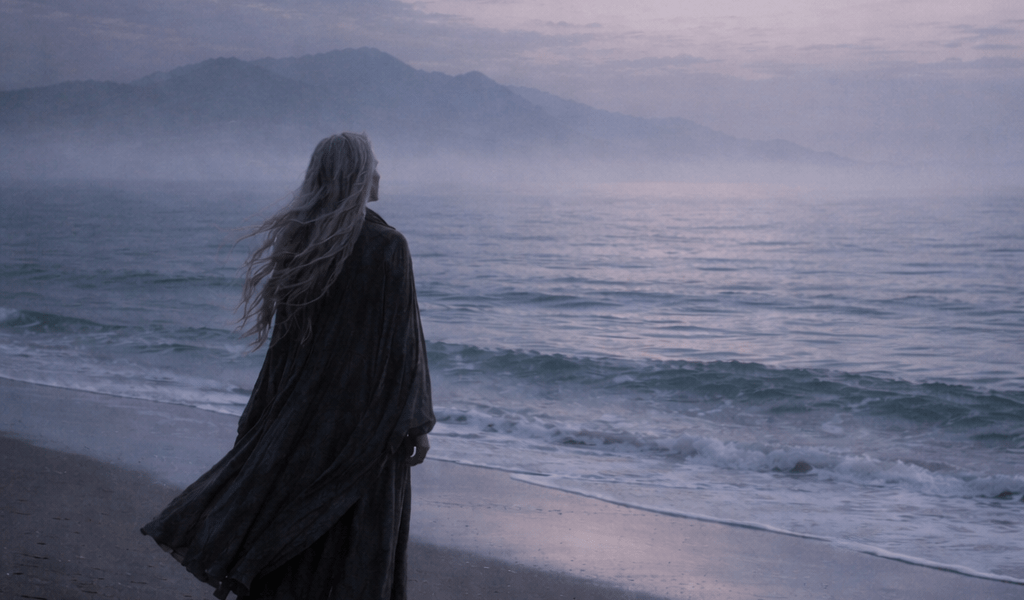
An old woman stood on a desolate beach, staring out at the sea. The ocean wind blew through her long gray hair. The hour was neither night nor day, neither dusk nor dawn. The sea was calm. Beyond it, the blue-gray shadow of distant land floated on the horizon.
She had come a long way. So long that it could not belong to a single lifetime. She had walked through several lives to finally arrive at this distant sea.
I am tired.
So tired.
I want to die.
The wind moves through my hair—hair that was once so angry it flamed upward and burned the sky.
Blazing visceral anger burned my entrails like an ungutted fish thrown into a fire. It charred me from the inside out. Now my heart has lost the heat of burning coal and left me with ash-gray hair.
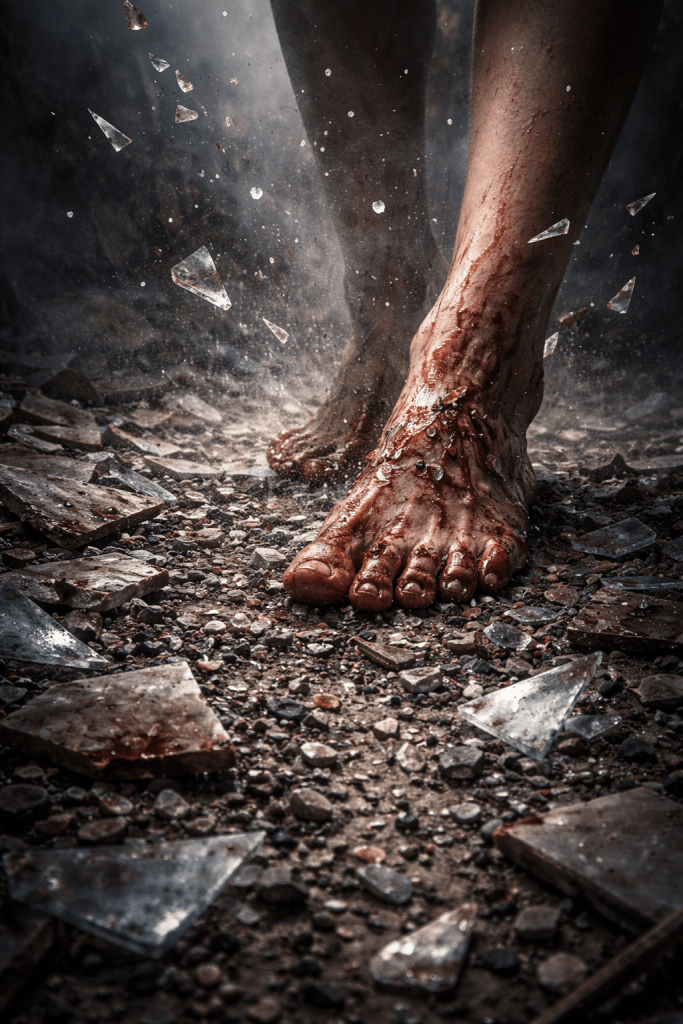
Every step I took was across shards of tile and gravel.
Every Breath I drew was studded with broken glass.
Where did I come from? I no longer remember. It was too long ago.
All the way here I slashed, stabbed and sliced. Blood gushed and sprayed over me—on my face, my neck, my arms. It burned my skin and hardened it into rusted iron.
I hid in dark places for days and nights, wounded and motionless while the shadows of enemies passed by. I was always watching, always alert. And when I slept, I dreamed of blood and dismemberment, waking to the smell of burning flesh.
That was the only way I knew.
It was my way.

In my hand I see a sword darkened with dried blood.
I have become the thing I feared.
An Oni who only knows how to fight.
And now I find myself standing alone on this beach. No more bodies to leave behind me. Where is my fire? Where is my anger.
It is gone.
There is no enemy left to kill.
What did I do to deserve lives of perpetual fighting? I have survived, and there is no one left to kill. And I am standing here alone.
I am tired.
I want to die.
I want to end this for good. No more fighting. No more bloodshed. No more hiding. I want to dissolve into total oblivion. No more memories. No more me.
Then what is holding me here on this silent beach?
The waves come and go, come and go, through thousands of nights and days.
Let me dissolve into that place where sea and sky are indistinguishable. That is the only way I can stop fighting.
Please do not make me turn into an Oni again.
“Who is it?”
The Oni suddenly turned.
For a moment her hair flared upward. Her muscles tightened. Her eyes widened. Her hand gripped the sword, ready to kill.
Then she saw a little girl.
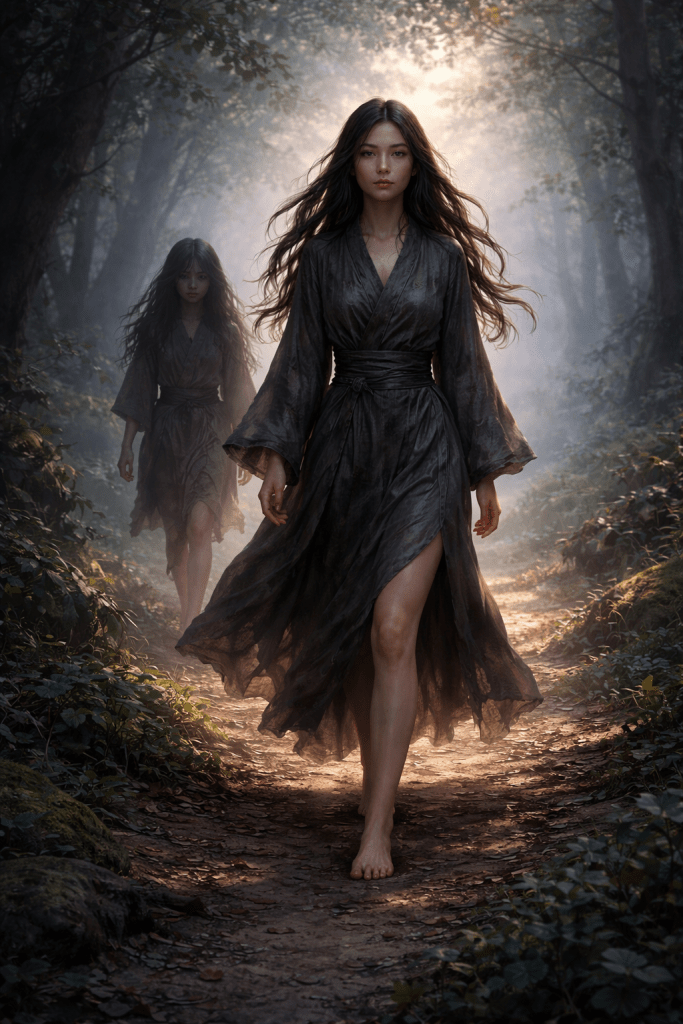
The girl slowly stepped out from the woods and walked toward the Oni. With every stride she grew older—her hair longer, her legs stronger, her eyes wiser.
The Oni remembered the girl.
Three or four lifetimes ago she had begun fighting for the child, to protect a helpless, vulnerable little girl.
Then she forgot the child.
And after that, she forgot what she had been fighting for—or against.
She fought simply for the sake of fighting.
That was when she became an Oni.
And now look—the child has grown into a woman, soft as she wishes to be, supple as she needs to be. She is smiling.
And look—she beans not even a scratch.
The Oni felt her anger flare again.
I was the one who fought all the way here.
Where were you when I lay in a ditch, holding my breath in the darkest hour of the night?
The Oni faced the woman and raised her sword high.
She was about to strike when the woman said quietly,
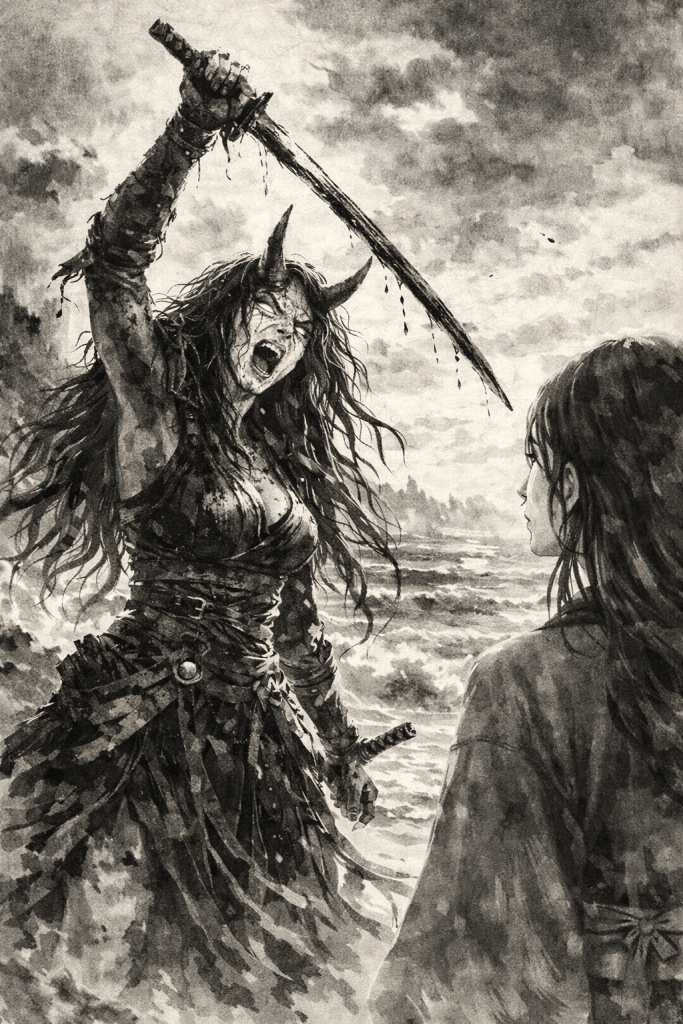
“I am your way.”
The sword shattered in the Oni’s hands.
And in the woman’s hand a sword appeared—clean as the first beam of morning sunlight falling across a hill heavy with dew.
She thrust it through the Oni.

Sweet breath flowed through her like sunlight streaming through leaves.
The Oni shed a single tear.
With that tear she dissolved into her,
becoming the sea and the wind—
where she is no more and dreams no dreams.

You are home.
Images are AI created.
©J.U. 2004


 Somatic Awareness