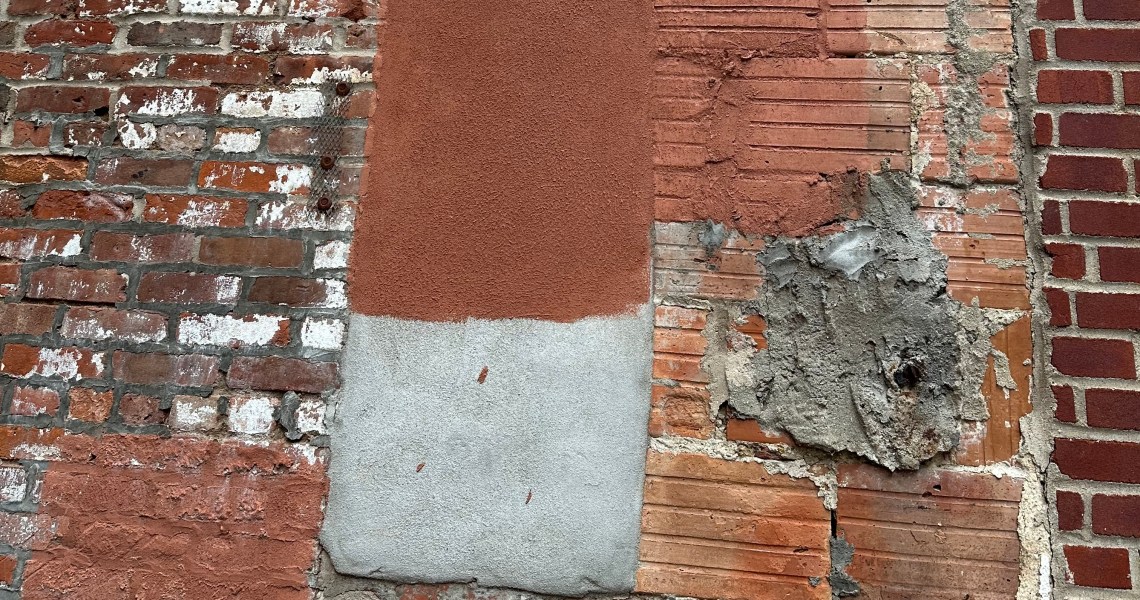
Dead and Naked

At Fort Lauderdale Airport, there was a long line for baggage check-in and security screening. As a hub for cruise travelers, the airport gets especially busy at certain times of the day. I stood in line for over an hour.

Airport staff maneuvered wheelchair-bound passengers through the crowd, one after another, weaving between the lines. Most of the people waiting were elderly—older than me, likely returning home from their first or perhaps their last cruise.

A month ago, I lost my 13-year-old dog. Since then, every time I see someone walking a dog, I’m struck by a strange feeling—a bittersweet sadness, like a drop of water hitting the surface of a lake, sending ripples outward until they fade into the distance. The pain of loss is universal, something we all share. Every person here will, at some point, feel what I feel now—the grief of losing a beloved companion.

I looked around and imagined cadavers on dissection tables, standing in line now—dead and naked. Sooner or later, we all end up there, in one way or another. We share the same destination. I am among them.

Is that a relief? Perhaps. At the very least, the vision freed me, if only for a moment, from the vulnerability of being.

First Cut: the Fragile Threshold between Life and Death

I recently sent my beloved dog, Simon, across the rainbow bridge. With the injection of a tranquilizer, he was asleep but alive. The moment the last injection was administrated, his being shifted. It was obvious that he was no longer there. What remained was just a body–a form of my beloved dog. It was no longer Simon. I left his form with the vet for cremation.

I might have a different reaction to human forms. I witnessed my grandmother’s death. Her heart was medically kept beating until her son arrived to witness her ultimate crossing. I stayed with her body overnight as a part of the Buddhist ritual of wake. Since then, I have experienced three more death in my family. In my old country, family members of the deceased accompany the body to the crematorium and wait for it to become bones. We pick up pieces of the bones with long chopsticks to place them in a small urn. For family members the death is not considered complete until this ritual is performed.

Whether it was Simon’s peaceful passing, my grandmother’s ritualized journey to ashes, or the cadaver I stand before, each moment reminds me of the fragile threshold between life and death–how quickly being gives way to form.

Standing at the dissection table, holding a scalpel with a fresh blade, most first-time dissectors hesitate to make the first cut. I did. Unless you are a surgeon, or other specific medical professional, you have not intentionally cut another person’s skin. A cadaver with the skin intact is closed off from and protected against the outside world. However vulnerable it may look, it maintains its integrity as a whole human being. The hesitancy comes from the violation of the personal boundary that the skin represents—the ultimate “Authorized Personnel Only” sign. It is the line of demarcation between the dead and the living. I still remember my first cut. It was on a cadaver named “Tony.”  I watched other experienced dissectors make their first cuts, then followed nervously, as if I might be reprimanded for my act of violation. The tip of the scalpel scratched the surface, creating a paper-cut thin, shallow pale line. No blood. With a little more pressure, the skin/dermis began to separate. The surface tension that had kept the entire body whole lost its hold, and the boundary broke. The cadaver opened itself up to the dissectors. I crossed the boundary.  After that, in my perception, it was not a person but a human form in which a person used to reside. A cadaver has no boundary, though deserves due respect.  With a long incision in the skin, I felt as if the human form released all the tension with a sigh of relief, saying, “It’s over. No more need to hold this form.”

You have only one chance to experience the first cut. So better be mindful.

copyright 2025

Dermis: The True Skin

The skin is often referred to as the largest organ in the human body. At the dissection table, we explore this remarkable organ in greater depth. The skin, along the dermis and its thin integument, tells the story of the person who once inhabited the form before us. How we interpret these stories is ultimately up to us.

Scars from surgeries, deep skin folds, stretch marks, tattoos and other markings frequently appear, each reflecting the years etched in the skin. Most cadavers are donated by elderly individuals who passed away in hospitals, and their stories are as distinctive and intricate as their wrinkles. Sometimes, internal conditions like jaundice manifest outwardly on the skin, altering its color and texture. 

Beyond the common surgical scars—hip and knee replacements, open-heart surgeries, rotator cuff reconstructions, and caesarean sections—we occasionally find evidence of accidents. While we can never know the exact stories behind these marks, we can imagine them. For instance, a scar on a man’s right thigh might be from a childhood bike accident during a carefree summer afternoon with friends— or perhaps from something more dramatic, like his wife discovering an affair and running him over in her fury. The truth could be anything. There are endless possibilities. 

I have a one-inch scar on my right breast from a biopsy. It never faded and serves as a constant reminder of a specific moment of my life. I remember waking up in the recovery room to the sudden commotion of EMS personal rushing in. The sliding door to the recovery room opened, and another door to the operating area followed. An old man in the waiting room looked panic-stricken as he tried to grasp what was happening on the other side.

A medical staff member explained that they didn’t have the equipment needed for the emergency his wife was experiencing and might need to transfer her to another hospital. My then-boyfriend, who had been waiting with the man, was in shock. “That man probably had coffee with his wife this morning, like usual,” he said. “He never thought it could be the last time.”

I don’t know what happened to the wife, but the experience stayed with me. Life is fragile. It could have been me who didn’t come back that day. My one-inch scar is a reminder of the delicate boundary between existence and nonexistence.

Skin: An Archive of Life

Our skin keeps records of life events. If you spend a lot of time outdoors, the sun will leave its mark on your skin. If you’ve had children, stretch marks may tell the story. If you smile or frown often, wrinkles will document those emotions. Skin is an archive of our lives.

Boundary: Skin as the First Line of Defense

For a manual therapist, an open cut on the skin is a nightmare. Any wound, no matter how small presents a potential danger—for both therapist and client. It’s an open door for pathogens. Something inside me could find its way onto someone else’s skin or vice versa. Cutting. in essence,  is an act of vulnerability.

Before the HIV pandemic, it wasn’t uncommon to see movies where characters cut their palms and held hands to mingle their blood as a gesture of ultimate trust and commitment. Sharing pathogens in this way was seen as a bond of loyalty. But cutting someone else’s skin is also a violation—a breach of boundaries.

Cutting one’s own skin is different. It’s an act that teeters on the edge of those boundaries. For some, it might be a way to reclaim control, to affirm that the boundary exists. By intentionally breaking the barrier of my own body, I can remind myself that I am alive. For those disconnected from their physical selves, self-harm might be a desperate attempt to feel real.

Skin as a Sensory Organ

As I lie on the ground, I feel the weight of my body pressing against it.  Heat transfers from my skin to the moist earth, and I sense coolness creeping back. Sunlight warms my exposed skin, while a gentle spring breeze takes some of the heat away. Grass brushes agains my arms, tingling lightly, and small pebbles beneath my back press into me with dull discomfort.

The skin is a vast sensory organ. Its receptors send signals of pressure, temperature, touch, and pain to the brain, which interprets these sensations. As a manual therapist, I must remember touching a client’s skin is a direct form of communication with their brain. Skin and nerves are inseparable; they form a continuous connection from receptors, through peripheral nerves and the spinal cord, to the brain itself.

When assisting with a nerve dissection project, I noticed how some nerves perforate into the skin. In typical gross anatomy dissections, we often overlook these structures, but they’re there, like delicate threads stitching the layers together. Touching one of these threads is, in essence, touching an extension of the brain itself.

Skin as Canvas for Expression

Occasionally, we encounter a cadaver with tattoos. One donor, “Z,” had multiple tattoos covering his body.  Z was a local donor, and one of the dissectors knew him personally—a rare occurrence. Z had lived a colorful life, full of adventures, rebellion, and humor. Before succumbing to cancer, he was a bulky, tough man.

When we uncovered his body, we saw an emaciated figure. A chemotherapy port protruded from his chest, and his gaunt face reflected the fierceness of his spirit. Though his body lay silent, his tattoos spoke volumes. They seemed to demand our attention: “Look at me. Read my life’s stories.”

Every piece—every image, every  word— told a story. As we began the dissection, we took care to preserve his tattoos, treating them as the storybook they were. Though they would eventually cremated with his body, the tattoos deserved our respect.

Tattoo ink remains permanently in the dermis, where macrophages engulf the pigment, making it a part of the person’s identity. Some pigments migrate to lymph nodes, where they can become trapped—sometimes visibly. Even in death, these marks persist, embodying the life they represent. 

copyright 2024

Quietude

When she saw me taking my dog, Angel, in a wagon to help him to be released from his suffering, she understood. When I came home without Angel, I found an arrangement of cactus with a sympathy card in front of my door. She had a little blind senior dog, and she understood.

Once in a while, we understand and act with compassion without any expectation. As a buddhist, I call it a buddha moment.

I didn’t know her well. We lived in the same building and see each other in elevator cars. We had small talks about dogs. Eventually, I got a new dog. When I saw her in a laundry room, she told me she lost her little dog. I gave her a hug. She also told me that she had got officially married with her live-in partner, and I hugged her again.

She was a little older than me, but looked robust and energetic.

I attended her funeral service a couple days ago.

It was a simple, short service in a funeral home. She seemed to be childless. Relatives and friends talked about her. Her husband talked about how they met and how was her last days. She seemed to enjoy her life at full, then suffer a lot, and finally be released from the suffering from her health condition.

I’ve been living in an apartment building for about 15 years. Younger people move as their life’s situation changes. Older people won’t move. They disappear. My building has less than 100 units and babies are born, and people die. It contains all the life stages.

Our past and our future are contained in our presence. Life is fragile, evanescent, and fleeting, but all-embracing. Live your present fully.

The service ended with kaddish. And I felt deep yearning for the quietude she was in, looking at the simple casket.

Skin

Where body meets air we are all cadavers

The Body: A guide for Occupants by Bill Bryson

Epidermis

Epidermis

I walked into the gross anatomy lab at a medical school, wearing a brand-new white lab coat, and stood at one of the dissection tables. The steady hum of  the air purifier filled the room. Under the gleaming florescent lights, the lab appeared sterile and lifeless. It held multiple tables, each with a cadaver lying upon it. It was my first human dissection class, and I was nervous. Unless you are a medical student, funeral director, coroner, forensic examiner, or some kind of specialist, you rarely have the chance to see naked dead bodies quietly resting on stainless steel tables. The cadavers were embalmed for preservation, giving their skin somewhat foreign texture.

In my old country, we don’t have the custom of embalming. When my grandmother passed away, she was laid on a futon in her home, as if she were sleeping, and family members took turns staying beside her body through the night. It is an old tradition for family members to spend the last night with a loved one—a way to familiarize the living with death. I stayed with her body for several hours, keeping incense burning. Her skin was yellowish, wrinkled, and dry but otherwise intact. The cold air from the dry ice, used to slow the body’s decomposition, seeped through the futon, carrying with a faint, distinct whiff of death.

In the lab, the cadavers’ skin was unnaturally moist due to the embalming fluid saturating their tissue. We carefully observed the artifacts of death and embalming process to distinguish them from the inherent characteristics of the deceased. The outer layer of skin was peeling in patches, similar to sunburned skin but slightly deeper. This is a decomposition process where the bond between dermis and epidermis begins to break down. One of the cadavers was a dark-skinned man, and we were startled to see the pale skin layer beneath. We realized the skin color is only epidermis deep. Beneath the epidermis layer, we are all same color: pale and fair.

The epidermis, the outermost layer of skin, is only 0.05mm (on the eyelids) to 1.5mm (on the palm and sole) in thickness. It defines our social identity, being the first aspect others notice. It is a social organ. As a person of east Asian origin, my skin has an olive tint.  When I was a child, I spent most of my time outdoors and became tanned in the areas exposed to the sun.  Naturally I was darker than adults who spent most of their time indoors. My father used to tell me I was too dark to be considered pretty. In my old country, at least at that time, fair skin was idealized as a standard of beauty for women; the lighter, the better.  My skin is still tanned, though not as much as when I was younger. In fact, the parts of my body that rarely see sunlight are as fair as those of my friends with natural light skin. I simply don’t burn as easily as they do. Being labeled as an “Asian girl too dark to be pretty” haunted my self-image, even though it was just an epidermis-deep judgement, easily shed like a snake’s slough when it no longer fits. Today, I am a proud woman of a certain advanced age with beautifully tanned skin, less sun-damaged than that of some fair-skinned friends.

Melanocytes, located in the bottom layer of epidermis, produce melanin, which determines skin color. Without the epidermis, you would be pale. Defining people by skin color is absurd. Melanin protects the skin from UV damages caused by sunlight. A darker skin color simply means your skin is more tolerant to UV exposure. 

In the living body, the deepest layer of the epidermis, where melanocytes reside, is firmly attached to the dermis and does not peel away easily. Since the epidermis lacks sensory nerve endings — except for vibration-sensing Merkel cells, which are found in the bottom layer— touching the epidermis itself does not produce sensations. However, there is a rare genetic disorder in which the bond between the dermis and epidermis is very weak, causing the epidermis to peel away with the slightest contact, exposing nerve endings. Individual with this condition are vulnerable to UV damage, infections, and other external threats. Imagine being without an epidermis. Every slightest touch would cause excruciating pain, and your existence would become a constant agony. When I studied psychology in a post-graduate psycho-spiritual counseling program, the instructor described a person with borderline personality disorder as “being without skin.”  The analogy might be more accurately described as a condition of being without an epidermis.

The epidermis forms the boundary between what is me and what is not me, serving as the first line of defense by protecting what is inside from the external environment. Despite its crucial role, it is less than 1mm thick. Our physical existence is remarkably vulnerable in this way.

When I get a temporary henna tattoo, the “tattoo” fades away in a week or two because the pigment only penetrates the epidermis.  The outermost layer of the epidermis, the stratum corneum, consists of dead cells that are constantly flaking away. The cells in the outer layer of epidermis are replaced every thirty to forty days. Part of us is constantly dying from birth. Our physical existence is not as separate as we might believe. When I step into a subway car, I sometimes encounter a distinct smell associated with a particular human state. Even if the source is no longer present, the oder lingers as if the ghost of its presence remains. Occasionally, we find ourselves in someone else’s personal space, and as I inadvertently breathe in tiny molecules of oder, I also realize I am inhaling minuscule flakes of dead epidermis. 

As a manual therapist, when I touch a client, I make contact with their epidermis. I would never touch their dermis, the true skin, directly. Between “them” and “me,” the epidermis stands guard, keeping “not me” out.  Every caress of lovers passes through the layer of dead cells. Flaked-off dead cells mingle with other minute substances, floating away in the air or settling on the floor. This thin, evanescent boundary keeps us safe from one another.

The first difference between a living person and a cadaver lies in the skin. In the dissection lab, we stood around a table with a cadaver. No one touched it until the instructor encouraged us to do so. Initially, most of us hesitated, but soon we began to touch the cadaver quite aggressively. The cadaver allowed us to explore in whatever way necessary for study. A person has boundaries; a cadaver does not. When somebody violates your boundaries through inappropriate touching, they are treating you as if you were a cadaver.

Imagine yourself as a corpse lying on the ground. Focus on the outermost layer of your skin. Peeling away in patches, this interface with society falls off. It becomes desiccated and papery—light and fragile. Part of your identity sheds away, your boundary dissipating with a mere whiff.

copyright 2024