Storage of Emotional Energy

The subcutaneous/hypodermis tissue is the deepest layer of your skin, usually dissected away along with the skin to reveal the underlying muscular structure. In Integral Anatomy, this layer is known as the superficial fascia, clearly distinguished from the skin layer. When I slid the scalpel deep enough, the distinctive yellow tissue broke through the pale edge of dermis. Its texture was strikingly different from that of the skin—it was wet, soft, vibrant in color, and greasy. This subcutaneous adipose, commonly known as fat, which everybody seems to dislike.

The true skin or dermis is tightly connected to the subcutaneous layer. They don’t want to be separated. Subcutaneous tissue is a connective tissue, anchoring the skin throughout the body. When I cut through this connection, I felt the resistance through the scalpel. The blade dulled quickly from hitting strong fibers in between. In my first dissection workshop, we spent a week dissecting away the skin layer as one continuous piece to reveal the yellow layer underneath. Every day, every minutes, we were faced with this yellow, bubble -wrap-like tissue. It was an assault on my nervous system. Most novice dissectors hated it. After class, when I closed my eyes, I saw yellow everywhere. Eventually, my nervous system seemed to adjust to the stimuli, and at a certain point, I began to appreciate and cherish this layer. 

Due to my stress-management diet of ice cream and cheesecake, I use to have an abundance of adipose tissue around my midsection, which I jokingly referred to as an “emergency energy reserve” for a potential zombie apocalypse. When I experienced a Meniere’s flare-up and couldn’t eat much, I lost about 20 pounds in three months, and my skin looked like that of a Shar Pei dog. I lost a substantial amount of “fat” along with some muscle mass. I didn’t feel unhappy about losing my energy reserve. Fat is something everybody dislikes having beneath the skin.

We are all covered with subcutaneous adipose tissue. Its distribution varies from one individual to another, though common patterns can be observed. For example, the surface of shin or tibia has very sparse, almost negligible adipose tissue beneath the skin, while the buttocks are primarily shaped by adipose tissue. Female breasts are mostly shaped by fat. When I lost weight, my breasts lost their shape, and the skin appeared looked loose and saggy.

Hate it or love it, a human being can’t live without subcutaneous adipose tissue. This loose connective tissue is embedded with adipocytes, those teeny tiny bags of fat. Currently about 23% of my body weight is subcutaneous fat, which is within the normal range for a woman. Sure, I wish I had abs like young Britney Spears or Miley Cyrus, but it’s my vanity talking. 

What happens if we lose too much of fat?  I once saw a cadaver without any adipose tissue. She was an elderly, petite woman who was so emaciated that she virtually had no fat. Once  the skin was removed, her body was almost translucent, revealing a white matrix of connective tissue without the familiar yellow. The mammary glands were visible on her breasts. She was beautiful but otherworldly. It still makes me sad to imagine her last days, with no soft layer hugging her body, keeping her warm, and cushioning her from pressure and occasional bumps and falls. It’s a cruel state of being.

Healthy babies come with a generous layer of fat, essential for their survival. Their softness and warmth, which make them so cuddle-worthy, are thanks to the subcutaneous fat. This fat layer is what makes a mother’s hug feel so soothing to the baby. (So I hear from parents.)  Subcutaneous fat tissue acts as both a cushion and insulation. You really appreciate its cushioning function when you bump your shin against something hard or land on your rear end without breaking your sit bones.

Even though I have my fair share of fat, as a petite Asian woman, it is relatively thin compared to someone larger. I used to do scuba diving, and even in warm water, I needed a long-sleeved wetsuit to avoid loosing body heat quickly. Larger folks with more subcutaneous fat were fine with just a thin half-suit or even a swimsuit. Even as a cadaver, someone with a thick layer of adipose looked warmer compared to the translucent cadaver of the elderly woman. Adipose tissue is also known as the largest endocrine organ, producing hormones like leptin and estrogen. It’s vascular, innervated, and has lymphatic vessels running through it. Your midsection fat isn’t just a mere blob that can be cut away without consequences.

So, If fat beneath the skin isn’t just a lump of lipids, what is it? It is not a lump that you can simply suck out like a melted butter. It’s connective tissue anchoring the skin and holding the fat lobules in place. It firmly grips the skin and moves with it. Even though the textures are different, the skin and subcutaneous adipose tissue are indivisible. Think of an orange: the peel has a thin outer layer and a fibrous white inner layer. They aren’t separate layers but part of an integral “skin.” To separate them into two layers, you need to carve away the zest.

After you reflect the outer skin layer to reveal the yellow tissue beneath, you get a rare perspective of the dermis from underside. You see a cantaloupe-rind-like reticulate pattern, drawn in white all over. The density and size of this mesh vary depending on location and individual. It looks like a reflection of the adipose lobules in the subcutaneous layer. I imagine it as a mesh framework for sculpting, holding the plaster in shape. 

With the skin removed, a cadaver looks different, yet still retains the distinct shape of the individual. They are mostly covered with sometimes glistening, sometime muted yellow soft, wet substance. It is a human form most of us have never seen or imagined. The tone and saturation can vary within a single cadaver. You might see dark reddish areas, likely caused by subcutaneous bleeding after death. When a person dies, their body lies on its back. Without a beating heart, blood succumbs to gravity, pooling and coagulating in the tissues where it contacts the ground or a hard surface, staining the adipose tissue reddish-brown. In the abdominal area, you might even see an unusual green color, a sign of decay within the human form.

Female cadavers usually have more abundant adipose. Their breasts, shaped almost entirely by adipose, droop toward the sides of the body when the skin is removed, as gravity takes hold. Male cadavers also have substantial adipose tissue, but its distribution differs somewhat. After spending many hours in the dissection lab, I’ve come to appreciate this layer. The human form shrouded in yellow looks content to me. Freed from the skin, that once bounded and contained their shape, they seem relaxed. There is no longer a hard boundary between what’s inside and what’s outside. The body’s water content begins to leak and dissipate. 

More naked than actual nakedness, a body covered in adipose tissue can evoke strong emotional reactions: aversion, vulnerability, discomfort, shame, confusion, sadness—or even relief, strength, joy. I observed cadavers with all kinds of fat: thin, thick, compact, or loose. The first time I saw one — actually, we had six in the lab — I felt confusion and aversion. It wasn’t something I wanted to have in my body. For the first time, I confronted the usually hated fat, and the meaning of the word shifted from an abstract idea to the actual substance, as integral part of human beings. Just seeing and touching that ubiquitous yellow tissue exhausted me.  It’s this tissue that formed the physical image of the individual. And it’s the very substance I’m molded from at this moment. Throughout my life, I’ve gained, retained, and lost fat, and my present physical and energetic shape is represented by this layer. 

I sense that this layer holds a lot of energy—not just in a caloric way, but in a non-physical sense too. It demands that the beholder confront their emotional reaction, which actually reflects my own relationship with body fat. I’ve accumulated some around my midsection thanks to stress eating. Were those fats generated to protect me from the stresses I encountered too often?  Who knows? I heard one dissector started crying, recalling her relationship with fat. You just never know.  I realized I didn’t have any deep trauma stored in this layer. Eventually, I started to love this comfy, snuggly onesie made of soft beeswax pellets. 

I sometime chant Heart Sutra for meditation.  When I chant, I feel the sound wave and vibration travel through my body, and I often end up breaking into a sweat. I wonder if adipose tissue is acting as an energy conductor.
Touch: Your Brain’s Interpretation

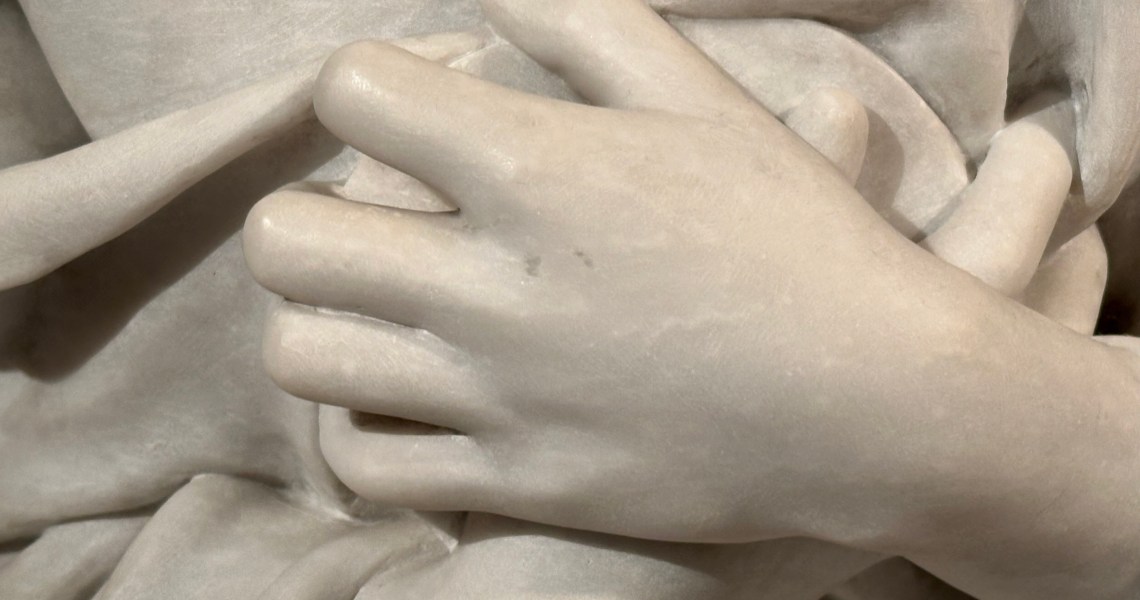
Even though the sensory receptors in the skin are mechanoreceptors, it is your brain that interprets the signals they send. Since the brain remembers past experiences and the emotions associated with them, touch is never merely a  touch. Even the same mechanical touch can be felt differently—it can be loving, caring, comforting, or healing; sensual or sexual; cold, abusive or invasive. Even when you think your touch is neutral, it’s up to the receiver’s brain to interpret it.

When I was in my late thirties, I went through infertility treatment. To check if my fallopian tubes were open, I underwent a very uncomfortable test. The pressure I felt inside my body was so invasive that I instinctively contracted my entire body, bracing myself. Then the technician’s assistant gently placed her hand on my arm. I melted. Her touch was neutral, and I don’t think she was consciously trying to comfort me. I felt it came from her spontaneous empathy. 

I have Meniere’s disease. One day, I had a Meniere’s attack in a gross anatomy lab and had to lie on a cold linoleum floor for some time, clutching a barf bag. I told everybody that nothing could be done to relieve my suffering and asked them to keep me safe and leave me alone until the symptoms resolved. I threw up in the bag and was hyperventilating in a fetal position. Some people can’t tolerate witnessing suffering without doing anything; it might make them feel powerless. A few of them placed their hands on me, perhaps to soothe or heal. I just had to endure the unwanted touch. They were mechanically the same kind of touch, but my brain interpreted them differently. One was comforting and the other was annoying.

As a child, I experienced improper touches, which were a violation of boundaries. This experience made me sensitive to the intent behind a touch. I don’t remember receiving loving touches from adults in my family during my childhood. My nervous system used to react to every touch as if it were a danger. Sometimes, a touch triggered tremendous rage, while other times, it made me feel nauseous. It took me a long time to learn to discern a safe touch from an unwanted one. I’ve learned to set boundaries and to choose how to respond, not just to react. 

copyright 2024

Dermis: The True Skin

The skin is often referred to as the largest organ in the human body. At the dissection table, we explore this remarkable organ in greater depth. The skin, along the dermis and its thin integument, tells the story of the person who once inhabited the form before us. How we interpret these stories is ultimately up to us.

Scars from surgeries, deep skin folds, stretch marks, tattoos and other markings frequently appear, each reflecting the years etched in the skin. Most cadavers are donated by elderly individuals who passed away in hospitals, and their stories are as distinctive and intricate as their wrinkles. Sometimes, internal conditions like jaundice manifest outwardly on the skin, altering its color and texture. 

Beyond the common surgical scars—hip and knee replacements, open-heart surgeries, rotator cuff reconstructions, and caesarean sections—we occasionally find evidence of accidents. While we can never know the exact stories behind these marks, we can imagine them. For instance, a scar on a man’s right thigh might be from a childhood bike accident during a carefree summer afternoon with friends— or perhaps from something more dramatic, like his wife discovering an affair and running him over in her fury. The truth could be anything. There are endless possibilities. 

I have a one-inch scar on my right breast from a biopsy. It never faded and serves as a constant reminder of a specific moment of my life. I remember waking up in the recovery room to the sudden commotion of EMS personal rushing in. The sliding door to the recovery room opened, and another door to the operating area followed. An old man in the waiting room looked panic-stricken as he tried to grasp what was happening on the other side.

A medical staff member explained that they didn’t have the equipment needed for the emergency his wife was experiencing and might need to transfer her to another hospital. My then-boyfriend, who had been waiting with the man, was in shock. “That man probably had coffee with his wife this morning, like usual,” he said. “He never thought it could be the last time.”

I don’t know what happened to the wife, but the experience stayed with me. Life is fragile. It could have been me who didn’t come back that day. My one-inch scar is a reminder of the delicate boundary between existence and nonexistence.

Skin: An Archive of Life

Our skin keeps records of life events. If you spend a lot of time outdoors, the sun will leave its mark on your skin. If you’ve had children, stretch marks may tell the story. If you smile or frown often, wrinkles will document those emotions. Skin is an archive of our lives.

Boundary: Skin as the First Line of Defense

For a manual therapist, an open cut on the skin is a nightmare. Any wound, no matter how small presents a potential danger—for both therapist and client. It’s an open door for pathogens. Something inside me could find its way onto someone else’s skin or vice versa. Cutting. in essence,  is an act of vulnerability.

Before the HIV pandemic, it wasn’t uncommon to see movies where characters cut their palms and held hands to mingle their blood as a gesture of ultimate trust and commitment. Sharing pathogens in this way was seen as a bond of loyalty. But cutting someone else’s skin is also a violation—a breach of boundaries.

Cutting one’s own skin is different. It’s an act that teeters on the edge of those boundaries. For some, it might be a way to reclaim control, to affirm that the boundary exists. By intentionally breaking the barrier of my own body, I can remind myself that I am alive. For those disconnected from their physical selves, self-harm might be a desperate attempt to feel real.

Skin as a Sensory Organ

As I lie on the ground, I feel the weight of my body pressing against it.  Heat transfers from my skin to the moist earth, and I sense coolness creeping back. Sunlight warms my exposed skin, while a gentle spring breeze takes some of the heat away. Grass brushes agains my arms, tingling lightly, and small pebbles beneath my back press into me with dull discomfort.

The skin is a vast sensory organ. Its receptors send signals of pressure, temperature, touch, and pain to the brain, which interprets these sensations. As a manual therapist, I must remember touching a client’s skin is a direct form of communication with their brain. Skin and nerves are inseparable; they form a continuous connection from receptors, through peripheral nerves and the spinal cord, to the brain itself.

When assisting with a nerve dissection project, I noticed how some nerves perforate into the skin. In typical gross anatomy dissections, we often overlook these structures, but they’re there, like delicate threads stitching the layers together. Touching one of these threads is, in essence, touching an extension of the brain itself.

Skin as Canvas for Expression

Occasionally, we encounter a cadaver with tattoos. One donor, “Z,” had multiple tattoos covering his body.  Z was a local donor, and one of the dissectors knew him personally—a rare occurrence. Z had lived a colorful life, full of adventures, rebellion, and humor. Before succumbing to cancer, he was a bulky, tough man.

When we uncovered his body, we saw an emaciated figure. A chemotherapy port protruded from his chest, and his gaunt face reflected the fierceness of his spirit. Though his body lay silent, his tattoos spoke volumes. They seemed to demand our attention: “Look at me. Read my life’s stories.”

Every piece—every image, every  word— told a story. As we began the dissection, we took care to preserve his tattoos, treating them as the storybook they were. Though they would eventually cremated with his body, the tattoos deserved our respect.

Tattoo ink remains permanently in the dermis, where macrophages engulf the pigment, making it a part of the person’s identity. Some pigments migrate to lymph nodes, where they can become trapped—sometimes visibly. Even in death, these marks persist, embodying the life they represent. 

copyright 2024

Integral Anatomy Workshop: Day 5

Today, we observed the variety of superficial fascia presentation in multiple forms.  Superficial fascia layer is mostly composed of adipose tissue.  i.e. your friendly loose connective tissue with fat.  It lies between the skin layer and the deep fascia layer.  It’s a matrix filled with adipose tissue.

What I learned today:

  • Slight or moderate kookiness is very good for the universe.
  • Being yourself and keep on pursuing whatever crazy idea that would keep you interested in is the source of the Great kookiness in a very positive way.
  • When I massage, I am not accessing muscles.  I am talking to the superficial fascia which is inseparable from the skin layer, just like the skin of an apple.  The skin is continuum of the flesh.

Gil Hedley’s Superficial Fascia Meditation

Integral Anatomy Workshop: Day 4

We freed Tony from the restriction of the skin.

What I learned today:

We can be respectful of and happy with the cadaver.

The Color Wheel of Somanauts.  Morning Healing Ritual.

workshop3

Dealing with cadavers requires us to embrace our own mortality. When uncomfortable, we tend to “check out” of the reality of our body and take a refuge in our mind.  It is important to stay grounded and connected to the physical reality of each other.   Unexpected emotions could bubble up to the surface.  We need a safe container for them during the workshop.  It is safe to let it speak and it is also safe not to share.  It’s O.K.   You process in your own way.  We just hold a safe space for ourselves, absolutely with no judgement.

Gil, the instructor,held a space for every one of us.

Gil Hedley’s Skin Meditation Audio

Here is a mp3 of Gil’s Skin Meditation.