The subcutaneous/hypodermis tissue is the deepest layer of your skin, usually dissected away along with the skin to reveal the underlying muscular structure. In Integral Anatomy, this layer is known as the superficial fascia, clearly distinguished from the skin layer. When I slid the scalpel deep enough, the distinctive yellow tissue broke through the pale edge of dermis. Its texture was strikingly different from that of the skin—it was wet, soft, vibrant in color, and greasy. This subcutaneous adipose, commonly known as fat, which everybody seems to dislike.
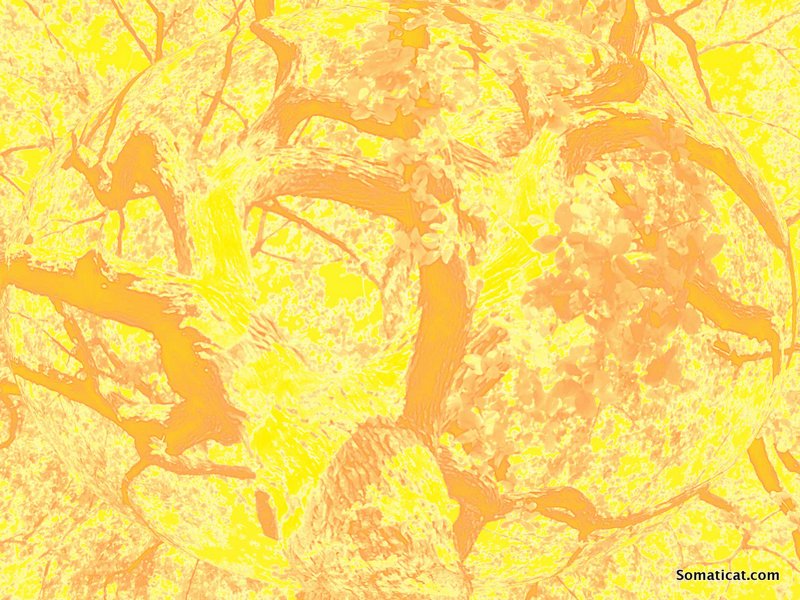
The true skin or dermis is tightly connected to the subcutaneous layer. They don’t want to be separated. Subcutaneous tissue is a connective tissue, anchoring the skin throughout the body. When I cut through this connection, I felt the resistance through the scalpel. The blade dulled quickly from hitting strong fibers in between. In my first dissection workshop, we spent a week dissecting away the skin layer as one continuous piece to reveal the yellow layer underneath. Every day, every minutes, we were faced with this yellow, bubble -wrap-like tissue. It was an assault on my nervous system. Most novice dissectors hated it. After class, when I closed my eyes, I saw yellow everywhere. Eventually, my nervous system seemed to adjust to the stimuli, and at a certain point, I began to appreciate and cherish this layer.
Due to my stress-management diet of ice cream and cheesecake, I use to have an abundance of adipose tissue around my midsection, which I jokingly referred to as an “emergency energy reserve” for a potential zombie apocalypse. When I experienced a Meniere’s flare-up and couldn’t eat much, I lost about 20 pounds in three months, and my skin looked like that of a Shar Pei dog. I lost a substantial amount of “fat” along with some muscle mass. I didn’t feel unhappy about losing my energy reserve. Fat is something everybody dislikes having beneath the skin.
We are all covered with subcutaneous adipose tissue. Its distribution varies from one individual to another, though common patterns can be observed. For example, the surface of shin or tibia has very sparse, almost negligible adipose tissue beneath the skin, while the buttocks are primarily shaped by adipose tissue. Female breasts are mostly shaped by fat. When I lost weight, my breasts lost their shape, and the skin appeared looked loose and saggy.
Hate it or love it, a human being can’t live without subcutaneous adipose tissue. This loose connective tissue is embedded with adipocytes, those teeny tiny bags of fat. Currently about 23% of my body weight is subcutaneous fat, which is within the normal range for a woman. Sure, I wish I had abs like young Britney Spears or Miley Cyrus, but it’s my vanity talking.
What happens if we lose too much of fat? I once saw a cadaver without any adipose tissue. She was an elderly, petite woman who was so emaciated that she virtually had no fat. Once the skin was removed, her body was almost translucent, revealing a white matrix of connective tissue without the familiar yellow. The mammary glands were visible on her breasts. She was beautiful but otherworldly. It still makes me sad to imagine her last days, with no soft layer hugging her body, keeping her warm, and cushioning her from pressure and occasional bumps and falls. It’s a cruel state of being.
Healthy babies come with a generous layer of fat, essential for their survival. Their softness and warmth, which make them so cuddle-worthy, are thanks to the subcutaneous fat. This fat layer is what makes a mother’s hug feel so soothing to the baby. (So I hear from parents.) Subcutaneous fat tissue acts as both a cushion and insulation. You really appreciate its cushioning function when you bump your shin against something hard or land on your rear end without breaking your sit bones.
Even though I have my fair share of fat, as a petite Asian woman, it is relatively thin compared to someone larger. I used to do scuba diving, and even in warm water, I needed a long-sleeved wetsuit to avoid loosing body heat quickly. Larger folks with more subcutaneous fat were fine with just a thin half-suit or even a swimsuit. Even as a cadaver, someone with a thick layer of adipose looked warmer compared to the translucent cadaver of the elderly woman. Adipose tissue is also known as the largest endocrine organ, producing hormones like leptin and estrogen. It’s vascular, innervated, and has lymphatic vessels running through it. Your midsection fat isn’t just a mere blob that can be cut away without consequences.
So, If fat beneath the skin isn’t just a lump of lipids, what is it? It is not a lump that you can simply suck out like a melted butter. It’s connective tissue anchoring the skin and holding the fat lobules in place. It firmly grips the skin and moves with it. Even though the textures are different, the skin and subcutaneous adipose tissue are indivisible. Think of an orange: the peel has a thin outer layer and a fibrous white inner layer. They aren’t separate layers but part of an integral “skin.” To separate them into two layers, you need to carve away the zest.
After you reflect the outer skin layer to reveal the yellow tissue beneath, you get a rare perspective of the dermis from underside. You see a cantaloupe-rind-like reticulate pattern, drawn in white all over. The density and size of this mesh vary depending on location and individual. It looks like a reflection of the adipose lobules in the subcutaneous layer. I imagine it as a mesh framework for sculpting, holding the plaster in shape.
With the skin removed, a cadaver looks different, yet still retains the distinct shape of the individual. They are mostly covered with sometimes glistening, sometime muted yellow soft, wet substance. It is a human form most of us have never seen or imagined. The tone and saturation can vary within a single cadaver. You might see dark reddish areas, likely caused by subcutaneous bleeding after death. When a person dies, their body lies on its back. Without a beating heart, blood succumbs to gravity, pooling and coagulating in the tissues where it contacts the ground or a hard surface, staining the adipose tissue reddish-brown. In the abdominal area, you might even see an unusual green color, a sign of decay within the human form.
Female cadavers usually have more abundant adipose. Their breasts, shaped almost entirely by adipose, droop toward the sides of the body when the skin is removed, as gravity takes hold. Male cadavers also have substantial adipose tissue, but its distribution differs somewhat. After spending many hours in the dissection lab, I’ve come to appreciate this layer. The human form shrouded in yellow looks content to me. Freed from the skin, that once bounded and contained their shape, they seem relaxed. There is no longer a hard boundary between what’s inside and what’s outside. The body’s water content begins to leak and dissipate.
More naked than actual nakedness, a body covered in adipose tissue can evoke strong emotional reactions: aversion, vulnerability, discomfort, shame, confusion, sadness—or even relief, strength, joy. I observed cadavers with all kinds of fat: thin, thick, compact, or loose. The first time I saw one — actually, we had six in the lab — I felt confusion and aversion. It wasn’t something I wanted to have in my body. For the first time, I confronted the usually hated fat, and the meaning of the word shifted from an abstract idea to the actual substance, as integral part of human beings. Just seeing and touching that ubiquitous yellow tissue exhausted me. It’s this tissue that formed the physical image of the individual. And it’s the very substance I’m molded from at this moment. Throughout my life, I’ve gained, retained, and lost fat, and my present physical and energetic shape is represented by this layer.
I sense that this layer holds a lot of energy—not just in a caloric way, but in a non-physical sense too. It demands that the beholder confront their emotional reaction, which actually reflects my own relationship with body fat. I’ve accumulated some around my midsection thanks to stress eating. Were those fats generated to protect me from the stresses I encountered too often? Who knows? I heard one dissector started crying, recalling her relationship with fat. You just never know. I realized I didn’t have any deep trauma stored in this layer. Eventually, I started to love this comfy, snuggly onesie made of soft beeswax pellets.
I sometime chant Heart Sutra for meditation. When I chant, I feel the sound wave and vibration travel through my body, and I often end up breaking into a sweat. I wonder if adipose tissue is acting as an energy conductor.




 Somatic Awareness