Telltale Feet

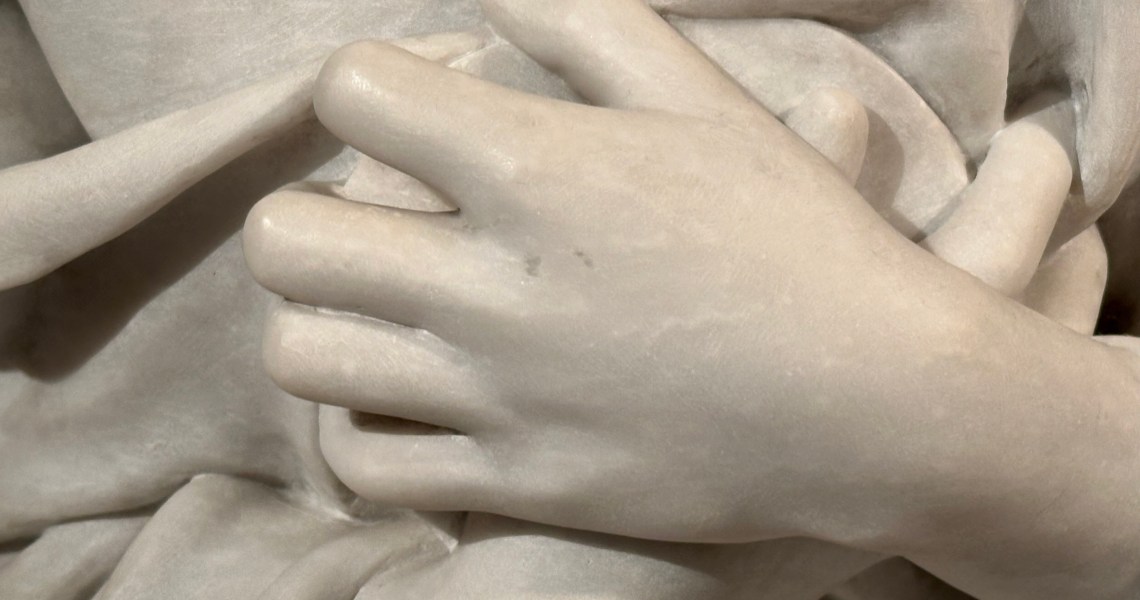
Feet are as individual as faces. They show how we’ve carried our weight through the world. They’re our interface with gravity, recording every step, stance, and every way we’ve held ourselves in space. 

The donor we called “Anna” was missing her second toes, and the rest were squeezed together. She looked like the kind of grandmother who would welcome a dozen grandchildren with a wide smile. But her feet told another story—bunions and hammer toes from years of stylish high heels.

I see the same story in many of my clients’ feet. Narrowed toes, bunions, hammer toes. Perhaps in youth they danced away the pain, as I once did. I’m grateful I stopped wearing what I now call torture devices. Sometimes I think of Chinese foot binding—an old, brutal attempt to force bodies into unnatural expectations.

Every cadaver’s feet are unique. The skin, fascia, and fat fuse into a sole strong enough to hold a lifetime. Looking at a male donor’s large feet, I imagine their story: soft, curling baby feet; first steps against gravity; running after his father or chasing a dog. Playing football, or soccer.  Later, leather shoes on a granite office floor or steel-toed boots on a construction site. Feet that walked him out of a chapel with his bride, carried him on hikes with his son, down the aisle with his daughter, and held him steady as he lifted his grandson high in the air. And finally, feet at rest, no longer bearing weight.

Anna’s feet tell a different story—one of a young woman dressing up, dancing through the night in pointed heels, ignoring the ache, embracing the moment.

I used to be one of those “ungrounded” people, moving through life on tiptoe. It took me decades to realize how little awareness I had of my connection to the ground. Now I pay attention to the soles of my feet and the shifting of my weight. It anchors me. I am here.

Face Reflected

Sometimes, face, hands, and feet are left undissected for a longer time unless there is a dissector specifically interested in these areas. Novice dissectors often feel a strong hesitation to make incision on those structures. We tend to identify individuals by their faces, as it is the most public and social part of the body. It serves as the primary interface between “I” and the society. We can’t see our faces directly: what we see is merely a reflection in a mirror or an image captured by a camera at a particular moment. As a result, a person’s self-image does not always align with their physical face. 

When I went home for my father’s funeral, I found my junior high yearbook.  I recognized the faces of girls I hadn’t seen in decades; one by one, they came back to life in my memory. I knew those teenage girls; they looked exactly as I remembered. I turned pages looking for my photo, but I couldn’t find it.  I felt confused, being certain I was in the yearbook. I started over from the first page, and with each turn, the faces of the girls became clearer in my memory. Still I couldn’t find my own face. 

On the third try, I finally found my name under a photo. She was a beautiful teenage girl. I didn’t recognize her because I had been told I was an ugly, unattractive, miserable creature—an image I had come to believe due to the distorted reflections I had been shown. Did I look ugly to you, Dad?  Or did I threaten you?  Did I look ugly to you, Mom?  Or did you also believe what Dad saw? 

Anyway, it’s too late. I lost the chance to live the life of a pretty girl and became a plain looking high school student. When I remember my high school years, I see myself as that unpopular girl with long hair hiding half of her face, like Violet Parr in The Incredibles, believing that she is invisible. My best friend is that popular girl who dates the football team captain. Years later, I had the opportunity to attend a high school reunion. One guy—who was neither the football team captain nor an academic high achiever—told me that I had been his crush in high school. I was stunned.  “You were a beautiful and intelligent girl,” he said, “and I admired you.”  I didn’t know.  I knew he liked me, but I couldn’t believe that anyone would genuinely like me. So I missed the chance to live the life of a popular girl in high school. When surrounded by distorted mirrors, we come to believe the distorted images they reflect.  

Some people are desperate to modify their faces to match their self-image. Skin is often rubbed, massaged, moisturized, medicated, and painted. It is sometimes cut, stretched, peeled, threaded, paralyzed, and modified in various ways. The skin of face, in particular, receives the most attention. 

I often see older women in my neighborhood with skin stretched unnaturally, resembling a Japanese Noh mask. For those individuals, the skin is not an archive of their life’s history but rather a screen on which they project their fears about the future. They are desperately trying to reverse the time, even though their faces, frozen in a perpetual state of youth, no longer reflect who they truly are. 

The skin is continuous throughout the body, and you won’t find perforated lines to guide your cuts. You need to decide where to make an incision. Where does the face start? The skin on the face is quite thin, so you won’t see much subcutaneous adipose tissue. Instead you will find the parotid glands, which look like pads of fat, under ears. Working on it requires a meticulous attention. 

One facial expression muscle you might miss if you don’t know its location is the platysma. In many dissection workshops, it is mistakenly cut away along with subcutaneous adipose tissue. When I managed to save it from being partially cut away with the superficial fascia, I was fascinated. This extremely thin and broad muscle, which extends from the chin to the upper chest, resides between the sheets of subcutaneous adipose tissue. I can activate it and make it pop up. Despite being easy to miss during dissection, this muscle is not immune to modification: platysmaplasty, or neck lift, is a common procedure. 

Once the skin and superficial fascia are removed from the face, the cadaver looks less personal and more like an anatomy chart. 

copyright 2025

The story you tell about them might not be their real story

We were standing in the lab, looking at three cadavers on dissection tables. As workshop participants, we were to choose a body to work on.

One was a slender woman with unnaturally perky breasts. Her nails were impeccably manicured, her hair full and glossy. She was beautiful.

Another was a heavily boned woman with a muscular build. “She must have been an avid hiker,” someone said.

The third was a woman of significant size.

She looked exactly like a good friend I had—someone who suffered from psychological and mental health issues and who had steadily gained weight until she was nearly immobile.

I felt a pang of sadness when I saw her body on the dissection table, and I experienced a slight aversion to standing at her station. No, I didn’t want to dissect her. I already knew it would be physically harder to remove her superficial fascia.

And yet, somehow, I ended up at her table.

As I began releasing her from the bounds of skin, I couldn’t help but project. I imagined the subcutaneous adipose tissue as emotional baggage she had accumulated over a lifetime, or maybe as a thick armor she wore to shield her psyche from the outside world. Under the tremendous weight, it felt like she had been collapsing inward.

The layer of superficial fascia we freed from her dermis was sizable—just as she had been with her skin on. We began removing the adipose tissue, as if freeing her from the tortured existence of living in a large body. It was hard work. The layer was easily three inches thick in her midsection.

As I worked, I thought about all the nerve endings embedded in that adipose tissue. She probably had ten times more nerve length than I do. This was a hypersentient state of being.

And then, beneath the adipose, her muscular structure appeared—and we were all astounded.

What had been hidden under that armor of fascia was not a collapsed, atrophied frame. She was robust. I had never seen an elderly female cadaver with such powerful muscles. Her legs were so strong she looked like she could’ve squeezed the life out of a big, bad cowboy. Her gracilis was not slender at all; it was substantial. None of us had ever seen gracilis muscles like that.

Her musculature had supported the weight of her adipose armor. She had the body of an Amazon warrior. There was no trace of wasting. She must have remained mobile and active until quite recently, carrying her physical existence bravely.

Internally, too, she was robust.

Her organs were intact. No calcified arteries, no arteriosclerosis. Her colon was six feet long, padded with a healthy amount of visceral fat. No fatty liver. No damaged kidneys. No fibrosis in the uterus. Her heart was beautiful. Her lungs were slightly darkened, but free of adhesions.

She was healthy.
Much healthier than I am.

The slender, model-like woman, on the other hand, had gone through hell. Once her skin and minimal adipose were removed, her body appeared almost transparent. Cancer had riddled her form—metastatic, likely starting from the breast. A chemotherapy port protruded from her chest.

She was a fighter, too.

I find myself reflecting on my projections.

You can’t tell who someone is just by looking from the outside.
The story you tell about them might not be their real story.

Superficial Fascia: somewhat technical contemplation from the lab

As a manual therapist, this layer holds additional significance. When I work on a specific “muscle,” I am actually working through this layer, in addition to the skin. Unlike the skin, the subcutaneous adipose layer is more uneven in thickness and depth. Generally the adipose tissue is firmly attached to the skin and moves along with it, but its relationship with muscles is more complex. 

Subcutaneous adipose tissue is loose, areolar connective tissue with collagen fibers that provide structure. If you were to remove all the lipids from this tissue, a scaffolding-like matrix made of collagen fibers would be revealed. In Integral Anatomy, this is referred to as superficial fascia. In the human body, adipocytes—commonly know as fat cells—are embedded in this collagen matrix and cannot be separated from it. A typical fat cell has a diameter of about 0.1mm, making it too small to be seen with the naked eye. The lobules you observe at a gross level are not individual fat cells but rather clusters of them, encapsulated within the matrix. Each fat cell is enclosed by a cell membrane, with lipid stored inside. Under normal conditions, body fat doesn’t melt and can’t be sucked out like melted butter—unless it’s in a state of putrefaction.

In meditation, I imagine fat cells dissipating like dew on a spider web touched by the first summer sun, leaving a soft, white, flexible, three-dimensional lace-like structure. The cosy beeswax-yellow fleece onesie transforms into a milky-white dress, gently covering my body like summer clouds in the sky. Though it appears ephemeral, the fabric is deceivingly strong. It holds the weight of skin—the epidermis, dermis, and hypodermis—in places. The skin, after all, is the largest and heaviest organ, weighing between 5 and 10 kilogram.  Gil Hedley, Ph.D., demonstrated the strength of superficial fascia with and without adipose.  He could lift 22 kilograms with a piece of superficial fascia that had adipose intact, and 14.5 kilograms with it removed. I personally participated in this experiment, and the tactile sensation of handling the piece of superficial fascia without adipose has stayed with me ever since. In a tub of warm water, it floated and danced like a mystical creature.

Subcutaneous Adipose Tissue Removal

I’m not talking about liposuction, which I consider a form of amputation, given the destruction of structural, vascular, lymphatic, and nervous elements.  Subcutaneous adipose tissue has structural integrity. 

On dissection tables, human forms lie without the boundary that usually blocks observers from entering the inner space. I’ve never sensed hesitation to cut from workshop participants at this stage. They are usually eager to cut into the tissue and reveal the familiar, anatomy-book-defined muscles hidden beneath the shapeless yellow. I used to feel the same.

Without the dermis, human forms become transparent in a way. The dermis layer is relatively uniform in depth, while the subcutaneous adipose layer varies considerably from one area to another. When manual therapists manipulate soft tissue, they typically aim to target specific muscles. However, this work is done through the dermis and the subcutaneous adipose tissue. I need to be mindful of the variability in adipose layers. For example, the glutes are covered with thick adipose tissue, while the adipose tissue covering forearm is generally thin.

The process to remove subcutaneous adipose tissue is a significant learning opportunity. When you carefully incise the tissue with the tip of scalpel, it opens up with relative ease. Most of the time, you still see the yellow tissue, and you have no idea how deep it goes. You cut again until you finally reveal the familiar brown muscular tissue, covered with a transparent sheen. The energy around the table shifts from weariness to excitement and expectation. Suddenly energized, you eagerly remove the yellow, wet substance. However, if you become too hasty and task-oriented, you risk missing the wealth of information this process can reveal. 

This is where tactile learners, like myself, have an advantage. Unlike the removal of skin (dermis), subcutaneous adipose tissue allows blunt dissection by fingers. The relationship with the underlying structure can be loose, and tissue planes can be easily separated. A scalpel cuts through the connecting structure between tissue planes with little effort. It almost feels as if the subcutaneous adipose layer slide over the muscular structure beneath it. 

When you grasp your forearm and twist it without moving the forearm itself, your skin (all three layers) slides over the muscle. There is a massage technique called skin rolling, where a therapist pull the skin away from muscle tissue and “rolls” it forward. This is possible because the bond between the skin and underlying muscular structure has some play, allowing for movement. In some areas, subcutaneous adipose tissue is firmly anchored to the structure beneath, preventing the skin from slipping. In other areas, the plane where two layers meet is so intimately bonded that the only way to separate them is to carve the adipose tissue away.  

Because of sudden weight loss, I have an abundance of extra skin, which is somewhat loose. It’s relatively easy for me to pull up and “roll” the skin. For some people with tighter skin and/or firmer fat, it’s not as easy. However, there is a limit how much the skin can “slip.” There’s always a connection at the interface. No part of my body wants to be a separate entity. 

We shouldn’t overlook the perforating nervous and vascular structure that travel continuously through the layers. Nerves exit from muscular structures and extend into the subcutaneous adipose tissue, then continue to the dermis like a branching tree. Remember, the nerve endings are the furthest end of your brain, constantly searching for proof of life throughout the body. When I use a scalpel to separate subcutaneous adipose layer, I feel a consistent rhythm of bumps. This resistance occurs when the scalpel encounters something firmer than collagen fibers. Even though the nerves are very fine at the ending, they are strong enough to be part of the structure that physically hold your body in place.

I imagine my brain reaching out, through adipose tissue which cocoons me. How would it feel? The moist, warm, soft beeswax-yellow tissue moves, changes shapes, slides, and dances, conducting heat, sound, and energy. Don’t you feel the love in this layer?

Storage of Emotional Energy

The subcutaneous/hypodermis tissue is the deepest layer of your skin, usually dissected away along with the skin to reveal the underlying muscular structure. In Integral Anatomy, this layer is known as the superficial fascia, clearly distinguished from the skin layer. When I slid the scalpel deep enough, the distinctive yellow tissue broke through the pale edge of dermis. Its texture was strikingly different from that of the skin—it was wet, soft, vibrant in color, and greasy. This subcutaneous adipose, commonly known as fat, which everybody seems to dislike.

The true skin or dermis is tightly connected to the subcutaneous layer. They don’t want to be separated. Subcutaneous tissue is a connective tissue, anchoring the skin throughout the body. When I cut through this connection, I felt the resistance through the scalpel. The blade dulled quickly from hitting strong fibers in between. In my first dissection workshop, we spent a week dissecting away the skin layer as one continuous piece to reveal the yellow layer underneath. Every day, every minutes, we were faced with this yellow, bubble -wrap-like tissue. It was an assault on my nervous system. Most novice dissectors hated it. After class, when I closed my eyes, I saw yellow everywhere. Eventually, my nervous system seemed to adjust to the stimuli, and at a certain point, I began to appreciate and cherish this layer. 

Due to my stress-management diet of ice cream and cheesecake, I use to have an abundance of adipose tissue around my midsection, which I jokingly referred to as an “emergency energy reserve” for a potential zombie apocalypse. When I experienced a Meniere’s flare-up and couldn’t eat much, I lost about 20 pounds in three months, and my skin looked like that of a Shar Pei dog. I lost a substantial amount of “fat” along with some muscle mass. I didn’t feel unhappy about losing my energy reserve. Fat is something everybody dislikes having beneath the skin.

We are all covered with subcutaneous adipose tissue. Its distribution varies from one individual to another, though common patterns can be observed. For example, the surface of shin or tibia has very sparse, almost negligible adipose tissue beneath the skin, while the buttocks are primarily shaped by adipose tissue. Female breasts are mostly shaped by fat. When I lost weight, my breasts lost their shape, and the skin appeared looked loose and saggy.

Hate it or love it, a human being can’t live without subcutaneous adipose tissue. This loose connective tissue is embedded with adipocytes, those teeny tiny bags of fat. Currently about 23% of my body weight is subcutaneous fat, which is within the normal range for a woman. Sure, I wish I had abs like young Britney Spears or Miley Cyrus, but it’s my vanity talking. 

What happens if we lose too much of fat?  I once saw a cadaver without any adipose tissue. She was an elderly, petite woman who was so emaciated that she virtually had no fat. Once  the skin was removed, her body was almost translucent, revealing a white matrix of connective tissue without the familiar yellow. The mammary glands were visible on her breasts. She was beautiful but otherworldly. It still makes me sad to imagine her last days, with no soft layer hugging her body, keeping her warm, and cushioning her from pressure and occasional bumps and falls. It’s a cruel state of being.

Healthy babies come with a generous layer of fat, essential for their survival. Their softness and warmth, which make them so cuddle-worthy, are thanks to the subcutaneous fat. This fat layer is what makes a mother’s hug feel so soothing to the baby. (So I hear from parents.)  Subcutaneous fat tissue acts as both a cushion and insulation. You really appreciate its cushioning function when you bump your shin against something hard or land on your rear end without breaking your sit bones.

Even though I have my fair share of fat, as a petite Asian woman, it is relatively thin compared to someone larger. I used to do scuba diving, and even in warm water, I needed a long-sleeved wetsuit to avoid loosing body heat quickly. Larger folks with more subcutaneous fat were fine with just a thin half-suit or even a swimsuit. Even as a cadaver, someone with a thick layer of adipose looked warmer compared to the translucent cadaver of the elderly woman. Adipose tissue is also known as the largest endocrine organ, producing hormones like leptin and estrogen. It’s vascular, innervated, and has lymphatic vessels running through it. Your midsection fat isn’t just a mere blob that can be cut away without consequences.

So, If fat beneath the skin isn’t just a lump of lipids, what is it? It is not a lump that you can simply suck out like a melted butter. It’s connective tissue anchoring the skin and holding the fat lobules in place. It firmly grips the skin and moves with it. Even though the textures are different, the skin and subcutaneous adipose tissue are indivisible. Think of an orange: the peel has a thin outer layer and a fibrous white inner layer. They aren’t separate layers but part of an integral “skin.” To separate them into two layers, you need to carve away the zest.

After you reflect the outer skin layer to reveal the yellow tissue beneath, you get a rare perspective of the dermis from underside. You see a cantaloupe-rind-like reticulate pattern, drawn in white all over. The density and size of this mesh vary depending on location and individual. It looks like a reflection of the adipose lobules in the subcutaneous layer. I imagine it as a mesh framework for sculpting, holding the plaster in shape. 

With the skin removed, a cadaver looks different, yet still retains the distinct shape of the individual. They are mostly covered with sometimes glistening, sometime muted yellow soft, wet substance. It is a human form most of us have never seen or imagined. The tone and saturation can vary within a single cadaver. You might see dark reddish areas, likely caused by subcutaneous bleeding after death. When a person dies, their body lies on its back. Without a beating heart, blood succumbs to gravity, pooling and coagulating in the tissues where it contacts the ground or a hard surface, staining the adipose tissue reddish-brown. In the abdominal area, you might even see an unusual green color, a sign of decay within the human form.

Female cadavers usually have more abundant adipose. Their breasts, shaped almost entirely by adipose, droop toward the sides of the body when the skin is removed, as gravity takes hold. Male cadavers also have substantial adipose tissue, but its distribution differs somewhat. After spending many hours in the dissection lab, I’ve come to appreciate this layer. The human form shrouded in yellow looks content to me. Freed from the skin, that once bounded and contained their shape, they seem relaxed. There is no longer a hard boundary between what’s inside and what’s outside. The body’s water content begins to leak and dissipate. 

More naked than actual nakedness, a body covered in adipose tissue can evoke strong emotional reactions: aversion, vulnerability, discomfort, shame, confusion, sadness—or even relief, strength, joy. I observed cadavers with all kinds of fat: thin, thick, compact, or loose. The first time I saw one — actually, we had six in the lab — I felt confusion and aversion. It wasn’t something I wanted to have in my body. For the first time, I confronted the usually hated fat, and the meaning of the word shifted from an abstract idea to the actual substance, as integral part of human beings. Just seeing and touching that ubiquitous yellow tissue exhausted me.  It’s this tissue that formed the physical image of the individual. And it’s the very substance I’m molded from at this moment. Throughout my life, I’ve gained, retained, and lost fat, and my present physical and energetic shape is represented by this layer. 

I sense that this layer holds a lot of energy—not just in a caloric way, but in a non-physical sense too. It demands that the beholder confront their emotional reaction, which actually reflects my own relationship with body fat. I’ve accumulated some around my midsection thanks to stress eating. Were those fats generated to protect me from the stresses I encountered too often?  Who knows? I heard one dissector started crying, recalling her relationship with fat. You just never know.  I realized I didn’t have any deep trauma stored in this layer. Eventually, I started to love this comfy, snuggly onesie made of soft beeswax pellets. 

I sometime chant Heart Sutra for meditation.  When I chant, I feel the sound wave and vibration travel through my body, and I often end up breaking into a sweat. I wonder if adipose tissue is acting as an energy conductor.

First Cut: the Fragile Threshold between Life and Death

I recently sent my beloved dog, Simon, across the rainbow bridge. With the injection of a tranquilizer, he was asleep but alive. The moment the last injection was administrated, his being shifted. It was obvious that he was no longer there. What remained was just a body–a form of my beloved dog. It was no longer Simon. I left his form with the vet for cremation.

I might have a different reaction to human forms. I witnessed my grandmother’s death. Her heart was medically kept beating until her son arrived to witness her ultimate crossing. I stayed with her body overnight as a part of the Buddhist ritual of wake. Since then, I have experienced three more death in my family. In my old country, family members of the deceased accompany the body to the crematorium and wait for it to become bones. We pick up pieces of the bones with long chopsticks to place them in a small urn. For family members the death is not considered complete until this ritual is performed.

Whether it was Simon’s peaceful passing, my grandmother’s ritualized journey to ashes, or the cadaver I stand before, each moment reminds me of the fragile threshold between life and death–how quickly being gives way to form.

Standing at the dissection table, holding a scalpel with a fresh blade, most first-time dissectors hesitate to make the first cut. I did. Unless you are a surgeon, or other specific medical professional, you have not intentionally cut another person’s skin. A cadaver with the skin intact is closed off from and protected against the outside world. However vulnerable it may look, it maintains its integrity as a whole human being. The hesitancy comes from the violation of the personal boundary that the skin represents—the ultimate “Authorized Personnel Only” sign. It is the line of demarcation between the dead and the living. I still remember my first cut. It was on a cadaver named “Tony.”  I watched other experienced dissectors make their first cuts, then followed nervously, as if I might be reprimanded for my act of violation. The tip of the scalpel scratched the surface, creating a paper-cut thin, shallow pale line. No blood. With a little more pressure, the skin/dermis began to separate. The surface tension that had kept the entire body whole lost its hold, and the boundary broke. The cadaver opened itself up to the dissectors. I crossed the boundary.  After that, in my perception, it was not a person but a human form in which a person used to reside. A cadaver has no boundary, though deserves due respect.  With a long incision in the skin, I felt as if the human form released all the tension with a sigh of relief, saying, “It’s over. No more need to hold this form.”

You have only one chance to experience the first cut. So better be mindful.

copyright 2025

Touch: Your Brain’s Interpretation

Even though the sensory receptors in the skin are mechanoreceptors, it is your brain that interprets the signals they send. Since the brain remembers past experiences and the emotions associated with them, touch is never merely a  touch. Even the same mechanical touch can be felt differently—it can be loving, caring, comforting, or healing; sensual or sexual; cold, abusive or invasive. Even when you think your touch is neutral, it’s up to the receiver’s brain to interpret it.

When I was in my late thirties, I went through infertility treatment. To check if my fallopian tubes were open, I underwent a very uncomfortable test. The pressure I felt inside my body was so invasive that I instinctively contracted my entire body, bracing myself. Then the technician’s assistant gently placed her hand on my arm. I melted. Her touch was neutral, and I don’t think she was consciously trying to comfort me. I felt it came from her spontaneous empathy. 

I have Meniere’s disease. One day, I had a Meniere’s attack in a gross anatomy lab and had to lie on a cold linoleum floor for some time, clutching a barf bag. I told everybody that nothing could be done to relieve my suffering and asked them to keep me safe and leave me alone until the symptoms resolved. I threw up in the bag and was hyperventilating in a fetal position. Some people can’t tolerate witnessing suffering without doing anything; it might make them feel powerless. A few of them placed their hands on me, perhaps to soothe or heal. I just had to endure the unwanted touch. They were mechanically the same kind of touch, but my brain interpreted them differently. One was comforting and the other was annoying.

As a child, I experienced improper touches, which were a violation of boundaries. This experience made me sensitive to the intent behind a touch. I don’t remember receiving loving touches from adults in my family during my childhood. My nervous system used to react to every touch as if it were a danger. Sometimes, a touch triggered tremendous rage, while other times, it made me feel nauseous. It took me a long time to learn to discern a safe touch from an unwanted one. I’ve learned to set boundaries and to choose how to respond, not just to react. 

copyright 2024

Dermis: The True Skin

The skin is often referred to as the largest organ in the human body. At the dissection table, we explore this remarkable organ in greater depth. The skin, along the dermis and its thin integument, tells the story of the person who once inhabited the form before us. How we interpret these stories is ultimately up to us.

Scars from surgeries, deep skin folds, stretch marks, tattoos and other markings frequently appear, each reflecting the years etched in the skin. Most cadavers are donated by elderly individuals who passed away in hospitals, and their stories are as distinctive and intricate as their wrinkles. Sometimes, internal conditions like jaundice manifest outwardly on the skin, altering its color and texture. 

Beyond the common surgical scars—hip and knee replacements, open-heart surgeries, rotator cuff reconstructions, and caesarean sections—we occasionally find evidence of accidents. While we can never know the exact stories behind these marks, we can imagine them. For instance, a scar on a man’s right thigh might be from a childhood bike accident during a carefree summer afternoon with friends— or perhaps from something more dramatic, like his wife discovering an affair and running him over in her fury. The truth could be anything. There are endless possibilities. 

I have a one-inch scar on my right breast from a biopsy. It never faded and serves as a constant reminder of a specific moment of my life. I remember waking up in the recovery room to the sudden commotion of EMS personal rushing in. The sliding door to the recovery room opened, and another door to the operating area followed. An old man in the waiting room looked panic-stricken as he tried to grasp what was happening on the other side.

A medical staff member explained that they didn’t have the equipment needed for the emergency his wife was experiencing and might need to transfer her to another hospital. My then-boyfriend, who had been waiting with the man, was in shock. “That man probably had coffee with his wife this morning, like usual,” he said. “He never thought it could be the last time.”

I don’t know what happened to the wife, but the experience stayed with me. Life is fragile. It could have been me who didn’t come back that day. My one-inch scar is a reminder of the delicate boundary between existence and nonexistence.

Skin: An Archive of Life

Our skin keeps records of life events. If you spend a lot of time outdoors, the sun will leave its mark on your skin. If you’ve had children, stretch marks may tell the story. If you smile or frown often, wrinkles will document those emotions. Skin is an archive of our lives.

Boundary: Skin as the First Line of Defense

For a manual therapist, an open cut on the skin is a nightmare. Any wound, no matter how small presents a potential danger—for both therapist and client. It’s an open door for pathogens. Something inside me could find its way onto someone else’s skin or vice versa. Cutting. in essence,  is an act of vulnerability.

Before the HIV pandemic, it wasn’t uncommon to see movies where characters cut their palms and held hands to mingle their blood as a gesture of ultimate trust and commitment. Sharing pathogens in this way was seen as a bond of loyalty. But cutting someone else’s skin is also a violation—a breach of boundaries.

Cutting one’s own skin is different. It’s an act that teeters on the edge of those boundaries. For some, it might be a way to reclaim control, to affirm that the boundary exists. By intentionally breaking the barrier of my own body, I can remind myself that I am alive. For those disconnected from their physical selves, self-harm might be a desperate attempt to feel real.

Skin as a Sensory Organ

As I lie on the ground, I feel the weight of my body pressing against it.  Heat transfers from my skin to the moist earth, and I sense coolness creeping back. Sunlight warms my exposed skin, while a gentle spring breeze takes some of the heat away. Grass brushes agains my arms, tingling lightly, and small pebbles beneath my back press into me with dull discomfort.

The skin is a vast sensory organ. Its receptors send signals of pressure, temperature, touch, and pain to the brain, which interprets these sensations. As a manual therapist, I must remember touching a client’s skin is a direct form of communication with their brain. Skin and nerves are inseparable; they form a continuous connection from receptors, through peripheral nerves and the spinal cord, to the brain itself.

When assisting with a nerve dissection project, I noticed how some nerves perforate into the skin. In typical gross anatomy dissections, we often overlook these structures, but they’re there, like delicate threads stitching the layers together. Touching one of these threads is, in essence, touching an extension of the brain itself.

Skin as Canvas for Expression

Occasionally, we encounter a cadaver with tattoos. One donor, “Z,” had multiple tattoos covering his body.  Z was a local donor, and one of the dissectors knew him personally—a rare occurrence. Z had lived a colorful life, full of adventures, rebellion, and humor. Before succumbing to cancer, he was a bulky, tough man.

When we uncovered his body, we saw an emaciated figure. A chemotherapy port protruded from his chest, and his gaunt face reflected the fierceness of his spirit. Though his body lay silent, his tattoos spoke volumes. They seemed to demand our attention: “Look at me. Read my life’s stories.”

Every piece—every image, every  word— told a story. As we began the dissection, we took care to preserve his tattoos, treating them as the storybook they were. Though they would eventually cremated with his body, the tattoos deserved our respect.

Tattoo ink remains permanently in the dermis, where macrophages engulf the pigment, making it a part of the person’s identity. Some pigments migrate to lymph nodes, where they can become trapped—sometimes visibly. Even in death, these marks persist, embodying the life they represent. 

copyright 2024

Skin

Where body meets air we are all cadavers

The Body: A guide for Occupants by Bill Bryson

Epidermis

Epidermis

I walked into the gross anatomy lab at a medical school, wearing a brand-new white lab coat, and stood at one of the dissection tables. The steady hum of  the air purifier filled the room. Under the gleaming florescent lights, the lab appeared sterile and lifeless. It held multiple tables, each with a cadaver lying upon it. It was my first human dissection class, and I was nervous. Unless you are a medical student, funeral director, coroner, forensic examiner, or some kind of specialist, you rarely have the chance to see naked dead bodies quietly resting on stainless steel tables. The cadavers were embalmed for preservation, giving their skin somewhat foreign texture.

In my old country, we don’t have the custom of embalming. When my grandmother passed away, she was laid on a futon in her home, as if she were sleeping, and family members took turns staying beside her body through the night. It is an old tradition for family members to spend the last night with a loved one—a way to familiarize the living with death. I stayed with her body for several hours, keeping incense burning. Her skin was yellowish, wrinkled, and dry but otherwise intact. The cold air from the dry ice, used to slow the body’s decomposition, seeped through the futon, carrying with a faint, distinct whiff of death.

In the lab, the cadavers’ skin was unnaturally moist due to the embalming fluid saturating their tissue. We carefully observed the artifacts of death and embalming process to distinguish them from the inherent characteristics of the deceased. The outer layer of skin was peeling in patches, similar to sunburned skin but slightly deeper. This is a decomposition process where the bond between dermis and epidermis begins to break down. One of the cadavers was a dark-skinned man, and we were startled to see the pale skin layer beneath. We realized the skin color is only epidermis deep. Beneath the epidermis layer, we are all same color: pale and fair.

The epidermis, the outermost layer of skin, is only 0.05mm (on the eyelids) to 1.5mm (on the palm and sole) in thickness. It defines our social identity, being the first aspect others notice. It is a social organ. As a person of east Asian origin, my skin has an olive tint.  When I was a child, I spent most of my time outdoors and became tanned in the areas exposed to the sun.  Naturally I was darker than adults who spent most of their time indoors. My father used to tell me I was too dark to be considered pretty. In my old country, at least at that time, fair skin was idealized as a standard of beauty for women; the lighter, the better.  My skin is still tanned, though not as much as when I was younger. In fact, the parts of my body that rarely see sunlight are as fair as those of my friends with natural light skin. I simply don’t burn as easily as they do. Being labeled as an “Asian girl too dark to be pretty” haunted my self-image, even though it was just an epidermis-deep judgement, easily shed like a snake’s slough when it no longer fits. Today, I am a proud woman of a certain advanced age with beautifully tanned skin, less sun-damaged than that of some fair-skinned friends.

Melanocytes, located in the bottom layer of epidermis, produce melanin, which determines skin color. Without the epidermis, you would be pale. Defining people by skin color is absurd. Melanin protects the skin from UV damages caused by sunlight. A darker skin color simply means your skin is more tolerant to UV exposure. 

In the living body, the deepest layer of the epidermis, where melanocytes reside, is firmly attached to the dermis and does not peel away easily. Since the epidermis lacks sensory nerve endings — except for vibration-sensing Merkel cells, which are found in the bottom layer— touching the epidermis itself does not produce sensations. However, there is a rare genetic disorder in which the bond between the dermis and epidermis is very weak, causing the epidermis to peel away with the slightest contact, exposing nerve endings. Individual with this condition are vulnerable to UV damage, infections, and other external threats. Imagine being without an epidermis. Every slightest touch would cause excruciating pain, and your existence would become a constant agony. When I studied psychology in a post-graduate psycho-spiritual counseling program, the instructor described a person with borderline personality disorder as “being without skin.”  The analogy might be more accurately described as a condition of being without an epidermis.

The epidermis forms the boundary between what is me and what is not me, serving as the first line of defense by protecting what is inside from the external environment. Despite its crucial role, it is less than 1mm thick. Our physical existence is remarkably vulnerable in this way.

When I get a temporary henna tattoo, the “tattoo” fades away in a week or two because the pigment only penetrates the epidermis.  The outermost layer of the epidermis, the stratum corneum, consists of dead cells that are constantly flaking away. The cells in the outer layer of epidermis are replaced every thirty to forty days. Part of us is constantly dying from birth. Our physical existence is not as separate as we might believe. When I step into a subway car, I sometimes encounter a distinct smell associated with a particular human state. Even if the source is no longer present, the oder lingers as if the ghost of its presence remains. Occasionally, we find ourselves in someone else’s personal space, and as I inadvertently breathe in tiny molecules of oder, I also realize I am inhaling minuscule flakes of dead epidermis. 

As a manual therapist, when I touch a client, I make contact with their epidermis. I would never touch their dermis, the true skin, directly. Between “them” and “me,” the epidermis stands guard, keeping “not me” out.  Every caress of lovers passes through the layer of dead cells. Flaked-off dead cells mingle with other minute substances, floating away in the air or settling on the floor. This thin, evanescent boundary keeps us safe from one another.

The first difference between a living person and a cadaver lies in the skin. In the dissection lab, we stood around a table with a cadaver. No one touched it until the instructor encouraged us to do so. Initially, most of us hesitated, but soon we began to touch the cadaver quite aggressively. The cadaver allowed us to explore in whatever way necessary for study. A person has boundaries; a cadaver does not. When somebody violates your boundaries through inappropriate touching, they are treating you as if you were a cadaver.

Imagine yourself as a corpse lying on the ground. Focus on the outermost layer of your skin. Peeling away in patches, this interface with society falls off. It becomes desiccated and papery—light and fragile. Part of your identity sheds away, your boundary dissipating with a mere whiff.

copyright 2024

Meditation on Cadavers-Prologue

Savasana

I am not writing an anatomy book, nor a dissection manual, though I use nomencIature of anatomist when it is more clear than everyday language. This book/writing is not about scientific knowledge. If you want to learn detailed anatomical information, there are tons of great books you can choose from. This is just A story of my personal experience facing cadavers in dissection labs, and a story about how that experience has affected my perception of who I am, how I relate to everything, especially to my body, in this lifetime.

I once read about a meditation technique where you lie on your back and imagine your body gradually decomposing until it becomes a skeleton. I heard that in Buddhism there is a meditation method in which one observes one’s own body both from the inside and outside while observing an actual corpse decompose. I liked this meditation method because I interpreted it as a training to realize that all material existence in this world, including one’s own body, is a mere phenomenon, just like a decaying corpse. 

When we experience unbearable trauma, our body and consciousness may become dissociated in order to protect ourselves. The body becomes a thing that performs a specific function, and becomes separated from the ”I” consciousness.

Once I had sessions with a Zen psychology therapist. He often asked me, “What do you feel in your body?” I looked up at the ceiling, looked around the room and always looked for the answer outside of my body. “Can you feel your feet on the floor?” he asked. Of course I could feel my feet physically touching the floor, but that was completely disconnected from what I was feeling mentally. 

I didn’t have much knowledge about my own body. So even when I meditated on a corpse, I couldn’t visualize it very well, and I had no conscious connection to my body, so the corpse quickly turned into abstract bones. I couldn’t understand how complex and delicate the human body was, and how it was related to my very existence.

Through the gross anatomy training, I gradually recovered the connection between my self and my body. Every time I stood at the dissection table, I felt like I was slowly regaining my humanity. It has been more than 10 years since I was initiated into human dissection, and I have spent over 1,500 hours in dissection labs. Now attending an annual dissection workshop is like a Zen practitioner regularly practicing at a temple. 

I see it as my spiritual practice. It prepares me for the reality of death and dying, and reminds me of the meaning of living this moment. 

Savasana in yoga is said to be a pose where you lie on your back and imitate a dead body. When we go to a dissection table in a dissection lab, we face a donated body that is quietly in Savasana pose. It is the last pose we all will take.

copyright 2024